Traditional Gold Bangles Guide: Explore Designs, Gold Purity, Styles, Patterns, and Selection Factors
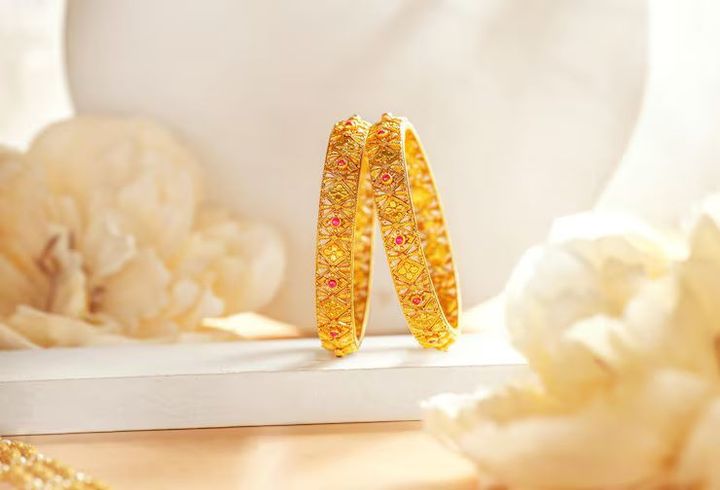
Traditional gold bangles are circular or partially flexible ornaments worn around the wrist. They have been part of South Asian jewelry traditions for centuries and continue to appear in everyday clothing, festivals, weddings, family ceremonies, and cultural celebrations. Their designs often reflect regional craftsmanship, historical influences, religious customs, and changing fashion preferences.
Gold bangles can be made in different purity levels and may feature engraved patterns, floral motifs, geometric details, gemstones, enamel work, or textured surfaces. Traditional designs often emphasize repeated patterns and craftsmanship rather than temporary fashion trends.
Historical Background
Gold has been used in jewelry across the Indian subcontinent for many generations. Bangles developed in many regional forms, with differences in shape, thickness, decoration, and manufacturing techniques.
Traditional gold bangles may be associated with particular communities or regions. Designs such as floral patterns, peacock motifs, temple-inspired details, filigree work, and geometric engraving can reflect local artistic traditions.
Common Bangle Structures
Traditional bangles generally fall into several structural categories. Rigid bangles maintain a fixed circular form, while hinged or clasp-based designs allow easier placement around the wrist. Some traditional pieces are composed of multiple narrow bangles worn together.
The construction affects appearance, weight, flexibility, and how the ornament sits on the wrist. Decorative elements can be incorporated into the outer surface, central section, edges, or individual panels.
Importance
Traditional gold bangles have both decorative and cultural significance. They can form part of ceremonial clothing and may be passed between generations as family jewelry, making their design and craftsmanship important beyond their physical appearance.
Gold purity is another important consideration because gold jewelry can contain different proportions of pure gold and other metals. Understanding purity markings helps readers interpret jewelry specifications more accurately.
Cultural Significance
In many Indian traditions, bangles are associated with important stages and occasions in life. Their meanings vary across communities, families, and regions, so there is no single cultural interpretation that applies everywhere.
Traditional designs may also communicate regional identity. For example, temple-inspired patterns, detailed filigree, or regional motifs can make a bangle recognizable as part of a particular jewelry tradition.
Understanding Gold Purity
Pure gold is generally too soft for many forms of everyday jewelry, so gold is commonly combined with other metals to create an alloy with different physical characteristics.
Gold purity is commonly expressed using karats. Higher karat values indicate a greater proportion of gold in the alloy.
| Gold Purity | Approximate Gold Content | General Description |
|---|---|---|
| 24K | 99.9% | Very high-purity gold |
| 22K | 91.6% | Commonly used for traditional gold jewelry |
| 18K | 75.0% | Gold alloy with greater proportions of other metals |
| 14K | 58.5% | Lower gold content with increased alloy content |
The exact composition can vary according to applicable standards and manufacturing specifications. In India, consumers can also look for hallmarking information used to indicate the purity of precious-metal articles.
Recent Updates
Traditional gold bangles continue to combine established design elements with newer manufacturing techniques. Jewelry makers increasingly use computer-aided design, precision casting, laser engraving, and other technologies alongside traditional handcrafting methods.
Digital design tools can help create detailed patterns before production. Computer-based modeling can also make it easier to visualize proportions, decorative arrangements, and structural elements.
Contemporary Traditional Designs
Modern traditional bangles may preserve familiar motifs while using simpler shapes or lighter visual patterns. Floral, paisley, geometric, and temple-inspired elements continue to appear in different combinations.
Some designs also combine multiple textures. A single bangle may include polished sections, matte surfaces, engraved areas, and raised decorative elements.
Hallmarking and Purity Identification
Gold hallmarking remains an important part of identifying the declared purity of applicable jewelry in India. The Bureau of Indian Standards operates the hallmarking framework and provides information about hallmarking, registration, and verification.
BIS also provides a Hallmarking overview and resources for checking hallmark-related information. Bureau of Indian Standards Hallmarking Resources
Consumers can use the BIS CARE platform to verify hallmark-related information where applicable. BIS CARE App
Laws or Policies
Gold jewelry in India is affected by standards and regulations concerning purity, hallmarking, consumer information, and precious-metal articles. The Bureau of Indian Standards administers the Indian hallmarking system and publishes requirements applicable to precious-metal articles.
The hallmarking framework includes information that identifies the purity or fineness of the precious metal. BIS explains that hallmarking provides an official recording of the proportionate content of precious metal in a jewelry article.
The applicable requirements can change according to government notifications and BIS rules. Readers should therefore consult current BIS information when interpreting hallmarking requirements for a particular piece.
Hallmark Components
A hallmarked gold article may contain identifying marks associated with the applicable hallmarking system. These markings help establish information about the article's precious-metal purity.
The exact marking format can depend on the applicable rules and period of manufacture. For current requirements, BIS publications should be used rather than relying only on older examples of hallmark symbols.
Tools and Resources
Several resources can help readers understand traditional gold bangles, purity, design terminology, and hallmarking.
Gold Purity Calculators
Gold purity calculators can convert karat values into approximate fineness or gold-content percentages. They are useful for understanding the difference between 22K, 18K, 14K, and other purity levels.
Jewelry Measurement Guides
Wrist-measurement guides can help explain how bangle dimensions relate to fit. Rigid bangles are generally measured differently from adjustable or hinged designs, so the construction should be considered when interpreting size information.
BIS Hallmarking Resources
BIS provides official information about hallmarking and precious-metal standards. Its online resources can help readers understand purity marks and the regulatory framework surrounding hallmarked jewelry.
Design Reference Materials
Jewelry design catalogs, museum collections, cultural archives, and books on Indian jewelry can provide useful background on traditional motifs. These sources can help distinguish regional patterns from more recent adaptations.
Selection Factors
When comparing traditional gold bangles, several characteristics can be considered:
- Gold purity: Check the stated karat or fineness and applicable hallmark information.
- Design: Consider the pattern, engraving, motifs, and overall visual style.
- Construction: Examine whether the bangle is rigid, hinged, clasped, or composed of multiple pieces.
- Dimensions: Compare the internal diameter or other sizing information with the intended wrist fit.
- Weight: Gold weight can vary considerably between thin decorative bangles and heavier traditional designs.
- Surface finish: Polished, matte, textured, engraved, and enamel surfaces create different appearances.
- Craftsmanship: Examine the consistency of patterns, edges, joins, settings, and decorative details.
- Documentation: Relevant hallmark and product information can help establish the stated characteristics of the jewelry.
FAQs
What are traditional gold bangles?
Traditional gold bangles are wrist ornaments made primarily from gold alloys and decorated using cultural motifs, engraving, texturing, gemstones, enamel, or other techniques. Their designs vary considerably by region and tradition.
Which gold purity is commonly used for traditional gold bangles?
22K gold is commonly associated with traditional Indian gold jewelry because it contains a high proportion of gold while incorporating other metals into the alloy. Other purity levels, including 18K and 14K, are also used for different jewelry designs.
How can gold purity be identified in a traditional gold bangle?
Applicable hallmark information can provide an indication of the declared gold purity. In India, BIS resources explain the hallmarking system and provide tools for checking relevant hallmark information.
What patterns are common in traditional gold bangles?
Common patterns include floral designs, leaves, paisley forms, geometric shapes, peacock motifs, temple-inspired imagery, vines, and repeated ornamental borders. Regional jewelry traditions may use distinctive combinations of these elements.
How should traditional gold bangles be selected?
Important factors include gold purity, hallmark information, dimensions, weight, construction, pattern, surface finish, and craftsmanship. The appropriate characteristics depend on personal preferences, intended use, and the type of traditional design.
Conclusion
Traditional gold bangles combine gold craftsmanship with cultural designs that vary across regions and generations. Understanding gold purity, hallmarking, construction, patterns, dimensions, and decorative techniques provides useful context when comparing different styles. Recent manufacturing methods have introduced digital design and precision techniques while many traditional motifs continue to influence contemporary jewelry. BIS resources provide relevant information about hallmarking and gold purity in India.