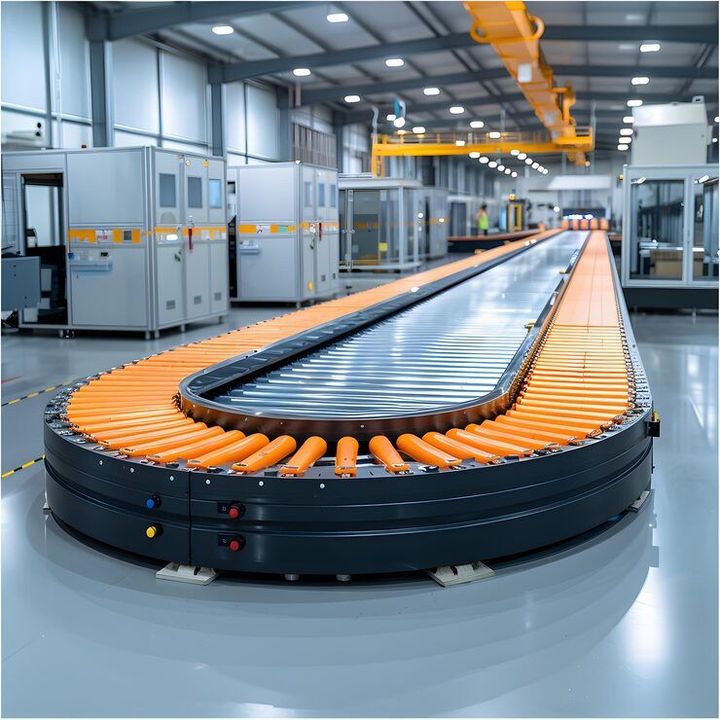
In recent years, the comparison and evaluation of vibrating screen conveyor technologies have become increasingly important due to rising automation demands, stricter workplace safety standards, and growing pressure for energy-efficient production systems. Industries are focusing on equipment that minimizes downtime, reduces contamination risk, and supports higher throughput without increasing operating costs.
Recent industrial trends show increased adoption of smart monitoring systems, predictive maintenance technologies, and vibration analytics in conveyor operations. Many facilities are integrating sensor-based monitoring and Industrial Internet of Things (IIoT) capabilities into screening systems to improve productivity and maintenance planning. At the same time, environmental regulations and sustainability goals are encouraging manufacturers to adopt lower-energy vibration technologies and recyclable equipment materials.
As industries continue modernizing production lines, vibrating screen conveyors remain a critical component for efficient and controlled material movement.Industries Affected and Problems These Systems Solve
Vibrating screen conveyors affect a wide range of industries that depend on bulk material movement and classification. Mining operations use them to separate ores and minerals by size before processing. Food manufacturers rely on sanitary vibrating conveyors for sorting grains, spices, powders, and packaged ingredients. Recycling facilities use screening conveyors to separate plastics, metals, and construction debris efficiently. Pharmaceutical companies also use precision vibrating systems to maintain contamination control and uniform material flow.
Manufacturing plants increasingly adopt vibrating screen conveyors because they support automated workflows while reducing labor-intensive handling processes. Industries dealing with fragile, hot, abrasive, or irregularly shaped materials often prefer vibration-based movement because it can reduce material damage compared with conventional belt conveyors.
These systems solve several operational problems, including:
| Common Industrial Problem | How Vibrating Screen Conveyors Help |
|---|
| Uneven material flow | Maintains controlled and consistent feed rates |
| Material clogging | Vibration reduces buildup and blockage |
| Product contamination | Enclosed systems improve cleanliness |
| Manual sorting inefficiency | Integrated screening automates separation |
| Excessive downtime | Modern systems support predictive maintenance |
| Dust generation | Sealed designs help reduce airborne particles |
| Product degradation | Gentle vibration reduces material damage |
| Space limitations | Combined screening and conveying saves floor space |
In sectors with high production demands, improper material flow can create bottlenecks that affect overall plant efficiency. Vibrating screen conveyors help stabilize throughput and improve process consistency. This becomes especially important in automated production environments where small disruptions can impact multiple downstream operations.
Recent Updates and Industry Trends
The past year has seen several notable developments in vibrating screen conveyor technologies and industrial material-handling systems.
Increased Integration of Smart Monitoring
Manufacturers are increasingly integrating sensors that monitor vibration amplitude, temperature, bearing performance, and motor efficiency in real time. These monitoring systems help maintenance teams identify wear patterns before mechanical failure occurs. Predictive maintenance strategies are becoming more common because unplanned downtime remains a major cost concern in industrial operations.
Focus on Energy Efficiency
Energy-efficient vibration motors and variable frequency drives (VFDs) are becoming more widely adopted. Industrial operators are seeking equipment that balances throughput with lower electricity consumption, especially in regions with rising industrial energy costs.
Growth in Recycling Applications
Global recycling initiatives have increased demand for advanced screening and separation equipment. Vibrating screen conveyors are now widely used in electronic waste recycling, plastic recovery systems, and construction material sorting processes.
Hygienic Conveyor Design Expansion
Food and pharmaceutical industries are adopting stainless-steel vibrating conveyors with clean-in-place (CIP) designs. These systems help companies meet stricter hygiene and contamination-control requirements while improving cleaning efficiency.
Automation and IIoT Connectivity
Industrial Internet of Things integration allows conveyor systems to share operational data with centralized plant management platforms. This trend supports remote diagnostics, process optimization, and automated reporting.
Reduced Noise and Worker Safety Improvements
Recent designs emphasize lower vibration transmission and reduced noise emissions to improve workplace safety and comply with occupational regulations. Manufacturers are investing in isolation technologies and improved frame designs to minimize structural vibration.
Comparative Table of Vibrating Screen Conveyor Types
| Conveyor Type | Primary Function | Common Industries | Advantages | Limitations |
|---|
| Linear Vibrating Conveyor | Straight material transport | Mining, agriculture | High throughput, simple design | Limited directional flexibility |
| Circular Vibrating Screen Conveyor | Material separation and grading | Construction, recycling | Efficient particle classification | Higher maintenance needs |
| Electromagnetic Vibrating Conveyor | Precise feeding control | Pharmaceuticals, chemicals | Accurate feed rates | Best for lighter materials |
| Heavy-Duty Vibrating Conveyor | Transport abrasive materials | Mining, foundries | Durable construction | Higher energy usage |
| Sanitary Vibrating Conveyor | Hygienic material handling | Food processing | Easy cleaning and contamination control | Higher equipment costs |
| Dewatering Vibrating Screen Conveyor | Removes moisture from materials | Mining, wastewater | Improves downstream processing | Requires drainage systems |
Key Operational Comparison
| Performance Factor | Belt Conveyor | Vibrating Screen Conveyor |
|---|
| Screening Capability | Limited | Integrated |
| Material Separation | External equipment needed | Built-in separation |
| Dust Control | Moderate | Often improved |
| Handling Fragile Products | Moderate | Better control possible |
| Maintenance Complexity | Lower | Moderate |
| Automation Compatibility | High | High |
| Suitable for Wet Materials | Limited | Better in some configurations |
Laws, Regulations, and Industrial Policies
Vibrating screen conveyors are influenced by workplace safety regulations, environmental policies, and manufacturing standards across multiple countries. Industrial operators must ensure that equipment installations comply with occupational safety and environmental guidelines.
Workplace Safety Regulations
Many countries enforce machinery safety requirements covering vibration exposure, moving parts protection, electrical systems, and noise control. Examples include:
-
Occupational Safety and Health Administration (OSHA) regulations in the United States
-
Machinery Directive standards in the European Union
-
Factory safety standards under industrial labor regulations in India and other Asian markets
Operators often need proper guarding systems, emergency stop mechanisms, lockout procedures, and regular inspection schedules to maintain compliance.
Dust and Environmental Controls
Industries such as mining, cement, recycling, and chemicals must comply with air-quality and dust-emission standards. Enclosed vibrating screen conveyors can help facilities reduce airborne particulate emissions and support compliance goals.
Food and Pharmaceutical Compliance
In food processing and pharmaceutical applications, conveyor systems may need to meet sanitary standards such as:
-
Food-grade stainless-steel requirements
-
Hygienic equipment certifications
-
Contamination prevention protocols
-
Cleanability standards
Energy Efficiency Programs
Some governments encourage energy-efficient manufacturing equipment through industrial modernization initiatives or sustainability programs. Facilities upgrading older conveyor systems may qualify for efficiency incentives depending on regional policies.
Practical Guidance for Industrial Operators
| Situation | Recommended Approach |
|---|
| High dust environment | Use enclosed vibrating conveyors |
| Food-grade production | Choose stainless-steel sanitary systems |
| Abrasive materials | Select heavy-duty wear-resistant designs |
| Energy cost concerns | Use variable frequency drives |
| Noise-sensitive facilities | Install vibration isolation systems |
| Automated production lines | Integrate sensor-based monitoring |
Understanding local compliance requirements before installation is essential because regulations vary significantly by country and industry sector.
Useful Tools and Resources
Several tools, software platforms, and technical resources help industries optimize vibrating screen conveyor operations.
Monitoring and Maintenance Tools
| Tool Type | Purpose |
|---|
| Vibration analyzers | Detect imbalance and wear |
| Thermal imaging devices | Identify overheating components |
| Predictive maintenance software | Forecast maintenance schedules |
| Motor monitoring systems | Track power consumption |
| Condition monitoring sensors | Provide real-time performance data |
Engineering and Design Resources
-
CAD software for conveyor layout planning
-
Material flow simulation tools
-
Industrial vibration calculators
-
Throughput estimation templates
-
Conveyor sizing software
Industrial Standards and Information Sources
| Resource Type | Use |
|---|
| Industrial engineering associations | Best practices and guidelines |
| Machinery safety manuals | Compliance reference |
| Manufacturer technical documents | Equipment specifications |
| Preventive maintenance checklists | Maintenance planning |
| Material compatibility charts | Equipment selection guidance |
Helpful Operational Practices
-
Schedule routine vibration analysis
-
Inspect springs and isolation mounts regularly
-
Monitor motor temperature trends
-
Maintain proper lubrication schedules
-
Use predictive maintenance data for planning
Digital maintenance management systems are becoming increasingly valuable for large industrial facilities because they centralize inspection data and improve maintenance coordination.
Frequently Asked Questions
What is the main purpose of a vibrating screen conveyor?
A vibrating screen conveyor moves and separates bulk materials using controlled vibration. It helps industries improve material flow, classification, and processing efficiency.
Which industries commonly use vibrating screen conveyors?
Mining, food processing, pharmaceuticals, recycling, agriculture, chemicals, and manufacturing industries frequently use these systems for material handling and screening.
Are vibrating screen conveyors energy efficient?
Modern systems can be energy efficient when equipped with variable frequency drives and optimized vibration controls. Energy usage depends on material type, throughput, and system size.
What maintenance is required for vibrating conveyors?
Common maintenance tasks include checking bearings, inspecting springs, monitoring vibration levels, lubricating components, and verifying motor performance.
How do vibrating screen conveyors improve workplace safety?
They reduce manual material handling, minimize dust exposure through enclosed designs, and support automated processes that lower worker interaction with hazardous materials.
Conclusion
Vibrating screen conveyors continue to play an important role in modern industrial material handling and screening operations. Their ability to combine material transport and separation into a single system supports improved operational efficiency, reduced labor requirements, and better production consistency across industries.
Recent developments in automation, predictive maintenance, and energy-efficient technologies are reshaping how these systems are designed and operated. Industries are increasingly prioritizing equipment that supports regulatory compliance, sustainability goals, and long-term operational reliability.
Data from industrial automation trends suggests that facilities integrating smart monitoring and predictive maintenance systems often experience lower unplanned downtime and more consistent production performance. At the same time, stricter environmental and workplace safety standards are encouraging broader adoption of enclosed and hygienic conveyor systems.
For organizations handling bulk materials, the most suitable vibrating screen conveyor depends on material characteristics, throughput requirements, hygiene standards, energy considerations, and maintenance capabilities. In high-throughput or precision-driven environments, advanced vibrating conveyor systems with automated monitoring capabilities generally provide the strongest long-term operational value.