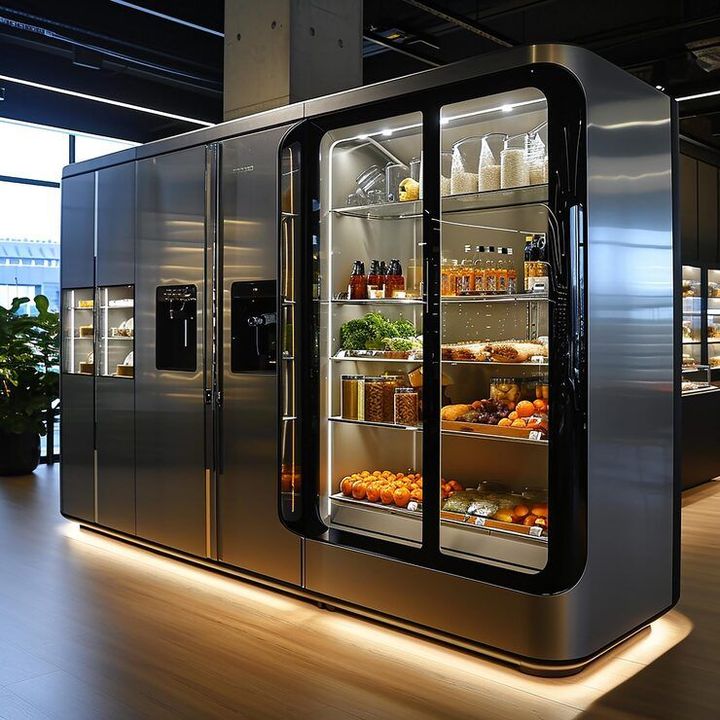
Industrial Refrigerator Guide: Types, Efficiency, and Use-Case Overview
Industrial refrigerators are large-scale cooling systems designed to preserve perishable goods under controlled temperature conditions in commercial and industrial environments. Unlike domestic refrigerators, these systems are engineered for durability, continuous operation, and high-volume storage. They are widely used in sectors such as food processing, pharmaceuticals, logistics, and hospitality, where maintaining strict temperature ranges is essential for product quality and safety.
In recent years, the relevance of industrial refrigeration has increased due to the expansion of global cold chain logistics and rising demand for temperature-sensitive products such as vaccines and fresh food. Technological advancements, including energy-efficient compressors, smart monitoring systems, and eco-friendly refrigerants, have significantly reshaped the industry. Additionally, sustainability concerns and stricter environmental regulations are influencing how these systems are designed and operated.
Understanding different types of industrial refrigerators and their performance characteristics is important for informed decision-making. A comparison-based approach helps stakeholders evaluate efficiency, cost implications, and suitability for specific applications, especially in a market where operational costs and regulatory compliance are becoming increasingly critical.
Who It Affects and What Problems It Solves
Industrial refrigeration systems impact a wide range of industries that rely on controlled temperature environments. Food manufacturers depend on them to maintain freshness and extend shelf life. Pharmaceutical companies require precise temperature control to preserve the efficacy of drugs and vaccines. Warehousing and logistics sectors use cold storage systems to ensure safe transportation and storage of perishable goods across long distances. Even retail sectors such as supermarkets and large-scale kitchens rely on these systems to manage inventory efficiently.
From an operational perspective, facility managers, engineers, and business owners are directly affected by the performance and reliability of industrial refrigerators. Poor system selection or inefficiency can lead to increased energy consumption, product spoilage, and regulatory non-compliance.
Problems It Solves
- Temperature Control: Maintains consistent cooling conditions for sensitive products
- Product Preservation: Extends shelf life and reduces wastage
- Regulatory Compliance: Ensures adherence to food safety and pharmaceutical standards
- Operational Efficiency: Supports large-scale storage and continuous operations
- Supply Chain Stability: Enables cold chain logistics for global distribution
Recent Updates and Industry Trends
The industrial refrigeration sector has undergone notable changes in the past year, driven by environmental, technological, and economic factors.
One major trend is the shift toward natural refrigerants such as ammonia (NH₃) and carbon dioxide (CO₂). These alternatives have lower global warming potential compared to traditional hydrofluorocarbons (HFCs), aligning with global sustainability goals. Many countries are gradually phasing out high-GWP refrigerants, prompting industries to upgrade or retrofit existing systems.
Another key development is the integration of IoT-enabled monitoring systems. Smart sensors now allow real-time tracking of temperature, humidity, and system performance. This helps in predictive maintenance, reducing downtime and operational risks.
Energy efficiency has also become a primary focus. Advanced compressor technologies, variable speed drives, and improved insulation materials are helping reduce energy consumption. Given that refrigeration can account for up to 50–70% of energy use in cold storage facilities, even small efficiency gains can result in significant cost savings.
Additionally, modular refrigeration systems are gaining popularity due to their scalability and flexibility, especially in growing logistics networks.
Comparison of Industrial Refrigerator Types
| Feature | Walk-In Refrigerators | Blast Freezers | Reach-In Refrigerators | Cold Storage Warehouses |
|---|---|---|---|---|
| Primary Use | Bulk storage | Rapid freezing | Quick access storage | Large-scale storage |
| Temperature Range | 0°C to 5°C | -18°C to -40°C | 0°C to 8°C | -25°C to 10°C |
| Capacity | Medium to high | Medium | Low to medium | Very high |
| Energy Consumption | Moderate | High | Low | Very high |
| Installation Cost | Moderate | High | Low | Very high |
| Best For | Restaurants, food storage | Food processing units | Commercial kitchens | Logistics and distribution |
| Cooling Speed | Standard | Very fast | Standard | Standard |
| Flexibility | Moderate | Low | High | Low |
Key Observations
- Blast freezers are ideal for industries requiring rapid temperature drops to preserve food texture and quality.
- Walk-in refrigerators offer a balance between capacity and cost, making them common in mid-scale operations.
- Reach-in units are more suited for environments requiring frequent access and limited storage.
- Cold storage warehouses are essential for large-scale logistics but come with higher operational and infrastructure costs.
Laws and Policies Impacting Industrial Refrigeration
Industrial refrigeration systems are heavily influenced by environmental and safety regulations. Governments worldwide are enforcing stricter policies to reduce emissions and improve energy efficiency.
Key Regulatory Areas
- Refrigerant Regulations: Many countries are phasing down HFCs under global agreements like the Kigali Amendment. This encourages the adoption of low-GWP refrigerants.
- Energy Efficiency Standards: Minimum energy performance standards (MEPS) are being implemented to reduce power consumption.
- Food Safety Regulations: Cold storage systems must comply with hygiene and temperature standards to ensure food safety.
- Workplace Safety: Systems using ammonia or other refrigerants must follow strict safety protocols to prevent leaks and hazards.
Practical Guidance
- Choose systems compatible with natural refrigerants to future-proof investments
- Ensure compliance with local energy standards to avoid penalties
- Implement monitoring systems for audit readiness
- Consider certified equipment that meets international safety standards
Tools and Resources
Several tools and resources can assist in selecting, managing, and optimizing industrial refrigeration systems:
- Energy Calculators: Estimate power consumption and operational costs
- IoT Monitoring Platforms: Track temperature and system performance in real time
- Maintenance Management Software: Schedule preventive maintenance and track repairs
- Industry Standards Documentation: Provides guidelines for compliance and best practices
- Simulation Tools: Help design efficient refrigeration layouts
Commonly used platforms include energy audit tools, refrigeration design software, and cloud-based monitoring dashboards that provide actionable insights for facility managers.
Frequently Asked Questions (FAQ)
What is the difference between industrial and commercial refrigerators?
Industrial refrigerators are designed for large-scale, continuous operations with higher capacity and durability, while commercial refrigerators are smaller and used in retail or food service environments.
Which type of industrial refrigerator is most energy-efficient?
Reach-in refrigerators generally consume less energy due to their smaller size, but modern walk-in units with advanced insulation and compressors can also be highly efficient.
Why are natural refrigerants becoming popular?
Natural refrigerants like ammonia and CO₂ have lower environmental impact and comply with evolving regulations, making them a sustainable choice.
How often should industrial refrigeration systems be maintained?
Routine maintenance is typically recommended every 3–6 months, depending on usage and system complexity.
What factors should be considered when choosing a system?
Key factors include storage capacity, temperature requirements, energy efficiency, regulatory compliance, and total cost of ownership.
Conclusion
Industrial refrigeration systems play a critical role in maintaining product integrity across multiple industries. The choice between different types—such as walk-in refrigerators, blast freezers, reach-in units, and cold storage warehouses—depends on operational scale, temperature requirements, and budget constraints.
Data-driven insights indicate that energy efficiency and regulatory compliance are now as important as performance. With refrigeration accounting for a significant portion of industrial energy consumption, adopting advanced technologies and eco-friendly refrigerants can lead to measurable cost savings and reduced environmental impact.
For most mid-scale operations, walk-in refrigerators offer a balanced solution. However, industries requiring rapid freezing or large-scale storage may benefit more from blast freezers or warehouse systems. Ultimately, selecting the right system requires a careful evaluation of both current needs and future regulatory trends.