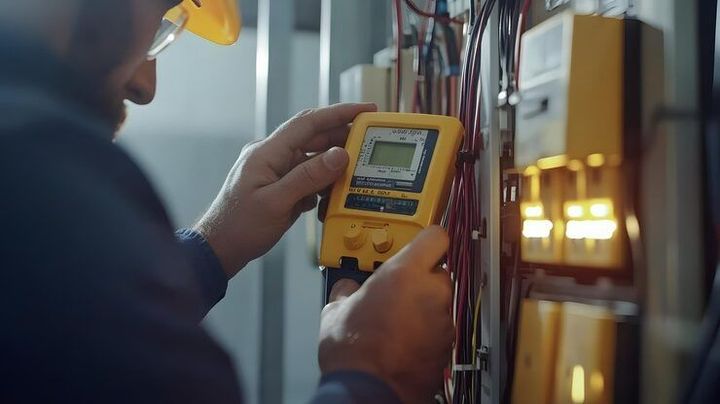
Smart Inverter Testing Equipment Guide: Explore Types, Features, Functions, Applications, and Testing Factors
Smart inverter testing equipment refers to electrical and electronic instruments used to evaluate how smart inverters perform under different operating conditions. A smart inverter can convert direct current (DC) into alternating current (AC) while also monitoring electrical conditions and, in grid-connected applications, responding to defined grid requirements.
Unlike a basic inverter test that may focus mainly on voltage, current, or output waveform, smart inverter testing can involve several functions at the same time. Testing equipment may examine conversion efficiency, power quality, protection functions, response to voltage or frequency changes, communication functions, and behavior during abnormal operating conditions.
The need for inverter testing developed alongside the wider use of power electronics, renewable energy systems, battery storage, and distributed generation. As inverter systems became more capable, test equipment also evolved to reproduce controlled electrical conditions and measure the resulting response.
What Smart Inverter Testing Equipment Does
A smart inverter test system normally creates controlled input or grid conditions and measures the inverter's response. Depending on the application, the setup can include programmable DC sources, AC grid simulators, electronic loads, power analyzers, oscilloscopes, data acquisition systems, and control software.
The equipment may be configured for laboratory testing, product development, production inspection, certification testing, or troubleshooting. The exact arrangement depends on inverter capacity, electrical architecture, applicable standards, and the functions being evaluated.
Main Types of Testing Equipment
Several categories are commonly combined in an inverter testing setup:
- DC power supplies or photovoltaic array simulators reproduce controlled DC input conditions.
- AC grid simulators reproduce voltage, frequency, phase, and disturbance conditions.
- Electronic loads absorb controlled amounts of electrical power.
- Power analyzers measure voltage, current, active power, reactive power, power factor, harmonics, and efficiency.
- Oscilloscopes capture electrical waveforms and transient behavior.
- Insulation and safety test instruments evaluate electrical protection characteristics.
- Data acquisition and software platforms record measurements and automate test sequences.
A complete laboratory system may combine several of these instruments rather than relying on one device.
Importance
Smart inverter testing equipment is important because inverter behavior can affect both the equipment itself and the electrical system to which it is connected. Testing helps determine whether an inverter responds appropriately to normal operating conditions and defined abnormal conditions.
For solar photovoltaic systems, battery storage, microgrids, and distributed energy installations, testing can involve both power-conversion performance and grid interaction. Testing laboratories such as ERDA list measurements involving maximum power point tracking, conversion efficiency, grid connectivity, low- and high-voltage ride-through, frequency-related behavior, and power quality.
What Testing Can Examine
The exact test program depends on the inverter design, but common areas include:
- Input voltage and current behavior
- AC output voltage and frequency
- Conversion efficiency
- Maximum power point tracking
- Power factor
- Harmonic distortion
- Voltage and frequency response
- Islanding prevention
- Fault detection
- Thermal behavior
- Insulation and electrical safety
- Communication and control functions
- Response to grid disturbances
Testing may be performed at different power levels to understand how the inverter behaves across its operating range.
Why Controlled Testing Matters
A laboratory test environment allows individual electrical conditions to be changed while measurements are recorded. For example, a programmable AC source can reproduce changes in voltage or frequency without relying on naturally occurring grid disturbances.
This controlled approach makes it easier to compare test results and identify how an inverter responds to a specific condition. It also helps laboratories conduct repeatable procedures where defined pass or fail criteria apply.
Smart Inverter Applications
Smart inverter testing is relevant to several areas:
| Application | Typical testing focus |
|---|---|
| Solar PV inverter | Efficiency, MPPT, grid interaction, power quality |
| Battery inverter | Charge/discharge behavior, efficiency, protection |
| Microgrid inverter | Grid support, transition behavior, synchronization |
| Grid-connected inverter | Voltage, frequency, islanding, ride-through |
| Stand-alone inverter | Output stability, load response, protection |
| Pump or motor inverter | Output control, efficiency, electrical behavior |
The equipment configuration changes according to the application and inverter capacity.
Recent Updates
From 2024 through 2026, inverter testing has increasingly focused on grid interaction, automated testing, digital monitoring, and more complex operating conditions. This reflects the growing role of inverter-based resources in photovoltaic systems, battery storage, microgrids, and distributed energy networks.
Modern test laboratories can combine programmable power sources with measurement systems and automated test software. This allows multiple operating conditions to be reproduced systematically while collecting measurements for later analysis.
Greater Grid-Interaction Testing
Grid-connected inverters increasingly need to be evaluated for their response to voltage and frequency changes. ERDA's solar inverter laboratory lists testing areas including LVRT, HVRT, FRT, and power quality, along with MPPT and conversion-efficiency measurements.
This means smart inverter testing equipment may need to reproduce more than steady-state conditions. The test system can require controlled changes in electrical conditions and sufficiently fast measurement to capture the inverter's response.
More Automated Test Procedures
Automated testing can sequence multiple test conditions through software. Instead of manually changing every parameter, a test program can control programmable sources, record measurements, and organize results.
Automation is particularly useful when a testing procedure contains many repeated conditions. It can also reduce differences caused by manual instrument adjustments.
Expanded Testing Capabilities
Current laboratory capabilities cover a broad range of inverter tests. CPRI lists testing according to standards including IS/IEC 61683, IS 16169/IEC 62116, IS 16221-1 and -2/IEC 62109-1 and -2, electromagnetic compatibility standards, and other inverter-related requirements.
BIS laboratory records also show testing provisions for electrical ratings, thermal testing, environmental requirements, protection against electrical and mechanical hazards, fire hazards, and additional tests for grid-interactive inverters under IS 16221.
Laws or Policies
In India, inverter testing can be influenced by applicable Indian Standards, safety requirements, grid-interconnection requirements, and certification or conformity-assessment procedures. The exact requirements depend on the inverter type, capacity, intended application, and applicable regulatory framework.
IS 16221 Part 1 covers general safety requirements for power converters used in photovoltaic power systems. BIS laboratory information identifies testing areas such as electrical ratings, thermal testing, environmental conditions, protection against electric shock and energy hazards, mechanical hazards, fire hazards, and grid-interactive inverter tests.
IS 16169 addresses the test procedure for islanding-prevention measures in utility-interconnected photovoltaic inverters. BIS laboratory records specifically identify tests for single- or multi-phase inverters, testing circuits, testing equipment, pass/fail criteria, and documentation.
The applicable standard should be determined from the specific inverter and its intended use. A general smart inverter testing equipment setup does not automatically establish regulatory compliance.
Safety Considerations
Electrical testing can involve high voltages, high currents, stored electrical energy, rotating equipment, and rapidly changing electrical conditions. Test laboratories therefore need appropriate isolation, protective equipment, emergency procedures, guarding, grounding, and qualified personnel.
Instrument ratings should also match the voltage, current, frequency, and power levels involved. Test procedures should follow the applicable equipment manuals, laboratory procedures, and relevant standards.
Tools and Resources
Several technical resources can help readers understand smart inverter testing equipment and testing procedures.
Power Analyzers
Power analyzers measure electrical quantities such as voltage, current, active power, reactive power, apparent power, power factor, and harmonics. Some instruments can calculate conversion efficiency by comparing input and output measurements.
Programmable Power Sources
A programmable DC source can reproduce controlled input conditions for an inverter. In solar applications, a photovoltaic array simulator can reproduce electrical characteristics associated with photovoltaic generation.
Programmable AC sources or grid simulators can reproduce changes in voltage, frequency, phase, and other grid conditions required by particular test procedures.
Oscilloscopes
Oscilloscopes provide waveform information that may not be visible from basic numerical measurements. They can help examine switching behavior, transient responses, voltage waveforms, current waveforms, and other electrical events.
Electronic Loads
Electronic loads provide controlled power demand at the inverter output. They can be programmed to reproduce different loading conditions and load changes.
Standards and Laboratory Resources
BIS provides laboratory information for relevant inverter standards, including testing provisions for photovoltaic power converters and islanding prevention.
CPRI also publishes information about inverter testing and lists indicative testing durations for several inverter-related standards. Its published information includes testing according to IS/IEC 61683, IS 16169/IEC 62116, IS 16221-1 and -2/IEC 62109-1 and -2, and other standards.
ERDA's solar inverter laboratory provides another technical reference, listing testing capabilities and standards covering efficiency, MPPT, grid connectivity, safety, and power quality.
FAQs
What is smart inverter testing equipment?
Smart inverter testing equipment is a group of electrical instruments and systems used to evaluate inverter performance, safety, efficiency, power quality, protection functions, and grid interaction under controlled conditions.
What types of smart inverter testing equipment are used?
Common equipment includes DC sources or PV array simulators, AC grid simulators, electronic loads, power analyzers, oscilloscopes, insulation testers, data acquisition systems, and automated test software.
What does smart inverter testing measure?
Testing can measure conversion efficiency, voltage, current, frequency, power factor, harmonics, MPPT behavior, thermal characteristics, protection functions, and response to specified voltage or frequency disturbances.
Why is inverter testing equipment used for solar systems?
Solar inverters interact with photovoltaic arrays and, in grid-connected installations, the electrical grid. Testing equipment can reproduce controlled input and grid conditions to evaluate how the inverter responds to normal and abnormal operating situations.
Which standards are associated with inverter testing in India?
Relevant standards can include IS 16221 for safety of power converters used in photovoltaic systems and IS 16169 for islanding-prevention testing of utility-interconnected photovoltaic inverters. Other standards may apply depending on the inverter and test requirement.
Conclusion
Smart inverter testing equipment combines controlled electrical sources, loads, measurement instruments, and software to evaluate inverter behavior. Testing can cover efficiency, power quality, safety, protection, MPPT, and grid interaction depending on the application. Recent developments have increased automation and expanded testing of grid-related functions and dynamic operating conditions. In India, applicable BIS standards and other technical requirements provide important references for inverter testing procedures and safety.