Agricultural Equipment Guide: Tractors, Harvesters, Implements and Modern Farming Technology
Agricultural equipment refers to the machines, tools, and technologies used to perform farming activities, from preparing soil and planting seeds to harvesting crops and transporting agricultural products. These tools include tractors, combine harvesters, seed drills, cultivators, irrigation equipment, sprayers, and modern automated farming systems.
Context
Agricultural equipment refers to the machines, tools, and technologies used to perform farming activities, from preparing soil and planting seeds to harvesting crops and transporting agricultural products. These tools include tractors, combine harvesters, seed drills, cultivators, irrigation equipment, sprayers, and modern automated farming systems.
Traditional farming relied heavily on human labour and animal power. As agricultural activities expanded and farms required more efficient methods, mechanical equipment became increasingly important. The development of engines, hydraulic systems, and electronic controls introduced new ways to manage agricultural operations.
Today, agricultural equipment supports different farming systems, including small family farms, large commercial farms, and specialised crop production. The equipment selected depends on factors such as land size, soil conditions, crop type, climate, and the activities required during each growing season.
Main Types of Agricultural Equipment
Agricultural machinery can be divided into several categories according to its function:
Tractors: Versatile machines used for pulling implements, transporting materials, operating attachments, and performing field operations.
Harvesters: Machines designed to collect mature crops. Combine harvesters can perform several grain-harvesting operations in a single process.
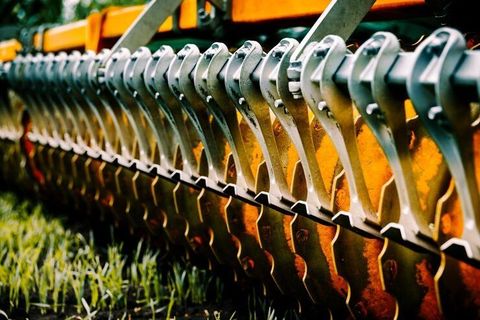
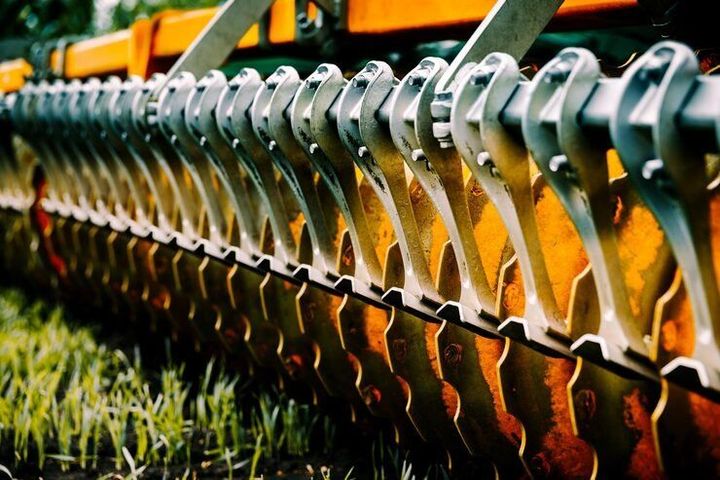
Tillage Implements: Ploughs, cultivators, harrows, and rotavators used to prepare and manage soil.
Planting Equipment: Seed drills, planters, and transplanters used to place seeds or seedlings in fields.
Irrigation Equipment: Pumps, sprinklers, drip systems, and water distribution equipment used to supply crops with water.
Crop Protection Equipment: Agricultural sprayers and related tools used to distribute approved crop-protection products.
Material Handling Equipment: Trailers, loaders, conveyors, and other machines used to move agricultural materials.
Each category performs a different function, and several types of equipment are commonly combined during a complete farming cycle.
Importance
Agricultural equipment plays an important role in modern food production. Farming involves several time-sensitive activities, including soil preparation, planting, irrigation, crop maintenance, and harvesting. Mechanical equipment helps farmers manage these activities across different field sizes and agricultural conditions.
Supporting Agricultural Productivity
Tractors and specialised machinery allow agricultural operations to cover larger areas than many traditional manual methods. Equipment such as seed drills helps maintain more consistent seed placement, while harvesters collect crops through mechanical processes.
The results depend on machine condition, operator knowledge, field preparation, weather, and crop characteristics. Machinery does not automatically produce higher yields, but it can help manage agricultural tasks more systematically.
Reducing Physical Work
Agricultural activities often involve physically demanding tasks. Machines such as loaders, tractors, mechanical planters, and harvesters can reduce the amount of manual work required for particular operations.
This is particularly relevant during planting and harvesting periods, when multiple activities may need to be completed within a limited time. However, operating machinery still requires training, supervision, and attention to safety.
Improving Farm Operations
Different agricultural implements help farmers perform specialised tasks with greater control. For example, a cultivator loosens soil, a seed drill places seeds, and a sprayer distributes liquids across designated areas.
Mechanisation also supports better coordination between farming activities. Equipment availability, maintenance schedules, fuel management, and suitable operating conditions remain important considerations.
Supporting Different Farm Sizes
Agricultural equipment is not limited to large farms. Small tractors, compact power tillers, portable irrigation pumps, and smaller implements are used in different agricultural settings.
The choice of machinery depends on available land, field layout, crop requirements, and local farming practices. Shared equipment arrangements and custom hiring facilities can also provide access to machinery where individual ownership is difficult.
Recent Updates
Agricultural equipment is changing as manufacturers, research institutions, and farming communities explore automation, digital technology, electric power, and precision-based farming methods. Developments during 2024–2026 reflect a growing interest in machinery that can perform agricultural operations with greater control and improved resource management.
Precision Agriculture and Smart Machinery
Precision agriculture uses digital information, sensors, satellite positioning, and automated equipment to manage field activities. GPS-enabled tractors can follow planned routes, while sensor-based systems monitor soil conditions, crop development, and machinery performance.
Some modern agricultural machines include electronic controls that adjust operating settings according to field conditions. These technologies can help manage seed placement, fertiliser distribution, irrigation, and crop protection activities.
Agricultural Drones
Agricultural drones are increasingly being explored for crop monitoring, field mapping, and the application of approved agricultural inputs. Equipped with cameras and sensors, they can collect information about crop growth, water stress, and variations across fields.
Drone-based agricultural operations are also receiving attention through government-supported demonstrations and mechanisation initiatives in India. Their use depends on equipment specifications, operator training, applicable aviation regulations, and agricultural requirements.
Electric Agricultural Tractors
Electric tractors represent an emerging development in agricultural machinery. They use electric motors and battery systems instead of conventional diesel engines.
Potential applications include smaller farms, orchard operations, indoor agricultural environments, and activities involving shorter operating periods. Battery capacity, charging infrastructure, machine power, and operating conditions remain important factors affecting their practical use.
India introduced the Indian Standard IS 19262:2025 for electric agricultural tractors. It establishes testing procedures covering aspects such as power performance, vibration, and component inspection.
Automation and Robotics
Agricultural robotics is being developed for activities such as planting, harvesting, weeding, and crop monitoring. Automated systems can use cameras, sensors, and computer-based controls to identify field conditions and perform specific tasks.
Robotic weeders, autonomous tractors, and automated harvesting equipment are examples of this developing technology. Their suitability varies according to crop types, field layouts, machine capabilities, and operating environments.
Machinery Sharing and Custom Hiring Centres
Shared machinery arrangements are another important development in agricultural mechanisation. Custom Hiring Centres allow farmers to access tractors, harvesters, and specialised implements without maintaining every machine individually.
This approach is particularly relevant to small and marginal farmers who operate limited or fragmented agricultural land. Government programmes in India continue to support machinery access, training, demonstrations, and shared equipment facilities.
Laws or Policies
Agricultural equipment in India is influenced by government mechanisation programmes, technical standards, machinery testing requirements, environmental rules, and aviation regulations. These frameworks address equipment quality, safe operation, agricultural development, and access to modern technology.
Sub-Mission on Agricultural Mechanization
The Government of India implements the Sub-Mission on Agricultural Mechanization (SMAM) through the Ministry of Agriculture and Farmers Welfare.
The programme aims to expand access to agricultural machinery, particularly among small and marginal farmers and in regions with lower levels of mechanisation. Its main activities include:
Financial assistance for eligible agricultural machinery and implements.
Establishment of Custom Hiring Centres.
Development of village-level Farm Machinery Banks.
Demonstrations and training programmes.
Testing and performance evaluation of agricultural equipment.
Support for appropriate mechanisation technologies in different regions.
Assistance levels and eligibility depend on the applicable scheme guidelines, equipment category, beneficiary group, and state-level implementation.
Machinery Testing and Quality Standards
Agricultural machinery testing helps evaluate equipment performance, technical specifications, and operational characteristics. India's Farm Machinery Training and Testing Institutes and other designated institutions conduct testing and training activities.
Testing is relevant to tractors, power tillers, harvesters, and various agricultural implements. Technical standards also help establish consistent methods for evaluating newer equipment, including electric agricultural tractors.
Tractor Emission Requirements
Agricultural tractors and other specified machinery are subject to applicable emission requirements under India's motor vehicle regulations. These requirements address pollutants produced by engines and establish testing procedures for relevant engine categories.
Emission standards are intended to address environmental effects associated with agricultural machinery. Applicable requirements depend on equipment classification, engine specifications, and the relevant regulatory provisions.
Drone Operation Regulations
Agricultural drones fall under India's aviation regulatory framework. The Directorate General of Civil Aviation (DGCA) oversees relevant drone requirements under the Drone Rules, 2021, and subsequent amendments.
Requirements may cover drone registration, operating permissions, pilot qualifications, airspace restrictions, and equipment categories. Agricultural drone operators must consider the applicable rules before conducting field operations.
Tools and Resources
Several digital platforms and technical resources provide information about agricultural machinery, government programmes, equipment specifications, and farming technologies.
Government Agricultural Resources
Ministry of Agriculture and Farmers Welfare: Provides information about national agricultural programmes, mechanisation policies, and farming initiatives. Website: Agriculture Ministry.
Agricultural Machinery Portal: Provides information about agricultural mechanisation, machinery-related programmes, and scheme resources. Website: Agricultural Machinery Portal.
myScheme: Helps users explore government programmes, eligibility information, and application requirements. Website: myScheme portal.
Indian Council of Agricultural Research (ICAR): Publishes agricultural research, technology information, and educational resources. Website: ICAR portal.
Practical Machinery Selection Tools
Farmers and agricultural planners can also use practical tools to understand equipment requirements:
Tractor power calculators: Help estimate the tractor power needed for particular implements and field activities.
Fuel consumption calculators: Help estimate fuel requirements based on operating hours and machine specifications.
GPS field mapping tools: Help measure field boundaries, plan machine routes, and monitor agricultural land.
Soil testing resources: Provide information about soil properties that influence tillage, planting, and fertiliser management.
Machinery maintenance records: Help organise inspection schedules, lubrication, component replacement, and equipment operating hours.
Manufacturer manuals and equipment testing reports are useful references when understanding machine specifications and operating limitations.
FAQs
What are the main types of agricultural equipment?
The main types include tractors, combine harvesters, ploughs, cultivators, seed drills, irrigation pumps, sprayers, and material-handling machines. Each performs specific tasks during different stages of agricultural production.
How are tractors used in modern farming?
Tractors are used for pulling implements, preparing soil, planting crops, transporting materials, and operating attachments. Modern tractors may include GPS navigation, electronic controls, and precision-farming technology.
What is the difference between a tractor and a combine harvester?
A tractor is a multipurpose agricultural machine that operates different implements and attachments. A combine harvester is designed primarily for harvesting grain crops by combining cutting, threshing, and separating operations.
How does modern farming technology improve agricultural operations?
Modern farming technology uses sensors, GPS, drones, automation, and digital monitoring systems. These technologies help farmers monitor fields, manage machinery, and carry out agricultural activities with greater precision.
What is the Sub-Mission on Agricultural Mechanization in India?
SMAM is a Government of India programme that promotes agricultural machinery adoption through financial assistance, equipment testing, training, demonstrations, and Custom Hiring Centres. Eligibility and assistance depend on the applicable guidelines.
Conclusion
Agricultural equipment plays an important role in modern farming, supporting activities such as soil preparation, planting, irrigation, and harvesting. Tractors, harvesters, and specialised implements perform different functions throughout the agricultural production cycle. Modern developments involving electric tractors, agricultural drones, GPS, and automation are expanding the range of available farming technologies. Government programmes and technical standards also influence machinery access, quality, and agricultural mechanisation in India.