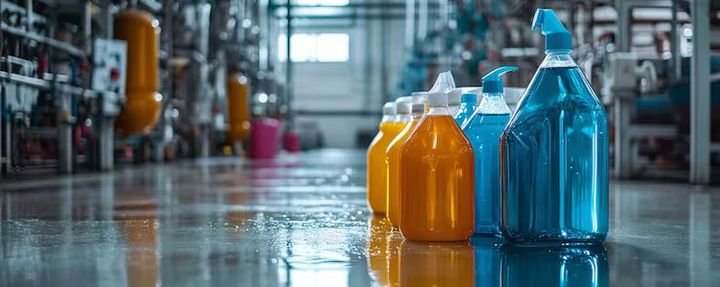
Industrial Solvents Guide: Explore Types, Properties, Applications, Safety, and Handling Factors
Industrial solvents are chemical substances used to dissolve, dilute, extract, clean, or otherwise process other materials. They are used across manufacturing, coatings, adhesives, printing, electronics, textiles, pharmaceuticals, laboratories, and many other industrial activities. An industrial solvents guide helps explain the different solvent groups, their physical and chemical properties, common applications, and the factors that influence safe handling.
Solvents can be liquids at room temperature or may be supplied as mixtures containing several chemical components. Their ability to interact with oils, resins, polymers, pigments, grease, and other substances makes them useful in many production processes.
The term “solvent” describes a function rather than one specific chemical. Water is a common solvent, while industrial processes may use organic solvents such as alcohols, ketones, esters, hydrocarbons, and glycol ethers. Each group behaves differently because of its chemical structure.
How Industrial Solvents Work
A solvent works by interacting with another substance at a molecular level. When the interaction is suitable, the material can dissolve or become dispersed within the solvent, producing a more uniform mixture.
Solvent selection depends on factors such as polarity, evaporation rate, boiling point, flash point, chemical compatibility, viscosity, and interaction with the material being processed. The same solvent may therefore be suitable for one application but inappropriate for another.
Common Solvent Categories
Industrial solvents can be grouped according to their chemical characteristics. Common categories include:
- Alcohols, such as ethanol and isopropanol, which are used in cleaning and formulation applications.
- Ketones, such as acetone and methyl ethyl ketone, which can dissolve many resins, coatings, and organic materials.
- Esters, which are widely used in coatings, inks, adhesives, and related formulations.
- Hydrocarbon solvents, which include aliphatic and aromatic compounds used in cleaning and formulation processes.
- Glycol ethers, which can provide useful combinations of solvency and controlled evaporation.
- Water-based solvents or aqueous systems, which use water as the primary liquid medium.
Each category contains substances with different hazards and performance characteristics, so chemical identity is important when assessing a particular product.
Importance
Industrial solvents support numerous processes where materials need to be dissolved, cleaned, extracted, diluted, or deposited in a controlled form. They can influence production efficiency, surface quality, drying behavior, and the consistency of formulated materials.
They are relevant to workers, facility managers, manufacturers, environmental personnel, and consumers because some solvents can present health, fire, environmental, or chemical-compatibility hazards when improperly handled.
Applications of Industrial Solvents
Industrial solvents are used in many areas, including:
- Paints and coatings for dissolving or dispersing formulation ingredients.
- Adhesives for controlling viscosity and helping distribute adhesive components.
- Printing inks for dissolving resins, pigments, and other ingredients.
- Metal cleaning for removing grease, oils, and residues.
- Electronics manufacturing for cleaning selected components and production surfaces.
- Textile processing for particular cleaning, dyeing, or finishing operations.
- Chemical manufacturing for reactions, extraction, separation, and purification.
- Laboratory operations for cleaning equipment and preparing chemical mixtures.
The required solvent characteristics depend on the specific process. Evaporation speed, chemical stability, material compatibility, and worker exposure considerations can all affect the selection process.
Important Solvent Properties
Several properties help determine how a solvent behaves during industrial use.
Polarity describes how electrical charge is distributed within a molecule and influences which substances a solvent can dissolve.
Boiling point indicates the temperature at which a liquid changes into vapor at a specified pressure. It can influence evaporation and recovery processes.
Flash point is particularly important for fire safety. It describes the lowest temperature at which a liquid can produce enough vapor to form an ignitable mixture with air under specified test conditions.
Vapor pressure indicates how readily a substance enters the vapor phase. Higher vapor pressure can result in greater vapor formation under comparable conditions.
Viscosity describes resistance to flow and can influence pumping, mixing, spraying, and coating behavior.
Solubility indicates how readily a substance dissolves in another substance under specified conditions.
Health and Environmental Considerations
Solvent exposure can occur through inhalation, skin contact, eye contact, or accidental ingestion. The potential effects vary substantially between chemicals and depend on factors such as concentration, exposure duration, route of exposure, and individual circumstances.
Some solvents can irritate the skin, eyes, or respiratory system, while particular chemicals may have more serious effects after repeated or high exposure. For this reason, chemical-specific safety information should always be reviewed before use.
Some solvents can also contribute to air pollution through volatile organic compound emissions. Environmental controls may therefore include ventilation, closed processing equipment, vapor recovery, substitution with less hazardous materials, or other emission-control measures.
Recent Updates
From 2024 through 2026, industrial solvent management has increasingly focused on exposure reduction, environmental emissions, safer chemical selection, and process control. Many industrial organizations are examining ways to reduce volatile organic compound emissions and limit unnecessary worker exposure.
One continuing trend is the development and use of water-based, high-solids, low-volatility, and other alternative formulations where they can meet process requirements. These approaches do not eliminate the need for chemical safety because alternative formulations can still contain substances requiring appropriate controls.
Another development is greater use of closed systems and automated dispensing. Automated equipment can reduce direct handling and can help control the amount of solvent introduced into a process.
Digital chemical-management systems are also increasingly used to organize safety data sheets, inventory information, exposure documentation, and regulatory records. These systems can make it easier for facilities to identify chemicals and review their associated requirements.
Safer Process Design
Modern chemical safety increasingly emphasizes controlling hazards at the source. Examples include closed transfer systems, local exhaust ventilation, automated dosing, improved containment, and process isolation.
Personal protective equipment remains important, but it is generally used as part of a broader control strategy rather than as the only method of protection.
Changing Solvent Formulations
Industrial formulators continue to examine alternatives based on factors such as toxicity, flammability, volatility, environmental impact, performance, and regulatory requirements.
A substitute is not automatically safer simply because it has lower volatility or a different chemical name. A complete assessment should consider the hazards and operating conditions of the replacement substance.
Laws or Policies
Industrial solvent requirements vary according to the chemical, workplace activity, quantity, storage method, emissions, waste characteristics, and country or state involved. In India, several regulatory frameworks can apply to chemical handling and industrial operations.
The Occupational Safety, Health and Working Conditions Code, 2020 provides a national framework covering occupational safety, health, and working conditions. Its implementation and related rules should be considered alongside applicable requirements for specific workplaces and activities.
The Manufacture, Storage and Import of Hazardous Chemicals Rules, 1989 address hazardous chemical management in India. These rules include provisions concerning the identification and control of major accident hazards and information relating to hazardous chemicals.
The Environment (Protection) Act, 1986 provides a broader legal framework for environmental protection, while rules and notifications made under it can address emissions, hazardous substances, waste, and industrial activities.
Chemical classification and workplace communication also depend on accurate safety information. Safety Data Sheets, commonly known as SDS documents, provide information about hazards, handling, storage, exposure controls, accidental release measures, and disposal considerations.
Businesses operating with industrial solvents should check the specific legal requirements applicable to their location, chemical inventory, process, storage quantity, and workplace conditions. Regulatory obligations can change, so current government notifications and applicable standards should be consulted.
Tools and Resources
Several resources can help readers understand and manage industrial solvents.
Safety Data Sheets
An SDS is one of the primary resources for understanding a specific chemical. It generally provides information about hazards, composition, first-aid measures, fire-fighting measures, accidental-release procedures, handling, storage, exposure controls, physical properties, stability, and toxicological information.
The SDS should correspond to the exact chemical or formulated product being used rather than a general solvent category.
Chemical Compatibility Charts
Compatibility charts can help assess whether a solvent is suitable for contact with materials such as plastics, elastomers, metals, coatings, seals, and containers. These references are useful because some solvents can soften, swell, dissolve, or otherwise damage certain materials.
Exposure and Ventilation Resources
Workplace exposure information can help identify appropriate engineering controls and ventilation requirements. Occupational safety authorities and industrial hygiene references can provide guidance on exposure limits and control methods.
Chemical Inventory Records
A chemical inventory can record the chemical name, quantity, location, supplier information, SDS availability, storage requirements, and relevant hazard classifications. A structured inventory can also support workplace inspections and regulatory documentation.
Basic Solvent Comparison Table
| Property | What it indicates | Why it matters |
|---|---|---|
| Polarity | Molecular charge distribution | Influences dissolving ability |
| Boiling point | Evaporation temperature | Affects drying and recovery |
| Flash point | Ignition-related vapor behavior | Important for fire controls |
| Vapor pressure | Tendency to form vapor | Relevant to exposure and emissions |
| Viscosity | Resistance to flow | Affects pumping and application |
| Solubility | Ability to dissolve in another substance | Helps determine formulation compatibility |
| Chemical stability | Resistance to chemical change | Relevant to storage and process conditions |
FAQs
What are industrial solvents?
Industrial solvents are substances used to dissolve, dilute, clean, extract, or process other materials. They include several chemical families, such as alcohols, ketones, esters, hydrocarbons, glycol ethers, and aqueous systems.
What are the main types of industrial solvents?
Common types include alcohol solvents, ketones, esters, hydrocarbon solvents, glycol ethers, and water-based systems. Their properties and appropriate applications differ according to their chemical structure.
What are industrial solvents used for?
Industrial solvents are used in applications such as coatings, adhesives, printing inks, metal cleaning, electronics manufacturing, chemical processing, textiles, and laboratory activities.
How should industrial solvents be handled safely?
Safe handling depends on the specific chemical. Relevant SDS information should be reviewed, suitable ventilation and containment should be provided, incompatible materials should be separated, ignition sources should be controlled where applicable, and appropriate protective equipment should be used.
Why is the flash point important for industrial solvents?
Flash point helps indicate how easily a liquid can produce ignitable vapor under specified conditions. It is an important consideration when assessing fire hazards, storage conditions, ventilation, and ignition-source controls.
Conclusion
Industrial solvents are used for dissolving, cleaning, extracting, diluting, and processing materials across many industries. Their properties, including polarity, boiling point, flash point, vapor pressure, viscosity, and chemical compatibility, influence their practical applications and hazards. Recent developments have emphasized exposure reduction, emission control, automated handling, and alternative formulations. Proper solvent management depends on chemical-specific safety information, applicable workplace controls, environmental requirements, and current regulations.