Oil Filling Machine Guide: Explore Types, Components, Filling Methods, Applications, and Capacity Factors
An oil filling machine is equipment designed to transfer a measured quantity of liquid oil from a storage tank or supply system into containers such as bottles, jars, cans, pouches, or drums. Oil filling machines are used in food processing, cosmetics, pharmaceuticals, chemicals, lubricants, and other industries where liquid products need controlled and repeatable filling.
The basic idea is simple: oil is supplied to the machine, measured according to a selected filling method, and directed through one or more nozzles into containers. Modern systems can perform filling as part of a larger packaging line that may also include container handling, capping, labeling, and inspection.
Oil filling equipment developed from manual and semi-automatic methods that required operators to measure and transfer liquids individually. As production volumes increased, mechanical and electronic systems became more common because they could coordinate container movement and liquid dispensing.
How an Oil Filling Machine Works
A typical oil filling machine begins with oil stored in a tank or connected supply vessel. A pump, gravity system, or combination of components moves the liquid toward the filling heads.
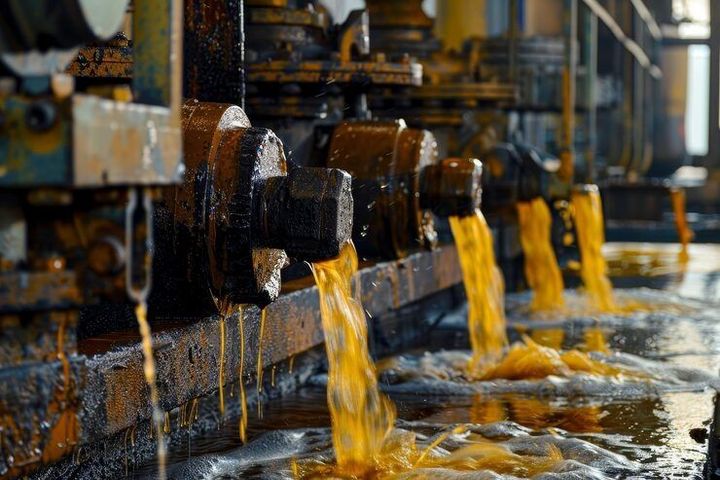
Containers are positioned below the nozzles, and the machine releases a predetermined amount of oil. Depending on the design, the quantity may be controlled by a piston, flow meter, timing system, weighing mechanism, or volumetric chamber.
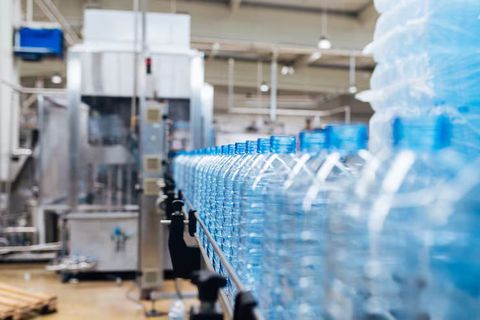
After filling, the container moves to the next stage of the packaging process. In an automated line, sensors and programmable controls coordinate container positioning, filling, and movement.
Common Oil Products
Oil filling machines can handle different liquid products when the machine configuration is appropriate. Examples include:
- Edible vegetable oils
- Cooking oils
- Olive and specialty food oils
- Cosmetic oils
- Essential-oil formulations
- Lubricating oils
- Hydraulic and industrial oils
- Certain chemical liquids
The physical properties of the liquid are important. Viscosity, temperature, foaming behavior, density, and sensitivity to contamination can influence the filling method and machine configuration.
Importance
Accurate liquid filling is important because container quantity affects product consistency, packaging operations, inventory records, and regulatory declarations. An oil filling machine helps control the amount transferred into each container while reducing repetitive manual measurement.
The equipment also matters for production environments where containers must be filled at a consistent rate. A suitable filling system can coordinate multiple nozzles, container spacing, liquid supply, and filling cycles.
Problems Addressed by Oil Filling Equipment
Manual liquid filling can involve repeated measuring and pouring, which may create differences between individual containers. Automated and semi-automatic systems use mechanical or electronic controls to establish a repeatable filling process.
Oil can also behave differently depending on temperature and viscosity. A machine designed around the properties of the particular oil can use appropriate pumps, pipes, valves, and nozzles to manage these characteristics.
Who Uses Oil Filling Machines?
Oil filling equipment is used by organizations involved in food packaging, personal-care products, industrial fluids, chemical processing, and other liquid-product applications. The required machine configuration depends on the product and container rather than simply the word “oil.”
For example, edible oil may require hygienic construction and food-contact considerations, while industrial lubricants may require different materials, seals, pumps, and container-handling arrangements.
Types of Oil Filling Machines
Different oil filling machine types use different mechanisms to measure and transfer liquid. The main categories are based on the filling principle and level of automation.
Volumetric Filling Machines
Volumetric systems fill containers according to a defined volume. Piston fillers and other measured-volume systems are common examples.
A piston moves through a chamber and draws in a predetermined amount of liquid before directing it toward the container. These systems can be suitable for liquids with moderate or higher viscosity, depending on the equipment design.
Gravity Filling Machines
Gravity filling uses the difference in height between the liquid supply and container to move oil through the filling system. The method has a relatively simple operating principle and can be appropriate for liquids that flow readily.
Filling speed and accuracy depend on factors such as liquid viscosity, tank level, nozzle design, and filling time.
Pump-Based Filling Machines
Pump-based systems use a pump to move oil from the supply tank to the filling nozzles. Different pump designs can be selected according to viscosity, flow requirements, and product characteristics.
Pump-based filling is useful when the liquid requires controlled movement rather than relying primarily on gravity.
Flow Meter Filling Machines
Flow meter systems measure the amount of liquid passing through a defined flow path. The control system can stop the filling cycle after the programmed quantity is reached.
This approach can be useful where electronic measurement and automated control are required.
Weighing-Based Filling Machines
A weight-based system measures the container and liquid together or measures the liquid quantity through a weighing arrangement. Because mass and volume are different physical measurements, this method can be useful when density changes need to be considered.
Main Components of an Oil Filling Machine
Although machine designs vary, several components appear frequently.
Storage and Supply Tank
The tank holds the oil before filling. Its capacity depends on the production setup and the expected filling cycle. Tanks may include level sensors, covers, mixing arrangements, or temperature-control features when required by the product.
Pump
A pump moves oil through the system when gravity alone is insufficient. Pump selection depends on viscosity, flow rate, pressure requirements, and compatibility with the liquid.
Filling Nozzles
Nozzles direct oil into containers. Their shape, diameter, number, and operating mechanism influence filling speed, dripping behavior, and container compatibility.
Valves and Piping
Valves regulate liquid movement through the filling system. Pipes and hoses connect the supply tank, pump, valves, and filling heads. Materials must be suitable for the particular liquid and operating conditions.
Sensors and Controls
Sensors can detect containers, monitor liquid levels, and coordinate machine movement. A programmable control system can manage filling cycles, conveyor movement, nozzle operation, and other machine functions.
Conveyor or Container Holder
Automated systems may use conveyors to move containers into position. Smaller systems may use fixtures or manually positioned holders instead.
Filling Methods and Capacity Factors
The filling method directly affects machine operation and the type of container that can be handled. Capacity is not determined only by the number of containers processed per hour.
Important factors include container size, oil viscosity, number of filling heads, filling volume, machine speed, product temperature, nozzle design, pump characteristics, and the time required to position containers.
| Capacity factor | Effect on filling operation |
|---|---|
| Container volume | Determines the amount dispensed during each cycle |
| Number of nozzles | Can affect the number of containers processed per cycle |
| Filling speed | Influences cycle duration |
| Oil viscosity | Affects liquid flow through pipes and nozzles |
| Pump capacity | Influences liquid movement and supply rate |
| Nozzle size | Affects flow characteristics |
| Container shape | Influences positioning and nozzle alignment |
| Product temperature | Can change viscosity and flow behavior |
| Conveyor speed | Determines container movement through the line |
| Changeover requirements | Can affect production time between products or container sizes |
A machine's stated capacity should therefore be understood in relation to its operating conditions. A theoretical filling rate may differ from practical throughput when container positioning, product characteristics, inspection, and other packaging stages are included.
Small, Medium, and High-Volume Systems
Small-scale systems are often designed for limited production environments and may use manual container positioning. Semi-automatic machines combine operator involvement with automated filling.
High-volume systems can use multiple filling heads, continuous conveyors, automatic container detection, and integrated control systems. The actual throughput depends on the complete packaging line and not only the filling head.
Recent Updates
From 2024 through 2026, liquid filling technology has continued moving toward automation, electronic monitoring, flexible production, and integration with broader packaging systems. Machines increasingly use programmable controls, digital displays, sensors, and automated container detection to coordinate filling cycles.
Another general trend is the use of servo-driven systems and electronic measurement for applications that require controlled movement. Such systems can allow machine parameters to be adjusted through digital controls rather than relying entirely on mechanical adjustments.
Flexible packaging lines are also becoming more relevant where different container sizes or liquid products are processed on the same equipment. Adjustable nozzles, programmable filling volumes, and recipe-based controls can simplify changes between operating configurations.
For food applications in India, regulatory developments also continue to affect packaging and labeling requirements. FSSAI's current regulations portal lists the Food Safety and Standards (Packaging) Regulation, 2018 and Food Safety and Standards (Labelling and Display) Regulations, 2020, along with amendments and related material.
The Department of Consumer Affairs also maintains current material concerning Legal Metrology (Packaged Commodities) Rules and amendments, including the 2023 amendment rules.
Laws or Policies
In India, packaged oil can be affected by food-safety, labeling, packaging, and legal-metrology requirements. The exact requirements depend on the type of oil, intended use, packaging format, and whether the product is classified as food or a non-food industrial liquid.
For edible oils, FSSAI regulations address food safety and packaging-related requirements. FSSAI's current regulatory resources include provisions covering packaging and labeling, while its product-standard resources identify regulations relating to food products and food safety.
Legal Metrology rules are also relevant to pre-packaged commodities. The Department of Consumer Affairs states that the Legal Metrology framework covers registration and other matters concerning manufacturers, packers, and importers of packaged commodities.
The department has specifically addressed edible oil quantity declarations. Its guidance states that edible oil, vanaspati, ghee, and butter oil may be declared by weight or volume under the relevant provisions, and it discusses the relationship between volume, temperature, and density.
The Legal Metrology (Packaged Commodities) Amendment Rules, 2022 also introduced changes concerning unit sale-price declarations for pre-packaged commodities, with the amended provisions taking effect from October 2022.
Packaging requirements should therefore be considered alongside the filling process. The machine should be configured so that the measured quantity corresponds with the applicable declaration and quality requirements for the packaged product.
Tools and Resources
Several resources can help readers understand oil filling equipment and packaging requirements.
Filling Capacity Calculators
A basic production calculation can estimate theoretical throughput by considering container quantity, filling heads, and cycle duration. For example, if a machine fills four containers during one cycle and completes 15 cycles per minute, the theoretical rate would be 60 containers per minute before accounting for interruptions and other line activities.
Machine Manuals
Technical manuals provide information about operating ranges, component specifications, filling adjustments, electrical controls, cleaning procedures, and safety requirements. The manual for the particular machine should be used when interpreting technical limits.
FSSAI Resources
FSSAI maintains regulations, standards, notifications, and guidance relating to food safety and packaging. Its current regulations section can be used to review applicable food-related requirements.
Legal Metrology Resources
The Department of Consumer Affairs provides Legal Metrology information, including the Packaged Commodities Rules, amendments, FAQs, and related documents. These materials are useful when examining quantity declarations and packaging requirements in India.
Process Records
A filling-process record can contain information such as:
- Oil type and viscosity
- Container size
- Target filling quantity
- Filling method
- Number of nozzles
- Machine speed
- Product temperature
- Observed filling variation
- Cleaning and inspection records
These records can help explain how operating conditions affect filling performance.
FAQs
What is an oil filling machine?
An oil filling machine is equipment used to transfer a measured quantity of oil into containers. Depending on its design, it may use gravity, pistons, pumps, flow meters, or weighing systems.
How does an oil filling machine work?
The machine receives oil from a supply tank, measures or controls the required quantity, and directs the liquid through filling nozzles into containers. Sensors and controls may coordinate container positioning and the filling cycle.
What are the main oil filling machine types?
Common types include volumetric, gravity, pump-based, flow meter, and weighing-based filling machines. The appropriate method depends on liquid properties, container format, required filling quantity, and production conditions.
What factors determine oil filling machine capacity?
Capacity depends on filling volume, number of nozzles, filling speed, oil viscosity, pump characteristics, container size, conveyor movement, product temperature, and cycle time. Practical throughput can also be affected by container handling and changeovers.
What rules apply to edible oil filling in India?
Edible oil packaging can be subject to FSSAI food-safety and labeling requirements as well as Legal Metrology requirements concerning packaged commodities and quantity declarations. The applicable rules depend on the product and packaging arrangement.
Conclusion
An oil filling machine transfers controlled quantities of liquid into containers using methods such as volumetric measurement, gravity, pumping, flow measurement, or weighing. Its main components include supply tanks, pumps, valves, nozzles, sensors, controls, and container-handling equipment. Machine capacity depends on several interacting factors, including filling volume, viscosity, nozzle configuration, cycle time, and container format. In India, edible oil packaging is also influenced by FSSAI requirements and Legal Metrology rules concerning packaged commodities and quantity declarations.