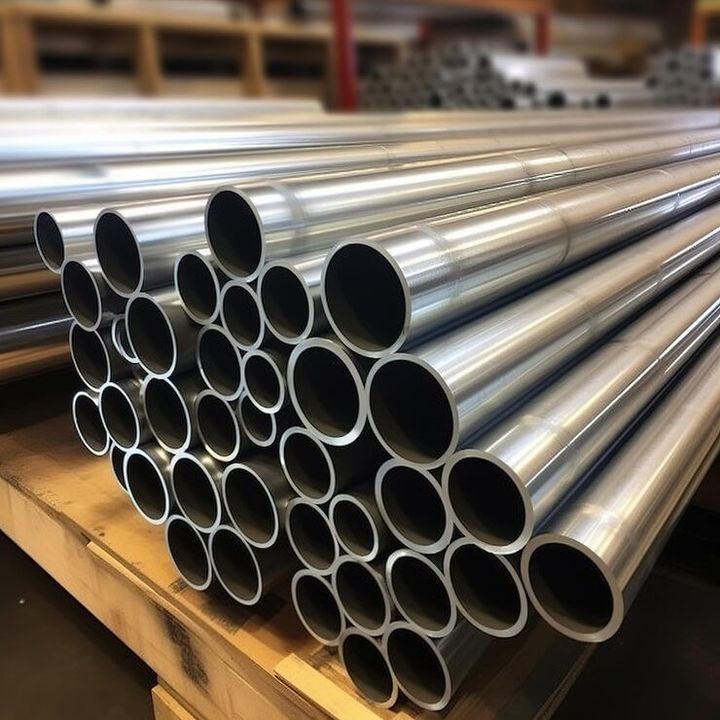
The growing demand for durable industrial materials has increased interest in Inconel tubing across global manufacturing sectors. Industries are operating equipment at higher temperatures and under more aggressive chemical conditions, creating the need for alloys that can maintain structural integrity over long operational cycles. Inconel alloys, particularly grades such as Inconel 600, 625, and 718, are known for their ability to resist scaling, pitting, and stress corrosion cracking.
Recent industrial trends show rising adoption of advanced alloy tubing in renewable energy, hydrogen processing, aerospace propulsion systems, and offshore drilling operations. As environmental regulations tighten and operational reliability becomes more important, industries are prioritizing long-lasting materials that reduce downtime and maintenance frequency. Inconel tubing has therefore become an important engineering solution for modern high-performance infrastructure.
Industries Affected and Problems Inconel Tubing Solves
Inconel tubing is used across a broad range of industrial sectors that rely on stable performance under demanding operating conditions. Aerospace manufacturers use Inconel tubing in jet engines and exhaust systems because of its thermal stability and oxidation resistance. Oil and gas facilities use these tubes on offshore platforms, in subsea equipment, and in refineries, where exposure to saltwater and corrosive chemicals is common. Chemical processing plants depend on Inconel tubing for transporting acids, alkalis, and high-temperature fluids.
Power generation facilities, especially nuclear and thermal plants, also use Inconel tubing in steam generators and heat transfer systems. Marine engineering applications benefit from its corrosion resistance in seawater environments. In pharmaceutical and food processing industries, certain Inconel grades are selected for hygienic and high-purity systems requiring strong contamination resistance.
Problems Inconel Tubing Helps Solve
| Industrial Challenge | How Inconel Tubing Helps |
|---|
| High-temperature equipment failure | Maintains strength at elevated temperatures |
| Corrosion from chemicals and seawater | Offers strong oxidation and corrosion resistance |
| Frequent maintenance shutdowns | Extends operational lifespan |
| Stress cracking in pressure systems | Improves structural durability |
| Material degradation in extreme environments | Provides thermal and mechanical stability |
| Heat exchanger inefficiency | Enhances thermal performance |
Traditional carbon steel and some stainless steel grades can weaken or corrode under aggressive operating conditions. Inconel tubing reduces the risk of leaks, fractures, and unexpected system failures, making it valuable in safety-critical industries.
Recent Updates and Industry Trends
Over the past year, the industrial alloy market has experienced several notable developments related to Inconel tubing and nickel-based materials.
Increased Demand from Energy and Hydrogen Projects
Hydrogen infrastructure projects have expanded globally, particularly in Europe, North America, and the Asia-Pacific regions. Hydrogen processing systems often require corrosion-resistant alloys capable of handling high-pressure environments. Inconel tubing is increasingly used in hydrogen fuel systems, reformers, and high-temperature pipelines.
Aerospace Manufacturing Expansion
The aerospace industry continues to adopt advanced superalloys to improve fuel efficiency and engine durability. Aircraft manufacturers are focusing on lighter, heat-resistant materials that can withstand higher combustion temperatures. This trend supports ongoing demand for Inconel tubing in turbine and exhaust applications.
Supply Chain and Nickel Pricing Volatility
Nickel market fluctuations have influenced alloy pricing worldwide. Since Inconel contains a high percentage of nickel, tubing costs have experienced periodic increases due to raw material supply challenges and mining disruptions. Manufacturers are therefore improving recycling processes and exploring material optimization strategies.
Growth in Additive Manufacturing
Industrial manufacturers are increasingly experimenting with additive manufacturing techniques for nickel alloys. Although tubing is still mainly produced through traditional methods, additive manufacturing research is influencing future design flexibility for customized industrial components.
Sustainability and Equipment Longevity
Industries are placing greater emphasis on equipment longevity and lifecycle efficiency. Longer-lasting tubing systems reduce replacement frequency and industrial waste generation, aligning with sustainability objectives in manufacturing and energy sectors.
Inconel Tubing Comparison Table
| Feature | Inconel 600 | Inconel 625 | Inconel 718 |
|---|
| Primary Composition | Nickel-Chromium | Nickel-Chromium-Molybdenum | Nickel-Chromium with Niobium |
| Corrosion Resistance | High | Very High | High |
| High-Temperature Strength | Good | Excellent | Excellent |
| Common Temperature Range | Up to 1093°C | Up to 982°C | Up to 700°C |
| Weldability | Good | Excellent | Moderate |
| Typical Industries | Chemical Processing | Marine, Oil & Gas | Aerospace |
| Oxidation Resistance | Strong | Strong | Strong |
| Pressure Resistance | Moderate | High | Very High |
| Typical Applications | Furnaces, Heat Treating | Offshore Equipment | Turbine Engines |
Mechanical and Performance Characteristics
| Property | Inconel Tubing Performance |
|---|
| Tensile Strength | High under extreme temperatures |
| Fatigue Resistance | Suitable for cyclic stress environments |
| Thermal Expansion | Moderate compared to stainless steel |
| Oxidation Resistance | Effective in high-temperature atmospheres |
| Fabrication Capability | Can be welded and formed with specialized processes |
| Lifespan | Long operational durability |
Laws, Standards, and Industrial Policies
Inconel tubing applications are influenced by industrial standards, safety regulations, and engineering compliance requirements in different countries.
International Manufacturing Standards
Several global organizations establish standards for nickel alloy tubing:
-
ASTM standards regulate material composition and testing requirements.
-
ASME codes influence pressure vessel and piping applications.
-
ISO standards support international manufacturing consistency.
-
NACE guidelines address corrosion resistance requirements in oil and gas environments.
These standards help ensure tubing reliability, dimensional accuracy, and operational safety.
Environmental and Industrial Safety Regulations
Governments and industrial agencies increasingly enforce stricter environmental and workplace safety regulations. Facilities handling hazardous chemicals or high-pressure systems often require certified corrosion-resistant materials to minimize operational risks.
For example:
| Sector | Regulatory Focus |
|---|
| Oil & Gas | Corrosion prevention and leak reduction |
| Aerospace | High-temperature material reliability |
| Nuclear Energy | Radiation and heat resistance |
| Marine Engineering | Saltwater corrosion protection |
| Chemical Processing | Safe handling of reactive substances |
Practical Guidance for Material Selection
Different situations require different Inconel grades:
-
Inconel 600 is often suitable for general heat and oxidation resistance.
-
Inconel 625 performs well in marine and highly corrosive environments.
-
Inconel 718 is commonly selected for aerospace systems requiring high mechanical strength.
Engineers typically evaluate:
-
Operating temperature
-
Pressure conditions
-
Chemical exposure
-
Maintenance frequency
-
Regulatory requirements
-
Long-term lifecycle costs
Selecting the wrong alloy can increase maintenance risks and operational downtime.
Tools and Resources for Inconel Tubing Applications
Several tools and technical resources help engineers, manufacturers, and procurement teams evaluate Inconel tubing systems more effectively.
Engineering and Design Tools
| Tool Type | Purpose |
|---|
| Material Selection Software | Compare alloy properties |
| Corrosion Calculators | Predict environmental resistance |
| Pressure Rating Calculators | Verify system safety |
| CAD Software | Design tubing layouts |
| Finite Element Analysis Tools | Simulate stress and temperature behavior |
| Thermal Analysis Software | Evaluate heat transfer performance |
Useful Technical Resources
| Resource | Use Case |
|---|
| ASTM Material Databases | Alloy specifications |
| ASME Boiler & Pressure Vessel Code | Pressure system compliance |
| NACE Standards | Corrosion management |
| Industrial Metallurgy Handbooks | Material reference data |
| Manufacturer Technical Datasheets | Mechanical and chemical properties |
| Engineering Journals | Research and performance studies |
Common Industry Services
-
Non-destructive testing (NDT)
-
Heat treatment analysis
-
Alloy certification inspection
-
Ultrasonic testing
-
Tube bending and fabrication consulting
-
Corrosion assessment services
These resources help improve system reliability and reduce design errors during project planning.
Frequently Asked Questions
What is Inconel tubing mainly used for?
Inconel tubing is primarily used in high-temperature and corrosive environments such as aerospace engines, chemical plants, offshore platforms, and heat exchangers.
Why is Inconel tubing more expensive than stainless steel?
Inconel contains high amounts of nickel and specialized alloying elements that improve heat and corrosion resistance. Manufacturing complexity and raw material costs also contribute to higher pricing.
Which Inconel grade is best for marine environments?
Inconel 625 is widely preferred for marine and offshore applications because of its strong resistance to saltwater corrosion and pitting.
Can Inconel tubing handle extreme temperatures?
Yes. Many Inconel grades maintain structural integrity at temperatures exceeding 900°C, depending on the specific alloy and operating conditions.
Is Inconel tubing difficult to machine?
Compared to standard steel, Inconel alloys are more challenging to machine because of their hardness and heat resistance. Specialized cutting tools and machining techniques are often required.
Conclusion
Inconel tubing plays an increasingly important role in modern industrial systems that operate under extreme heat, pressure, and corrosive conditions. Its unique combination of oxidation resistance, mechanical strength, and long-term durability makes it valuable across aerospace, energy, marine, and chemical processing industries.
Recent industrial trends show growing demand for nickel-based alloys due to expansion in hydrogen infrastructure, advanced manufacturing, and high-efficiency energy systems. Although material costs remain higher than conventional metals, many industries consider Inconel tubing a practical long-term investment because of reduced maintenance requirements and improved operational reliability.
For environments involving aggressive chemicals, elevated temperatures, or continuous mechanical stress, selecting the correct Inconel grade can significantly improve safety, performance, and equipment lifespan. Engineers and procurement teams should evaluate operational conditions carefully and align material choices with applicable industry standards and compliance requirements.