Fuel Cell Stack Assemblers Guide: Explore Types, Components, Processes, Applications, and Safety Factors
Fuel cell stack assemblers are specialized machines, tools, and production systems used to assemble the layers and components that form a fuel cell stack. A fuel cell stack combines multiple individual cells to generate electrical power through an electrochemical reaction. Understanding fuel cell stack assembly helps explain how individual components are aligned, compressed, connected, and inspected before a stack is placed into a larger fuel cell system.
A single fuel cell normally contains components such as an anode, cathode, electrolyte or membrane, gas diffusion layers, and bipolar plates. Several cells are arranged together to form a stack. The assembly process must maintain the intended order, alignment, contact, compression, and sealing of these components.
Fuel cell stack assemblers are used in manufacturing environments where repeatable assembly is important. Depending on the fuel cell technology, production volume, and stack design, assembly may involve manual workstations, semi-automated equipment, robotic systems, or integrated production lines.
What Fuel Cell Stack Assembly Involves
Fuel cell stack assembly generally brings together several prepared components into a controlled sequence. A typical process may include component inspection, positioning, alignment, sealing, stacking, compression, fastening, electrical connection, and final testing.
The exact sequence differs between proton exchange membrane fuel cells, solid oxide fuel cells, alkaline fuel cells, and other fuel cell designs. Component dimensions, materials, temperature requirements, compression levels, and sealing methods can therefore vary considerably.
Main Fuel Cell Stack Assemblers
Fuel cell stack assembly equipment can be grouped according to its level of automation:
- Manual assembly stations rely mainly on operators for positioning and inspection.
- Semi-automated systems combine operator handling with controlled mechanical processes.
- Automated stack assemblers use programmable equipment for repetitive positioning, stacking, compression, and fastening operations.
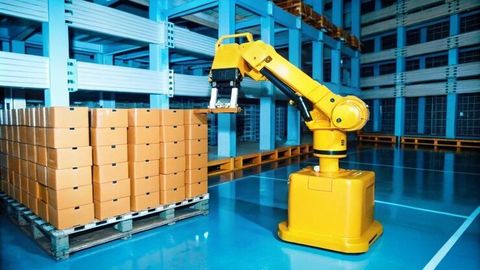
- Robotic assembly systems use robotic arms and specialized tooling to handle components and perform defined movements.
- Integrated production systems combine several assembly and inspection stages into a connected manufacturing process.
Importance
Fuel cell stacks contain many layers that must work together correctly. Small alignment errors, uneven compression, damaged seals, or incorrect component placement can affect electrical performance, gas distribution, thermal behavior, and durability.
As fuel cell technologies are developed for transportation, stationary power, backup power, material-handling equipment, and other applications, consistent manufacturing processes become increasingly important. Fuel cell stack assemblers can help organize repeated production steps and provide controlled handling of sensitive components.
Why Accurate Assembly Matters
A fuel cell stack is not simply a collection of individual cells. The cells must maintain appropriate physical contact and separation while allowing reactant gases, electrical current, heat, and water or other reaction products to move through the intended pathways.
Several assembly factors can influence stack behavior:
- Component alignment
- Compression uniformity
- Seal placement
- Fastener tightening
- Electrical contact
- Gas-channel alignment
- Surface cleanliness
- Component orientation
- Inspection accuracy
Incorrect assembly can result in leakage, electrical resistance, uneven pressure distribution, or mechanical damage. For this reason, manufacturing processes generally include inspection and verification steps.
Applications of Fuel Cell Stack Assemblers
Fuel cell stack assembly systems can support production for several types of applications. These include:
- Hydrogen-powered vehicles
- Stationary electricity generation
- Backup power systems
- Distributed power equipment
- Material-handling equipment
- Specialized industrial power systems
- Research and development systems
- Fuel cell testing programs
The required assembly equipment depends on stack size, cell chemistry, production volume, component geometry, and required degree of automation.
Recent Updates
From 2024 through 2026, fuel cell manufacturing has continued to focus on automation, production scalability, quality control, and manufacturing efficiency. The broader hydrogen and fuel cell sector has also placed increased attention on reducing manufacturing complexity and developing production systems that can support larger quantities of fuel cell components.
Automated handling is becoming more relevant because membrane electrode assemblies, gas diffusion layers, seals, and other fuel cell components can require careful positioning. Machine vision and sensor-based inspection can be integrated into manufacturing systems to identify alignment or component-placement issues.
Automation and Digital Monitoring
Modern assembly equipment may incorporate programmable controllers, machine vision, force sensors, position sensors, and data-recording systems. These technologies can monitor individual assembly steps and provide information about process conditions.
Force measurement is particularly relevant during stack compression. Excessive or uneven force can damage components or alter the intended contact between layers, while insufficient compression can affect sealing and electrical connections.
Digital manufacturing systems can also record information associated with individual stacks or production stages. Such records can support process analysis and quality investigations.
Manufacturing Developments
Fuel cell manufacturing research continues to address areas such as material utilization, automated assembly, durability, production throughput, and component integration. The U.S. Department of Energy's Hydrogen and Fuel Cell Technologies Office continues to support research and development related to fuel cell technologies, manufacturing, and hydrogen systems.
PEM fuel cells remain an important area of development because of their potential applications in transportation and stationary power. Manufacturing research includes improvements to components and production methods that can influence system performance and manufacturing scale.
Stack Design and Assembly Variation
Fuel cell stack designs continue to vary according to their intended application. A vehicle-oriented stack may have different packaging, cooling, compression, and automation requirements from a stationary power stack.
This means that there is no single fuel cell stack assembler configuration suitable for every production environment. Assembly systems are generally designed around the geometry, materials, cell chemistry, and production requirements of a specific stack.
Laws or Policies
Fuel cell stack assembly involves several areas of safety and regulatory consideration, particularly when hydrogen, oxygen, electrical power, compressed gases, chemicals, or high-temperature processes are present.
In India, workplace safety requirements can apply to manufacturing facilities handling machinery, hazardous substances, electrical equipment, pressure systems, and other industrial hazards. The Occupational Safety, Health and Working Conditions Code provides a broader legal framework for occupational safety and working conditions. Applicable central and state rules should be considered according to the specific facility and activity.
Hydrogen handling also requires attention to ventilation, ignition sources, leak detection, storage arrangements, pressure equipment, and emergency procedures. Hydrogen is highly flammable, so equipment and facility design need appropriate controls when hydrogen is present.
For electrical and electronic equipment, applicable Indian standards and certification requirements may also be relevant. The Bureau of Indian Standards maintains standards and conformity-assessment information covering many categories of industrial and electrical equipment.
Internationally, fuel cell and hydrogen systems can also be influenced by standards and codes developed by organizations such as ISO, IEC, NFPA, and other recognized standards bodies. The applicable requirements depend on the technology, location, fuel, pressure, equipment configuration, and intended application.
Regulatory requirements can change, so manufacturers and facility operators should consult the current requirements that apply to their particular installation rather than relying only on general information.
Tools and Resources
Several technical resources can help readers understand fuel cell stack assembly and related manufacturing processes.
Assembly Documentation
Assembly drawings, process instructions, component specifications, and inspection procedures are commonly used to define how a particular stack should be assembled. These documents can identify component orientation, assembly sequence, allowable tolerances, and inspection requirements.
Measurement Equipment
Typical measurement tools can include:
- Digital calipers and micrometers
- Torque measurement equipment
- Force and pressure sensors
- Electrical resistance measurement instruments
- Leak-testing equipment
- Machine-vision inspection systems
- Temperature sensors
- Alignment fixtures
The specific instruments depend on the stack design and the production process.
Hydrogen and Fuel Cell Resources
The U.S. Department of Energy's Hydrogen and Fuel Cell Technologies Office provides technical information, research resources, publications, and program information related to hydrogen and fuel cell technologies.
The International Organization for Standardization also publishes standards covering hydrogen technologies, fuel cells, and related technical areas. The applicable standard should be identified according to the particular equipment and application.
Process-Control Records
Manufacturing teams may record information such as:
| Assembly factor | Typical information recorded |
|---|---|
| Cell identification | Component or batch reference |
| Component sequence | Assembly order |
| Alignment | Position or tolerance result |
| Compression | Force or displacement |
| Fasteners | Tightening information |
| Leak test | Test condition and result |
| Electrical test | Resistance or continuity result |
| Visual inspection | Observed defects |
| Final inspection | Overall acceptance result |
These records can help identify process variation and trace assembly conditions.
FAQs
What is a fuel cell stack assembler?
A fuel cell stack assembler is equipment or a production system used to position, align, compress, fasten, and inspect the components that form a fuel cell stack. It may be manual, semi-automated, or fully automated.
How does fuel cell stack assembly work?
Fuel cell stack assembly generally involves placing prepared cells and related components in a defined sequence, aligning the layers, installing seals and plates, applying controlled compression, fastening the stack, and performing inspection or testing. The exact sequence varies by fuel cell technology.
What are the main components handled by fuel cell stack assemblers?
Common components include membrane electrode assemblies, bipolar plates, gas diffusion layers, seals, end plates, current collectors, compression hardware, and related electrical or fluid connections. Not every fuel cell design uses all of these components.
What are the applications of fuel cell stack assembly?
Fuel cell stacks can be assembled for transportation, stationary power, backup electricity, industrial equipment, material-handling systems, research equipment, and other applications that use fuel cell technology.
What safety factors are important during fuel cell stack assembly?
Important safety factors include hydrogen leak prevention, ventilation, ignition-source control, electrical protection, controlled mechanical force, chemical handling, pressure management, and appropriate personal protective equipment. Workers should follow the applicable equipment instructions and workplace safety procedures.
Conclusion
Fuel cell stack assemblers bring together the equipment and processes used to construct fuel cell stacks from individual components. Assembly involves careful positioning, alignment, compression, sealing, fastening, and inspection, with the exact method depending on the fuel cell technology and stack design. Recent manufacturing developments include greater automation, machine vision, sensor-based monitoring, and digital process records. Safety considerations are particularly important where hydrogen, electrical systems, pressure, chemicals, or elevated temperatures are involved.