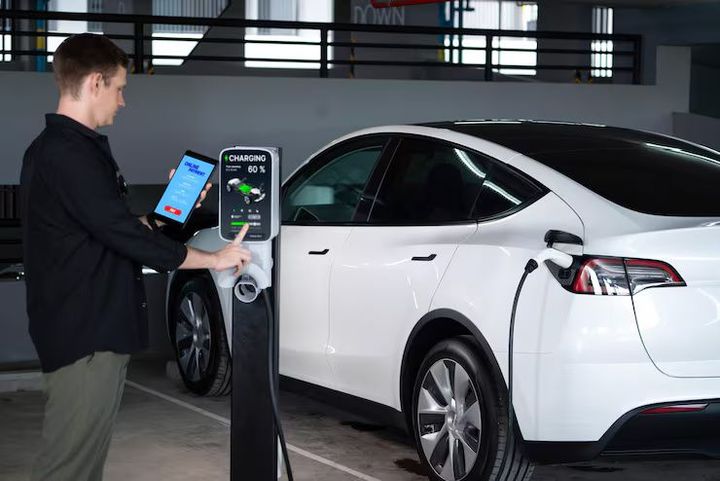
Electric Vehicle Management Details: Explore Platforms, Charging, Fleet Operations, Security, and Efficiency
Electric vehicle management refers to the systems, software, data, and operational practices used to monitor and coordinate electric vehicles, batteries, charging equipment, drivers, and related energy use. As electric vehicles become more common in personal transportation, delivery fleets, corporate mobility, public transport, and commercial operations, managing vehicles involves more than tracking location alone.
An electric vehicle management platform can combine vehicle telematics, battery information, charging data, route planning, driver records, and operational reports. Modern systems may connect vehicles with charging stations and cloud-based dashboards, allowing fleet operators to view information from multiple assets in one place. EV fleet management software commonly focuses on battery state of charge, charging schedules, vehicle location, energy consumption, and charger status.
The concept developed from conventional fleet management, which traditionally focused on fuel use, mileage, maintenance, location, and driver activity. Electric fleets introduce additional considerations because battery condition, charging availability, charging time, and energy consumption directly influence vehicle availability.
Main Elements of EV Management
An electric vehicle management system generally connects several areas:
- Vehicle telematics for location, mileage, battery status, and vehicle condition
- Charging management for charging sessions, charger availability, and energy use
- Fleet operations for dispatching, scheduling, driver assignments, and route planning
- Battery management for monitoring state of charge and battery health information
- Energy management for coordinating charging with available electrical capacity
- Security management for user access, vehicle data, charging systems, and connected devices
- Analytics for identifying operational patterns and measuring fleet performance
The exact combination depends on the size and purpose of the fleet. A small business may need basic vehicle and charging monitoring, while a large delivery fleet may require automated scheduling, telematics integration, charger management, and detailed analytics.
Importance
Electric vehicle management matters because EV operations depend on energy availability rather than conventional refueling alone. A vehicle may be operationally unavailable even when it is mechanically ready if its battery does not contain enough energy for the next planned journey.
For fleet operators, this creates a need to coordinate vehicles, drivers, routes, charging points, and schedules. A management platform can bring these activities into a shared operational view instead of keeping information across separate systems.
Charging Coordination
Charging is one of the central functions of EV management. Fleet operators need to know which vehicles are charging, which chargers are occupied, how much energy has been delivered, and whether vehicles are likely to reach the required state of charge before their next assignment.
Charging management software can also communicate with compatible charging equipment through protocols such as the Open Charge Point Protocol (OCPP). This can support functions such as remote session control, charger monitoring, session records, and equipment diagnostics.
Fleet Scheduling
EV scheduling must account for battery state and charging requirements. For example, assigning a vehicle with a low state of charge to a long route may create operational problems if there is insufficient time or charging access before departure.
A fleet dashboard can combine vehicle location, battery status, route information, and charging schedules. This allows dispatchers to consider energy availability when assigning vehicles rather than relying only on location or mileage.
Efficiency Monitoring
Energy consumption can vary according to vehicle load, driving behavior, traffic, road conditions, temperature, terrain, and vehicle configuration. Monitoring energy use over multiple trips can help identify patterns in fleet performance.
Common measurements include:
| Metric | What it indicates |
|---|---|
| State of Charge (SOC) | Available battery charge |
| State of Health (SOH) | General battery condition |
| Energy per kilometer | Electricity consumed over distance |
| Charging duration | Time spent connected to a charger |
| Charger utilization | How frequently charging equipment is used |
| Vehicle availability | Time vehicles are ready for assignment |
| Route distance | Distance covered during operations |
| Downtime | Periods when vehicles cannot be used |
These measurements provide operational information, although individual results vary according to vehicle models, routes, weather, traffic, and operating conditions.
Recent Updates
From 2024 through 2026, electric vehicle management has increasingly moved toward integrated platforms that connect fleet telematics, charging infrastructure, energy systems, and analytics. Indian EV platforms now describe capabilities such as fleet charging management, dynamic load balancing, route analytics, OCPP connectivity, and charging-network integration.
Another development is the growing use of automated charging coordination. Instead of treating every charging session independently, fleet systems can consider vehicle schedules, required departure times, charger availability, and electrical capacity.
Research published in 2026 has also examined coordinated EV and electric-bus charging with renewable-energy generation. Such approaches combine charger placement, charging schedules, vehicle assignments, and photovoltaic energy use under changing demand conditions.
Vehicle-to-grid technology is another area receiving continued research attention. V2G allows compatible vehicles to exchange electricity with the grid through bidirectional charging equipment. Recent research has investigated ways to coordinate large numbers of EVs while respecting charging requirements and grid constraints.
Connected Vehicle Platforms
Connected EV platforms increasingly combine data from vehicles, charging stations, mobile applications, and cloud systems. Some Indian platforms describe centralized dashboards for fleet management, charging sessions, battery information, and analytics.
This integration can reduce the need to monitor multiple independent systems. However, compatibility remains important because vehicles and chargers can use different communication standards, connectors, data structures, and manufacturer-specific interfaces.
Predictive Monitoring
Battery and charger monitoring is also becoming more data-driven. Systems can analyze historical information to identify unusual charging behavior, energy consumption changes, or equipment conditions.
Predictive approaches should be understood as monitoring and decision-support technologies rather than guarantees of future equipment performance. Actual battery life and charger reliability depend on many technical and environmental factors.
Laws or Policies
In India, electric vehicle management is influenced by national policies, electricity regulations, vehicle requirements, data protection rules, and state-level EV policies. The specific requirements can vary according to whether a system manages private vehicles, commercial fleets, public charging stations, or other transportation operations.
Charging infrastructure is particularly important because fleet electrification depends on access to suitable electricity connections and charging equipment. Government programs and policies have continued to support the expansion of EV charging infrastructure, while states and cities may introduce additional measures for electric mobility.
Data security is another consideration for connected EV management. Fleet systems can process information such as vehicle locations, driver accounts, charging records, device identifiers, and operational data. Organizations therefore need to consider applicable privacy and cybersecurity requirements when collecting, storing, sharing, and processing such information.
India's Digital Personal Data Protection framework is relevant where personal data is processed in digital systems. The precise obligations depend on the nature of the organization, the information involved, and the applicable legal framework.
State policies can also differ. For example, Delhi introduced a new EV policy in 2026 with targets for increasing electric vehicle adoption and expanding charging infrastructure.
Because EV regulations and implementation requirements can change, organizations should consult current government notifications and applicable technical standards for their specific location and operation.
Tools and Resources
Several categories of tools can help explain and manage electric vehicle operations.
EV Fleet Management Platforms
Fleet management platforms can provide vehicle tracking, battery monitoring, charging records, driver information, alerts, and operational analytics. Some platforms are designed specifically around EV requirements rather than adapting conventional GPS tracking systems.
Charging Management Systems
Charging management systems, sometimes called charge point management or charging station management systems, connect charging equipment with software. They can monitor charging sessions, charger status, energy consumption, users, and operational alerts.
Platforms operating in India describe support for OCPP, charging analytics, fleet charging, dynamic load management, and multi-site monitoring.
Route and Energy Planning Tools
Route-planning tools can be combined with battery information to estimate whether a vehicle has sufficient energy for a planned journey. More advanced systems may consider charging locations, route characteristics, vehicle energy consumption, and expected arrival state of charge.
EV Management Dashboard
A typical dashboard may include:
- Live vehicle locations
- Battery state of charge
- Estimated remaining range
- Charging status
- Charger availability
- Energy consumption
- Driver assignments
- Route progress
- Alerts and notifications
- Historical performance reports
The usefulness of these dashboards depends on the quality and frequency of data received from the vehicle and charging infrastructure.
Security and Access Controls
Security tools can include authentication systems, role-based permissions, encrypted communication, device management, audit logs, and access monitoring. Role-based access is particularly relevant for larger fleets because dispatchers, drivers, technicians, administrators, and managers may require different levels of system access.
Charging platforms increasingly describe role-based permissions, authentication, session controls, and audit records as part of their management architecture.
FAQs
What is electric vehicle management?
Electric vehicle management is the process of monitoring and coordinating EVs, batteries, charging infrastructure, drivers, routes, and operational data. It can be performed through dedicated software platforms and connected vehicle systems.
What does an EV fleet management platform do?
An EV fleet management platform can track vehicles, monitor battery status, coordinate charging, manage routes and drivers, record energy consumption, and produce operational reports. The available features vary between platforms.
How does EV charging management work?
EV charging management connects charging equipment with software that records charging sessions and can monitor charger status. Compatible systems may also support remote controls, scheduling, load management, and energy reporting.
How is security handled in electric vehicle management?
Security can involve user authentication, role-based permissions, encrypted communication, device controls, access logs, and monitoring of connected systems. The appropriate controls depend on the platform architecture and the type of information being processed.
How can EV management improve fleet efficiency?
EV management can provide information about battery status, charging patterns, energy consumption, route activity, and vehicle availability. Reviewing this information can help fleet operators coordinate vehicles and charging resources more systematically.
Conclusion
Electric vehicle management combines vehicle monitoring, charging coordination, fleet operations, battery information, security, and energy analytics. Its importance has increased as EV fleets become more connected and charging infrastructure becomes an integral part of transportation operations. Recent developments include integrated platforms, automated charging coordination, dynamic load management, predictive monitoring, and research into vehicle-to-grid systems. Regulatory and privacy requirements also remain important considerations when connected EV data is collected and processed.