Digital Twin Technology Overview: Explore Architecture, Data, Modeling, Applications, and Key Features
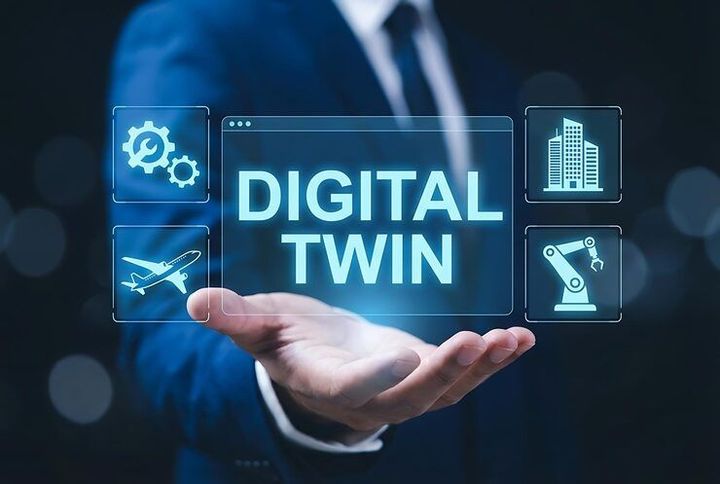
Digital twin technology refers to the use of a digital representation of a physical object, system, process, or environment. A digital twin can represent equipment, buildings, production lines, vehicles, infrastructure, or other real-world entities and can use data to reflect conditions and behavior over time. NIST describes a digital twin as a virtual representation of a physical or perceived real-world entity.
The concept developed from computer modeling, simulation, computer-aided design, sensor technology, and industrial automation. As connected sensors and data systems became more capable, digital models could be connected to information from physical systems rather than being used only as static design representations.
A digital twin can combine several technologies, including sensors, Internet of Things (IoT) devices, cloud computing, data platforms, simulation models, artificial intelligence, and analytics. These technologies allow organizations to observe physical systems, study possible changes, and support decisions using digital information.
How Digital Twin Technology Works
A typical digital twin system contains a physical entity, a digital representation, and a connection that allows information to move between them. Sensors or other data sources collect information from the physical system, while software processes the information and updates the digital model.
The digital model can then be used for monitoring, simulation, analysis, prediction, optimization, or decision support. Depending on the application, information can also move in the opposite direction so that digital analysis can influence actions involving the physical system. NIST identifies forecasting as a foundational capability across digital twin applications.
Main Components of a Digital Twin
The main elements commonly include:
- Physical asset: The real machine, product, building, process, or environment being represented.
- Sensors and data sources: Devices and systems that provide measurements or operational information.
- Connectivity: Networks and communication systems that transfer information.
- Digital model: The software representation used to describe the physical entity.
- Data platform: Systems that store, organize, process, and manage information.
- Analytics and simulation: Methods used to understand current and possible future conditions.
- User interface: Dashboards or applications through which people examine information and results.
The exact architecture depends on the purpose and complexity of the digital twin.
Importance
Digital twin technology matters because many physical systems are difficult, expensive, or disruptive to test directly. A digital representation provides another environment in which engineers and operators can study behavior, examine scenarios, and analyze operational information.
For example, a manufacturer can create a digital representation of production equipment and use operational data to examine equipment conditions. A building operator can represent building systems to study energy behavior, while an infrastructure organization can use digital models to monitor physical assets.
Benefits of Digital Twins
Digital twins can support several activities across an asset's life cycle. NIST describes applications that include dynamically representing, diagnosing, predicting, optimizing, and controlling real-world counterparts such as equipment.
Common potential benefits include:
- Monitoring equipment and system conditions
- Supporting predictive analysis
- Testing scenarios through simulation
- Identifying changes in operating behavior
- Supporting maintenance planning
- Improving visibility into complex systems
- Assisting product and process design
- Supporting lifecycle analysis
- Providing information for operational decisions
The actual results depend on data quality, model accuracy, system architecture, connectivity, and how the digital twin is implemented.
Digital Twins in Manufacturing
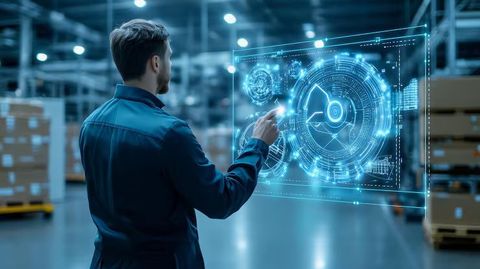
Manufacturing is one of the major application areas for digital twin technology. A factory can use digital representations of machines, production lines, products, or processes to study operations and interactions.
A manufacturing digital twin can help represent equipment states, production processes, and operational conditions. NIST notes that digital twins can support activities such as designing, configuring, simulating, operating, and maintaining products and systems throughout their life cycles.
Manufacturing applications may include production planning, equipment monitoring, process simulation, quality analysis, and maintenance-related analysis.
Digital Twin vs. Simulation
A simulation is generally a model used to reproduce or study the behavior of a system under particular conditions. A digital twin can also use simulation, but it is typically associated with a continuing relationship between a digital representation and a real-world entity.
The distinction is important because not every computer model is a digital twin. NIST has noted that definitions and implementation approaches vary across industries and that a lack of common terminology can make comparisons difficult.
Recent Updates
From 2024 through 2026, digital twin development has increasingly focused on standardization, interoperability, manufacturing applications, data exchange, and the integration of digital twins with connected technologies.
NIST published work in 2024 examining manufacturing digital twin standards, including implementation challenges, use cases, interoperability, trustworthiness, and the development of the ISO 23247 manufacturing framework.
International standardization has also advanced. ISO 23247 provides a framework for digital twins in manufacturing, including general principles, reference architecture, information exchange, and related areas.
New Digital Twin Standards
Recent developments in 2026 include additional international standards addressing digital twin architecture and manufacturing interoperability. ISO/IEC 30188:2026 specifies a general reference architecture for digital twin systems.
ISO also published ISO 23247-5:2026, which addresses the digital thread used to create, connect, manage, and maintain manufacturing digital twins across product life-cycle activities.
ISO 23247-6:2026 addresses digital twin composition and describes approaches for communication, aggregation, and interoperability among multiple digital twins.
Another recent development is ISO/TS 25271:2026, which defines an industrial digital twin interface architecture based around the digital twin, physical twin, and interface connecting them.
AI, IoT, and Digital Twins
Artificial intelligence, machine learning, and industrial IoT are increasingly connected with digital twin systems. IoT devices can provide operational data, while analytical and AI-based methods can help identify patterns or evaluate possible conditions.
NIST identifies smart sensors, IoT, cloud computing, machine learning, and AI as technologies contributing to digitalization and digital twin development in manufacturing.
The broader direction is toward digital twins that can combine data from multiple sources and support more detailed analysis throughout an asset's life cycle.
Laws or Policies
Digital twin technology does not generally operate under one single law because its applications span manufacturing, construction, transportation, energy, healthcare, infrastructure, and other sectors. The applicable requirements depend on the industry, location, data involved, and physical system being represented.
Organizations using digital twins may need to consider data protection, cybersecurity, intellectual property, industrial safety, sector-specific regulations, and requirements governing connected systems. A digital twin that processes personal information may also be subject to applicable privacy and data-protection rules.
International standards provide technical frameworks rather than replacing national laws. ISO/IEC 30173:2023 establishes terminology and concepts for digital twins and is intended to support communication among different stakeholders.
For manufacturing, ISO 23247 provides a framework covering digital twin concepts, architecture, and information exchange. These standards can provide technical references, but organizations still need to determine which national and sector-specific requirements apply to their particular implementation.
Tools and Resources
Several types of tools can support the development and study of digital twin systems.
Modeling and Simulation Tools
Computer-aided engineering, 3D modeling, process simulation, and physics-based modeling tools can provide the foundation for a digital representation. These tools can represent physical structures, processes, motion, temperature, loads, or other characteristics depending on the application.
IoT and Sensor Platforms
IoT platforms can collect information from connected devices and make operational data available to digital twin applications. Sensors may measure variables such as temperature, pressure, vibration, speed, location, energy consumption, or equipment status.
Data and Cloud Platforms
Cloud and data platforms can store and process information generated by connected systems. They may also provide dashboards, analytics, application programming interfaces, and data integration capabilities.
Standards and Research Resources
NIST provides digital twin research resources covering definitions, essential elements, validation, standardization, case studies, economics, and advanced manufacturing.
ISO provides published standards covering digital twin terminology, manufacturing frameworks, digital twin architecture, and information exchange. These resources are useful for understanding the technical vocabulary and structural principles used in the field.
Common Digital Twin Data Flow
| Stage | Typical activity | Example |
|---|---|---|
| Physical system | Generates operational data | Machine vibration |
| Data collection | Captures measurements | Connected sensor |
| Connectivity | Transfers information | Industrial network |
| Data processing | Organizes and analyzes data | Data platform |
| Digital model | Represents system behavior | Machine model |
| Analytics | Examines conditions or scenarios | Performance analysis |
| User interface | Presents information | Monitoring dashboard |
| Decision or control | Supports an operational response | Process adjustment |
FAQs
What is digital twin technology?
Digital twin technology creates a digital representation of a physical or real-world entity and connects it with relevant information about that entity. It can be used for monitoring, simulation, analysis, prediction, optimization, and decision support.
How does a digital twin work?
A digital twin typically receives information from sensors, connected systems, databases, or other data sources. Software processes this information and updates or analyzes the digital representation to provide information about the physical system.
What are the benefits of digital twin technology?
Digital twins can support monitoring, simulation, predictive analysis, maintenance planning, product development, process analysis, and operational decision-making. Their usefulness depends on the quality of the underlying models and data.
What are digital twins used for in manufacturing?
Manufacturing digital twins can represent machines, production lines, products, and processes. They can support design, configuration, simulation, operation, maintenance, production analysis, and lifecycle management.
What are the future trends in digital twin technology?
Future development is expected to continue around interoperability, standardized architectures, AI-assisted analytics, IoT connectivity, digital threads, multi-twin systems, and lifecycle-based digital representations. Recent ISO publications show increasing attention to architecture, digital thread integration, and digital twin composition.
Conclusion
Digital twin technology connects digital representations with information about physical systems to support monitoring, simulation, analysis, and decision-making. Its applications extend from manufacturing and infrastructure to buildings, transportation, energy, and other complex systems. Recent developments have placed greater emphasis on standards, interoperability, digital threads, AI, IoT, and the integration of multiple digital twins. As the technology develops, consistent terminology, reliable data, appropriate models, cybersecurity, and clear system architecture remain important considerations.