Industrial Panel Guide: Explore Types, Components, Applications, Controls, and Safety Factors
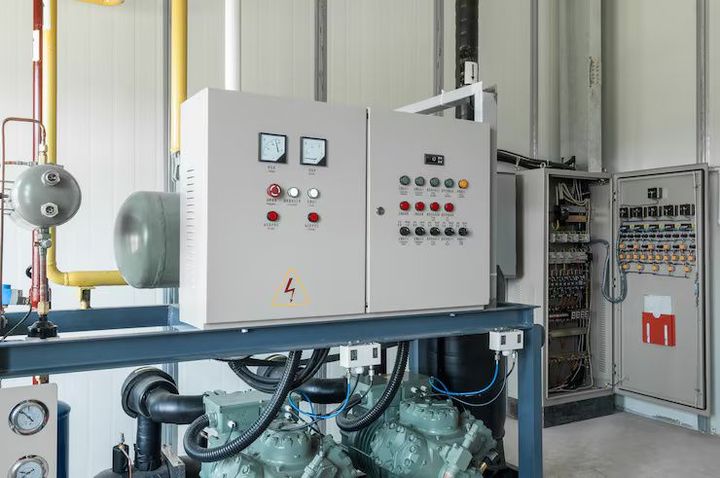
An industrial panel is an enclosure that houses electrical, control, protection, and monitoring equipment used in industrial facilities. An industrial panel guide helps explain how these panels organize electrical circuits, control machinery, protect equipment, and provide operators with information about industrial processes.
Industrial panels developed alongside electrical motors, production machinery, and automated manufacturing systems. As factories became more dependent on electrical equipment, separate control devices needed to be organized in a protected enclosure rather than installed individually throughout a facility.
Today, an industrial panel may contain circuit breakers, contactors, relays, programmable logic controllers (PLCs), variable frequency drives (VFDs), power supplies, terminals, switches, displays, and communication equipment. The exact arrangement depends on the application, electrical requirements, control method, and environmental conditions.
What an Industrial Panel Does
An industrial panel provides a central location for electrical distribution, machine control, monitoring, and protection. It can receive electrical power, distribute it to different circuits, process signals from sensors, and send control commands to motors, valves, pumps, conveyors, and other equipment.
The enclosure also helps separate electrical components from dust, accidental contact, moisture, and mechanical conditions. Its protection level depends on its construction and the environmental rating selected for the application.
Common Industrial Panel Types
Industrial panels are available in several configurations. Common examples include:
- Motor control panels for operating and protecting electric motors.
- Control panels for managing automated machinery and production processes.
- Power distribution panels for distributing electrical energy to multiple circuits.
- PLC panels containing programmable controllers and associated input and output equipment.
- VFD panels used to control the speed and operating characteristics of motors.
- Human-machine interface panels containing displays and operator controls.
- Instrumentation panels used to connect and manage measurement devices.
- Automation panels combining controllers, communication equipment, protection devices, and control components.
A single facility may use several panel types because different machines and electrical systems have different requirements.
Importance
Industrial panels are important because modern manufacturing depends on organized electrical distribution and machine control. A properly designed panel can place protection devices, controllers, wiring, and operating controls in a structured enclosure.
The subject affects factory operators, maintenance personnel, electrical engineers, equipment designers, and facility managers. Even people without an electrical background encounter industrial panels indirectly because they control equipment used to manufacture products, move materials, process water, manage buildings, and operate utilities.
Electrical Organization
Without organized electrical distribution, a large industrial installation would be difficult to operate and maintain. Panels provide defined locations for incoming power, outgoing circuits, protective devices, control equipment, and terminal connections.
Clear labeling and logical wiring also make it easier to identify individual circuits during inspection or troubleshooting. Documentation such as wiring diagrams and circuit schedules provides additional information about the panel's configuration.
Protection and Control
Industrial panels commonly combine control functions with electrical protection. Protective devices can help disconnect circuits when specified abnormal conditions occur, while control components determine when equipment starts, stops, accelerates, or changes operating conditions.
Typical protection and control components include:
- Circuit breakers
- Fuses
- Contactors
- Overload relays
- Motor protection devices
- Surge protection devices
- Emergency-stop circuits
- Control relays
- PLCs
- VFDs
- Power supplies
The particular combination depends on the equipment and electrical design.
Environmental Considerations
The environment around a panel affects enclosure selection. A panel installed inside a clean, dry electrical room may have different requirements from one located near water, dust, chemicals, heat, or outdoor equipment.
Important environmental factors include temperature, humidity, dust, water exposure, corrosive substances, vibration, and available installation space. Enclosure ratings and cooling arrangements should therefore correspond to the intended location.
Recent Updates
From 2024 through 2026, industrial panel development has continued to reflect broader changes in automation, connected manufacturing, energy management, and digital monitoring. Panels increasingly combine traditional electrical components with PLCs, industrial communication equipment, touchscreen interfaces, sensors, and data-oriented systems.
One important development is the integration of industrial panels with networked automation systems. Ethernet-based industrial communication can connect PLCs, drives, remote input/output modules, HMIs, supervisory systems, and other equipment. This can reduce isolated control arrangements and provide more centralized monitoring.
Energy management is another area receiving attention. Panels can incorporate measurement devices that monitor voltage, current, power, energy consumption, and other electrical characteristics. These measurements can support analysis of equipment operation and facility energy use.
Standards for low-voltage switchgear and controlgear assemblies have also continued to evolve. IEC 61439-1:2020 establishes general requirements for low-voltage switchgear and controlgear assemblies, including construction, technical characteristics, and verification requirements.
IEC 61439-2:2020 addresses power switchgear and controlgear assemblies and includes requirements for assemblies used in indoor and outdoor applications, including photovoltaic installations.
The IEC 61439 series also includes guidance for specifying assemblies. IEC/TR 61439-0:2022 explains characteristics and options that can be considered when defining an assembly for a particular application.
Digital Monitoring
Modern panels can incorporate meters, sensors, communication modules, and programmable controllers that provide information about electrical and process conditions. This can support centralized monitoring and help identify unusual operating conditions.
Digital monitoring does not eliminate the need for physical inspection or appropriate electrical protection. It is another layer within an overall control and maintenance approach.
Compact and Modular Designs
Panel layouts are also influenced by the increasing number of electronic control devices used in industrial equipment. Modular terminal systems, compact controllers, remote I/O, and integrated communication equipment can affect how components are arranged inside an enclosure.
Designers must still consider heat generation, wiring space, accessibility, electrical separation, and equipment ratings when arranging components.
Laws or Policies
In India, industrial electrical installations are influenced by regulations administered through the Central Electricity Authority (CEA), along with applicable state requirements and relevant standards. The CEA maintains the Central Electricity Authority (Measures relating to Safety and Electric Supply) Regulations, 2023 and its subsequent regulatory information.
The CEA also maintains regulations concerning safety requirements for the construction, operation, and maintenance of electrical plants and electric lines. The CEA's regulatory page was updated in 2026, providing access to the applicable regulatory documents.
These requirements are relevant to electrical safety practices, equipment installations, isolation, earthing, inspection, and other aspects of electrical systems. The exact requirements depend on the type of installation, voltage level, facility, and applicable regulatory framework.
For low-voltage assemblies, IEC 61439 provides an internationally recognized technical framework. IEC 61439-1:2020 covers general requirements, while the relevant subsequent parts address particular assembly applications.
Indian Standards issued by the Bureau of Indian Standards may also apply to particular electrical equipment and installations. The applicable standard should be identified according to the specific panel, components, voltage, installation environment, and intended use.
Because electrical regulations can change and requirements vary by installation, technical compliance should be assessed against the current applicable rules rather than relying only on general information.
Tools and Resources
Several technical resources can help readers understand industrial panels and their operating requirements.
Electrical Design Software
Electrical design platforms can be used to prepare circuit diagrams, panel layouts, wiring documentation, terminal schedules, and component information. These tools are commonly used during the design and documentation stages.
PLC Programming Platforms
PLC programming environments allow engineers to configure control logic for automated equipment. Depending on the controller, programming may involve ladder logic, function blocks, structured text, or other programming methods.
Electrical Calculation Tools
Electrical calculation tools can help evaluate parameters such as current, voltage drop, short-circuit conditions, conductor requirements, and power characteristics. Calculations should correspond to the actual installation and applicable engineering requirements.
Standards and Regulatory Resources
The IEC webstore provides information about the IEC 61439 series and related standards. The CEA website provides access to Indian electrical safety regulations and amendments.
Basic Panel Documentation
A panel documentation package may contain:
| Document or item | Purpose |
|---|---|
| Single-line diagram | Shows the main electrical distribution arrangement |
| Wiring diagram | Shows connections between components |
| Panel layout | Shows physical component positions |
| Terminal schedule | Identifies terminal connections |
| Component list | Records installed electrical devices |
| Cable schedule | Identifies cables and their connections |
| Control logic | Describes programmed machine behavior |
| Inspection record | Records relevant inspection results |
Good documentation can make future inspection, troubleshooting, modification, and maintenance activities easier to understand.
FAQs
What is an industrial panel?
An industrial panel is an enclosure containing electrical, control, protection, and monitoring equipment used to operate or manage industrial machinery and electrical systems. It can include components such as breakers, contactors, PLCs, drives, relays, meters, and terminal blocks.
What are the main types of industrial panels?
Common types include motor control panels, PLC panels, power distribution panels, VFD panels, instrumentation panels, automation panels, and operator interface panels. Their functions differ according to the equipment and process they control.
What components are used in an industrial control panel?
An industrial control panel may contain circuit breakers, fuses, contactors, overload relays, PLCs, power supplies, terminal blocks, control relays, VFDs, communication modules, meters, switches, and display devices.
How are industrial panels used in automation?
Industrial panels provide a central location for controllers, input and output devices, drives, communication equipment, and protection components. A PLC can receive signals from sensors and issue commands to equipment such as motors, valves, and actuators.
What safety factors are important for industrial panels?
Important factors include appropriate electrical ratings, enclosure protection, grounding and bonding, circuit protection, adequate spacing, heat management, clear labeling, appropriate guarding, safe isolation, and compliance with applicable regulations and standards. Work should be performed according to relevant technical procedures and workplace requirements.
Conclusion
Industrial panels organize electrical distribution, machine control, protection, and monitoring within a structured enclosure. Their design varies according to the equipment, electrical characteristics, environment, automation requirements, and applicable standards. Recent developments have increased the integration of PLCs, communication systems, digital monitoring, and energy measurement into industrial panel designs. In India, applicable CEA regulations and relevant Indian and international standards provide important references for electrical safety and panel design.