Die Casting Machines Guide: Explore Types, Components, Processes, Applications, and Quality Factors
Die casting machines are industrial machines used to produce metal components by forcing molten metal into a shaped mold under controlled pressure. A die casting machines guide helps explain the main machine types, components, production processes, applications, and factors that influence the quality of finished parts.
Die casting developed as manufacturers needed practical methods for producing metal components with consistent shapes and dimensions. The process became particularly important for metals such as aluminum, zinc, and magnesium, which can be melted and injected into reusable dies.
Unlike many traditional casting methods, die casting uses a permanent mold, commonly called a die. The machine closes the die, injects molten metal into its cavity, maintains pressure while the metal solidifies, and then opens the die so the casting can be removed.
What Is a Die Casting Machine?
A die casting machine is equipment designed to control the sequence of die closing, metal injection, pressure application, solidification, and part removal. Machine configurations vary according to the metal being processed, component size, production requirements, and casting method.
Die casting machines are commonly divided into hot-chamber and cold-chamber systems. The main difference concerns how molten metal is supplied to the injection system.
How Die Casting Developed
Early metal casting relied heavily on gravity and manually prepared molds. As industrial manufacturing expanded, pressure-assisted casting methods developed to produce components more quickly and with greater dimensional consistency.
Modern die casting combines mechanical systems, hydraulic or electric controls, temperature management, sensors, and automated handling. These developments allow manufacturers to monitor important process variables throughout a production cycle.
Importance
Die casting is important because many industries require large numbers of metal components with repeatable shapes and relatively detailed features. The process is used for components found in vehicles, electrical equipment, consumer products, industrial machinery, lighting equipment, and other manufactured products.
For general users, die-cast components may be present inside products without being immediately visible. Housings, brackets, structural parts, handles, covers, motor components, and other metal pieces can be produced using die casting.
Why Die Casting Is Used
The process can combine several useful manufacturing characteristics. A single casting may incorporate ribs, bosses, holes, curved surfaces, and other geometric features that would otherwise require multiple manufacturing operations.
Die casting is also suitable for repeated production because the die can be used for many casting cycles when properly maintained. The actual production characteristics depend on the alloy, die design, machine configuration, component geometry, and process parameters.
Common Die Casting Applications
Die casting machines are used across several industries:
- Automotive components
- Electrical and electronic housings
- Industrial equipment
- Appliances
- Lighting components
- Hardware and fittings
- Consumer products
- Power equipment
- Mechanical components
- Communication equipment
Aluminum alloys are widely associated with die casting because they provide a combination of low density, strength, and castability. Zinc and magnesium alloys are also used for specific component requirements.
Recent Updates
From 2024 through 2026, die casting technology has continued developing around automation, process monitoring, energy management, and larger casting systems. Modern equipment increasingly combines sensors, digital controls, automated material handling, and production data collection.
One notable direction is the development of larger die casting systems capable of producing large structural components. These systems are associated with efforts to reduce the number of individual components and manufacturing operations required for certain vehicle structures.
Automation and Digital Monitoring
Modern die casting machines can incorporate sensors that monitor variables such as injection pressure, hydraulic conditions, temperature, cycle time, and machine position. Production data can then be used to identify changes in process conditions.
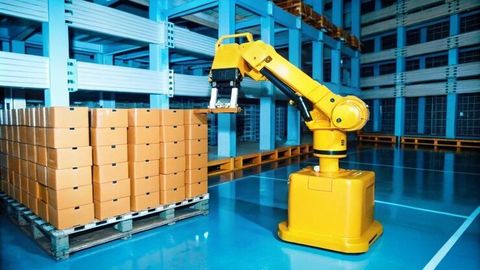
Automated robots and handling systems are also used for tasks such as removing castings, applying die-release materials, trimming components, and transferring parts between production stages. Automation can reduce repetitive manual handling and support consistent production sequences.
Electric and Hybrid Machine Designs
Electric and hybrid die casting machines have gained attention as manufacturers examine machine efficiency, motion control, and process monitoring. Electric drive systems can provide electronically controlled movement, while hydraulic systems remain widely used in industrial casting equipment.
The suitability of an electric, hydraulic, or hybrid configuration depends on the machine size, required force, injection characteristics, production environment, and technical specifications.
Large Structural Casting
Large-format die casting has become an important area of development, particularly in automotive manufacturing. Instead of producing numerous smaller pieces and joining them together, some vehicle structures can be designed around larger cast components.
This approach can change die design, machine requirements, material handling, quality inspection, and maintenance practices. It also requires careful control of thermal conditions, filling behavior, solidification, and die performance.
Laws or Policies
Die casting machines operate within workplace safety, machinery, environmental, and product-quality frameworks. In India, industrial workplaces must follow applicable occupational safety requirements, while specific environmental and electrical requirements can apply depending on the installation and manufacturing activity.
The Occupational Safety, Health and Working Conditions Code, 2020 provides a national framework concerning occupational safety and working conditions. Its implementation and associated rules should be checked according to the applicable workplace and jurisdiction.
The Bureau of Indian Standards maintains Indian Standards covering machinery, industrial safety, materials, testing, and related engineering subjects. The relevance of a particular standard depends on the equipment, alloy, component, electrical system, and intended application.
Workplace Safety Considerations
Die casting involves high temperatures, moving mechanical components, pressure, molten metal, and potentially hot surfaces. Appropriate safeguards therefore form an important part of machine operation.
Typical safety measures can include machine guarding, emergency controls, appropriate personal protective equipment, controlled access to hazardous areas, ventilation, training, and documented operating procedures.
Environmental requirements may also apply to emissions, waste materials, energy use, metal handling, and other aspects of foundry operations. Applicable national, state, and local requirements should be reviewed for the specific facility.
Tools and Resources
Several technical resources can help readers understand die casting machines and their production processes.
Machine Specifications
A die casting machine specification sheet commonly includes information such as:
- Clamping force
- Injection pressure
- Shot weight or shot capacity
- Die dimensions
- Tie-bar spacing
- Maximum die thickness
- Minimum die thickness
- Ejection force
- Machine cycle information
- Motor or hydraulic system specifications
These parameters help explain the operating range of a particular machine.
Die Design Resources
Die design references can help explain cavity configuration, runners, gates, overflows, cooling channels, ejector systems, and venting. Computer-aided engineering software may also be used to simulate filling and solidification behavior before physical production.
Quality Inspection Tools
Quality assessment may involve dimensional measuring equipment, surface inspection tools, hardness testing, density measurements, and non-destructive examination methods. More advanced facilities may use coordinate measuring machines, X-ray inspection, or computerized tomography for internal analysis.
Basic Process Data Table
| Factor | What it describes | Why it matters |
|---|---|---|
| Clamping force | Force holding the die closed | Helps prevent unwanted die opening |
| Injection pressure | Pressure used during metal injection | Influences cavity filling |
| Metal temperature | Temperature of molten alloy | Affects flow and solidification |
| Die temperature | Thermal condition of the die | Influences filling and cooling |
| Cycle time | Duration of one production cycle | Affects production planning |
| Cooling | Removal of heat from the casting | Influences solidification |
| Venting | Removal of trapped air and gases | Helps reduce certain casting defects |
| Inspection | Examination of finished parts | Helps identify dimensional or material variations |
FAQs
What is a die casting machine?
A die casting machine is industrial equipment that injects molten metal into a reusable metal die under controlled conditions. The machine manages die closing, injection, pressure, solidification, and part removal.
What are the main types of die casting machines?
The two commonly discussed types are hot-chamber and cold-chamber die casting machines. Hot-chamber machines keep the injection mechanism in contact with molten metal, while cold-chamber machines receive a measured quantity of molten metal before each injection cycle.
What are the main components of a die casting machine?
Major components can include the clamping unit, injection system, die, hydraulic or electric drive system, control system, ejector mechanism, lubrication system, and safety equipment. The exact arrangement varies by machine design.
What metals are used in die casting?
Common die casting alloys include aluminum, zinc, and magnesium. Copper-based alloys can also be processed using particular casting systems, although their higher melting temperatures create different equipment and die requirements.
What factors affect die casting quality?
Important factors include alloy composition, metal temperature, die temperature, injection speed, injection pressure, venting, cooling, die condition, lubrication, and die design. Dimensional accuracy and internal quality can also depend on inspection and process control methods.
Conclusion
Die casting machines provide a controlled method for producing repeated metal components using reusable dies and pressure-assisted metal injection. Hot-chamber and cold-chamber systems represent two major machine configurations, while modern systems increasingly incorporate automation, sensors, digital controls, and process monitoring. Applications extend across automotive, electronics, industrial equipment, appliances, and other manufacturing sectors. Casting quality depends on coordinated control of materials, machine parameters, die design, thermal conditions, and inspection methods.