CNC Sheet Metal Folding Machines Guide: Explore Types, Features, Applications, Benefits, and Selection Factors
CNC sheet metal folding machines are industrial machines designed to bend and form sheet metal into specific shapes using computer-controlled movements. CNC stands for Computer Numerical Control, meaning that programmed instructions control important machine functions such as tool movement, bending position, and material positioning.
Sheet metal folding has long been used in manufacturing because flat metal sheets can be transformed into panels, channels, enclosures, brackets, frames, and other components. Earlier folding processes depended heavily on manual measurements and operator adjustments. CNC technology introduced programmable controls that can help coordinate repeated bending operations with greater consistency.
A CNC sheet metal folding machine generally combines a mechanical structure, bending tools, a control system, positioning equipment, and safety components. Depending on the design, the machine may use a folding beam, clamping system, bending tools, or other mechanisms to form the sheet.
How CNC Folding Differs From Manual Folding
Manual folding requires an operator to position the sheet and control the bending process directly. CNC folding uses programmed parameters to control selected machine movements, reducing the need to manually calculate every bending position.
The machine does not automatically determine every manufacturing requirement. Operators still need to select suitable tooling, understand material characteristics, check dimensions, and verify the finished component.
Common Types of CNC Sheet Metal Folding Machines
Different machine configurations are designed for different production requirements. Common types include:
- CNC press brake machines, which use a punch and die arrangement to bend sheet metal.
- CNC panel bending machines, which use automated folding movements to form panels.
- Electric CNC folding machines, which use electrically driven mechanisms for controlled movement.
- Hydraulic CNC bending machines, which use hydraulic systems to generate bending force.
- Hybrid machines, which combine different drive technologies or automated functions.
The machine type affects bending capacity, operating method, automation level, energy requirements, and suitable applications.
Importance
CNC sheet metal folding machines are important in manufacturing because many products require accurately formed sheet-metal components. Industries such as construction equipment, electrical enclosure production, transportation, HVAC manufacturing, furniture production, and industrial machinery use formed sheet-metal parts.
The ability to program repeated bending sequences can be useful when producing components with several bends. Instead of manually calculating and adjusting every position for each part, the operator can use programmed settings and machine controls.
Manufacturing Challenges Addressed
Sheet metal forming can involve several challenges. Material springback, thickness variation, bend allowance, tooling selection, and positioning can affect the final dimensions.
CNC systems can coordinate programmed movements and positioning sequences. However, the final result still depends on material properties, machine condition, tooling, programming accuracy, and operator verification.
Benefits of CNC Control
CNC control can provide several practical benefits:
- Repeatable programmed bending sequences
- Reduced manual positioning calculations
- Faster setup for repeated production
- Digital storage of bending programs
- Automated positioning on suitable machines
- Consistent coordination of multiple machine movements
- Easier adjustment of programmed dimensions
These benefits are particularly relevant when components contain multiple bends or when the same geometry must be processed repeatedly.
Recent Updates
From 2024 through 2026, CNC sheet metal forming technology has continued to develop around automation, digital controls, energy management, connectivity, and production monitoring. Manufacturers increasingly integrate machine controls with broader manufacturing software and digital production systems.
Modern CNC machines can include touch-screen interfaces, automatic tool management, programmable backgauges, sensors, remote monitoring capabilities, and data communication systems. The availability of these functions varies by machine configuration.
Automation and Robotics
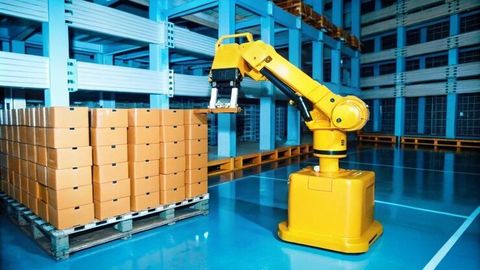
Automated loading and unloading systems are increasingly associated with CNC sheet metal production. Robotic arms can move sheets between storage systems and forming equipment, while automated positioning systems can coordinate material handling with machine cycles.
Automation can be particularly useful in production environments where large numbers of similar components must be processed. It also changes the operator's role from direct manual handling toward programming, monitoring, inspection, and process management.
Digital Manufacturing Integration
CNC folding equipment can be connected with CAD/CAM software and manufacturing-management systems. A digital design can be converted into manufacturing instructions that define bend sequences, tool positions, and other parameters.
This integration can reduce repeated manual data entry and help create a connected workflow from component design to production. The level of integration depends on the software, machine controller, and factory infrastructure.
Energy and Electric Drive Systems
Electric and servo-driven machines have received increased attention as manufacturers examine energy consumption and machine efficiency. These systems can use electronically controlled motors and drive mechanisms instead of relying exclusively on hydraulic power.
The actual energy performance depends on machine size, operating cycle, material, production volume, and drive configuration. Therefore, machine specifications should be evaluated using comparable operating conditions.
Laws or Policies
In India, CNC sheet metal folding machines used in workplaces are subject to applicable occupational safety and machinery requirements. The regulatory framework can include workplace safety legislation, electrical requirements, environmental rules, and standards relevant to particular equipment.
The Occupational Safety, Health and Working Conditions Code provides a broader framework covering occupational safety and working conditions. Its implementation and applicable rules should be checked according to the workplace, industry, and relevant government requirements.
The Bureau of Indian Standards also develops and publishes Indian Standards covering machinery, electrical equipment, machine tools, and related safety considerations. BIS provides resources for searching applicable standards and understanding conformity requirements.
Manufacturers and workplaces should consider requirements concerning machine guarding, emergency stopping systems, electrical safety, operator training, workplace layout, and maintenance. Requirements can vary according to the machine design and operating environment.
Machine Safety Considerations
A CNC folding machine contains moving mechanical parts capable of generating significant force. Appropriate safeguards may include fixed or interlocked guards, emergency-stop controls, protective devices, warning systems, and suitable operating procedures.
Operators should follow the machine manufacturer's instructions and applicable workplace rules. Safety procedures should address material handling, tooling changes, maintenance, programming, and access to moving areas.
Tools and Resources
Several technical resources can help readers understand CNC sheet metal folding and evaluate machine specifications.
CAD and CAM Software
CAD software is used to create digital component designs, while CAM software can convert design information into manufacturing instructions. Sheet-metal modules can calculate bend allowances, unfold formed components, and help prepare production data.
Bend Allowance Calculators
Bend allowance calculators help estimate the developed length of a sheet-metal component before bending. Inputs can include material thickness, bend angle, inside radius, and material-related factors.
The actual calculation method depends on the manufacturing process and material characteristics. Machine-specific tooling and calibration can also affect the final result.
CNC Machine Manuals
Machine manuals provide information about operating procedures, controller functions, tooling, maintenance, machine limits, and safety systems. These documents are particularly important because CNC controls and mechanical configurations differ between machines.
Production Planning Templates
A basic CNC folding planning sheet can include:
| Parameter | Information to record |
|---|---|
| Material | Metal type and grade |
| Thickness | Sheet thickness |
| Component size | Length and width |
| Bend angle | Required angle |
| Bend radius | Internal bend radius |
| Bend sequence | Order of operations |
| Tooling | Punch, die, or folding tool |
| Backgauge position | Programmed position |
| Quantity | Planned production volume |
| Inspection | Dimensional verification |
Recording these parameters can help organize production information and identify differences between programmed and measured dimensions.
Selection Factors
Choosing an appropriate CNC sheet metal folding machine requires consideration of several technical factors. These include:
- Maximum sheet thickness
- Maximum bending length
- Required bending force
- Machine working range
- Controller capabilities
- Number of programmable axes
- Tooling compatibility
- Backgauge configuration
- Automation requirements
- Material handling needs
- Machine footprint
- Maintenance requirements
- Electrical requirements
- Operator interface
The required specifications should be based on the actual materials, component dimensions, bend geometry, and production process.
FAQs
What is a CNC sheet metal folding machine?
A CNC sheet metal folding machine is computer-controlled equipment used to bend sheet metal into programmed shapes. It combines mechanical forming equipment with a numerical control system that coordinates selected machine movements.
How does a CNC sheet metal folding machine work?
The operator or production system enters bending parameters into the CNC controller. The machine positions the sheet and forming tools, then performs programmed movements to create the required bends.
What are the main types of CNC sheet metal folding machines?
Common types include CNC press brakes, CNC panel bending machines, electric folding machines, hydraulic machines, and hybrid configurations. Their mechanisms and capabilities differ according to the intended application.
What factors should be considered when selecting a CNC sheet metal folding machine?
Important factors include sheet thickness, bending length, required force, bend geometry, number of programmable axes, tooling compatibility, controller functions, automation requirements, workspace, and material-handling arrangements.
What materials can CNC sheet metal folding machines process?
Depending on the machine and tooling, CNC folding equipment can process materials such as mild steel, stainless steel, aluminum, and other sheet metals. Material thickness, hardness, bend radius, and machine capacity must be considered for each application.
Conclusion
CNC sheet metal folding machines combine mechanical forming systems with computer-controlled positioning and bending operations. They are used across manufacturing applications that require formed sheet-metal components with repeatable dimensions and programmed sequences. Recent developments have focused on automation, digital manufacturing integration, sensors, connectivity, and electronically controlled drive systems. Understanding machine type, capacity, tooling, software, safety requirements, and material characteristics is important when evaluating CNC folding equipment.