CNC Machines Details: Explore Equipment Types, Machining Methods, Applications, Maintenance, and Factors
CNC machines are computer-controlled manufacturing systems used to cut, shape, drill, mill, turn, or otherwise process materials according to programmed instructions. CNC stands for Computer Numerical Control, meaning that machine movements are controlled by numerical instructions rather than being guided entirely by manual operation. CNC machines details commonly include their equipment types, machining methods, components, applications, maintenance requirements, and operating factors.
The development of CNC technology grew from earlier numerical-control systems used to automate machine tools. As computer technology developed, numerical instructions became easier to create, edit, store, and transfer. This allowed manufacturers to control multiple machine movements with greater consistency.
A typical CNC system combines mechanical equipment with a controller, drive system, motors, feedback devices, tooling, and software. The controller interprets programmed instructions and coordinates movements along different axes. Depending on the machine, these movements can control cutting tools, worktables, spindles, or other machine elements.
How CNC Machines Differ From Conventional Machines
A conventional machine may require an operator to control movement directly through handwheels, levers, or other mechanical controls. A CNC machine instead uses programmed instructions to determine movements, speeds, tool changes, and machining sequences.
CNC operation does not eliminate the need for human involvement. Operators and technicians may still prepare programs, install workholding equipment, load tools, check measurements, inspect components, and monitor machine conditions.
Main CNC Machine Components
Although designs vary, many CNC machines contain several common components:
- CNC controller for interpreting programmed instructions
- Spindle for rotating the cutting tool or workpiece
- Servo motors for controlled machine movement
- Linear guides or other motion systems for axis movement
- Tool holder and cutting tools for material removal
- Workholding system for securing the component
- Machine frame or enclosure for structural support
- Coolant system for controlling heat and removing chips
- Feedback devices for monitoring position and movement
- Operator interface for programming and machine control
The combination of these components allows the machine to coordinate movement and machining operations.
Importance
CNC machines are important because modern manufacturing often requires repeatable dimensions, complex geometries, controlled machining sequences, and consistent production processes. They are used in industries ranging from automotive and aerospace to electronics, medical equipment, construction equipment, energy, and general engineering.
CNC equipment can process metals, plastics, composites, wood, and other suitable materials. The machine configuration and cutting tools must be matched to the material and machining operation.
Common Manufacturing Problems Addressed
Manual machining can become difficult when a component contains many repeated features, complex curves, multiple holes, or closely controlled dimensions. CNC equipment can execute programmed movements repeatedly, which can simplify these types of operations.
Another important factor is repeatability. Once a suitable program, tooling arrangement, workholding method, and process setup have been established, the same sequence can be reproduced for additional components, subject to normal process variation and inspection.
CNC Machining in Modern Manufacturing
CNC machines are also increasingly connected with computer-aided manufacturing and digital production systems. CAD software can be used to create component designs, while CAM software can generate toolpaths that are converted into machine instructions.
Some production environments connect CNC equipment with measurement systems, production monitoring platforms, tool-management systems, and factory software. These connections can provide information about machine status, production cycles, tool usage, and process conditions.
Equipment Types
CNC equipment is available in several forms, with each type designed around particular machining operations.
CNC Milling Machines
CNC milling machines use rotating cutting tools to remove material from a stationary or controlled workpiece. Depending on the configuration, the machine can move the tool, worktable, or both.
Three-axis milling machines commonly control movement along X, Y, and Z axes. Four-axis and five-axis systems add rotational movement, allowing more complex surfaces and features to be machined from different directions.
CNC Lathes and Turning Centers
CNC lathes rotate the workpiece while a cutting tool moves against it. They are commonly used for cylindrical components, shafts, threaded sections, grooves, tapers, and other rotational features.
Turning centers can combine turning with additional operations such as drilling, boring, and sometimes milling. This can reduce the number of separate setups required for certain components.
CNC Machining Centers
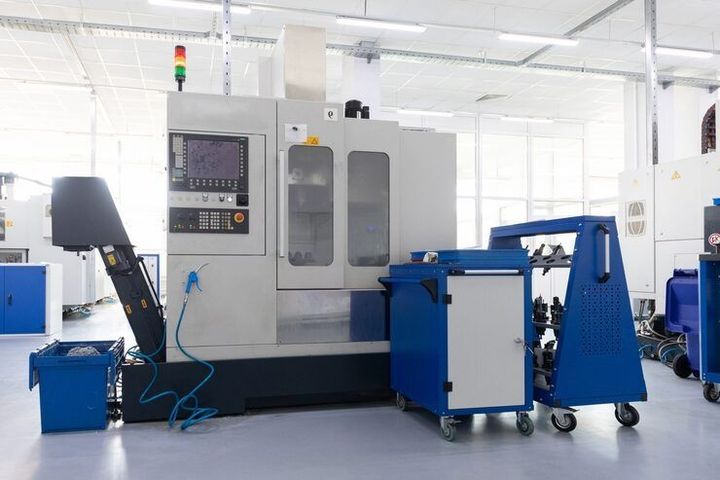
Machining centers are multifunctional CNC machines that can perform several cutting operations. Vertical machining centers have a vertically oriented spindle, while horizontal machining centers use a horizontal spindle arrangement.
Many machining centers incorporate automatic tool changers. The controller can select different tools during a programmed sequence.
CNC Routers
CNC routers are commonly used for materials such as wood, plastics, composites, and certain softer metals. They are used for cutting sheets, creating profiles, engraving, and producing three-dimensional shapes.
CNC Grinding Machines
CNC grinding machines use abrasive wheels to remove small amounts of material and produce controlled surface conditions. They can be configured for cylindrical, surface, internal, or specialized grinding operations.
Machining Methods
CNC machining includes several methods, each suited to particular shapes and materials.
| Machining method | Basic operation | Common applications |
|---|---|---|
| Milling | Rotating tool removes material | Slots, pockets, faces, contours |
| Turning | Rotating workpiece is cut by a tool | Shafts, cylinders, threads |
| Drilling | Rotating drill creates holes | Through and blind holes |
| Boring | Tool enlarges or refines an existing hole | Precision internal features |
| Grinding | Abrasive wheel removes material | Surface finishing and dimensional control |
| Tapping | Tool creates internal threads | Threaded holes |
| Reaming | Tool improves an existing hole | Controlled hole dimensions |
The machining method is selected according to the component geometry, material, dimensional requirements, tooling, machine capability, and production sequence.
CNC Programming
CNC programs contain instructions that tell the machine where and how to move. Depending on the control system, programs may use G-code, M-code, or other controller-specific instructions.
A program can define coordinates, feed rates, spindle speeds, tool selections, coolant commands, and machining cycles. Before production machining, programs may be checked through simulation, verification software, or controlled testing procedures.
Cutting Tools
Cutting tools have a major influence on machining results. Common tools include end mills, drills, turning inserts, boring tools, reamers, thread tools, and form tools.
Tool material and geometry are selected according to the workpiece material and operation. Carbide tools, for example, are widely used for many industrial cutting operations, while other tool materials may be appropriate for particular applications.
Applications
CNC machines are used in many manufacturing environments because their programmed movements can accommodate both repeated production and complex component geometries.
Automotive Manufacturing
CNC equipment can be used to produce engine components, transmission parts, brackets, shafts, housings, molds, and other machined components. Different CNC processes may be combined within a larger manufacturing sequence.
Aerospace Manufacturing
Aircraft and aerospace components can contain complex shapes and tightly controlled dimensions. CNC milling, turning, drilling, and five-axis machining can be used for suitable parts and materials.
Medical Equipment
CNC machining is used for various medical and laboratory components, including instrument parts, equipment housings, and certain precision components. Material selection and applicable regulatory requirements depend on the specific product.
General Engineering
Machine builders and engineering manufacturers use CNC equipment for components such as gears, fixtures, shafts, plates, housings, brackets, and tooling. CNC machining can also support prototype production and customized component manufacturing.
Electronics and Small Components
Smaller CNC systems can be used for enclosures, heat-management components, fixtures, connectors, and other parts where controlled cutting or drilling is required.
Maintenance
CNC machine maintenance helps keep mechanical, electrical, and control systems in appropriate operating condition. Maintenance requirements vary according to the machine design, operating environment, workload, manufacturer instructions, and component specifications.
Routine Maintenance
Routine checks may include cleaning chips and debris, inspecting lubrication systems, checking coolant condition, examining tooling, and keeping machine enclosures and work areas orderly.
Operators may also monitor unusual vibration, noise, temperature, positioning behavior, or surface changes. These observations can help identify conditions that require technical inspection.
Mechanical Maintenance
Mechanical maintenance can involve checking guideways, ball screws, belts, bearings, tool holders, workholding systems, and other moving components. Lubrication should follow the machine manufacturer's specified lubricant and schedule.
Electrical and Control-System Maintenance
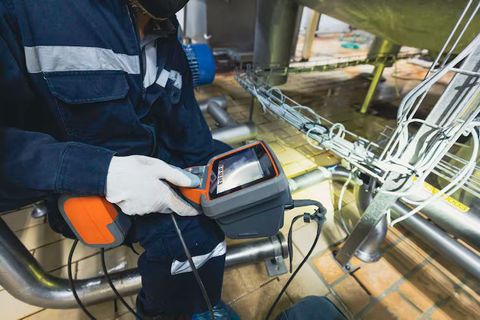
Electrical systems may require inspection of control cabinets, cables, connectors, sensors, cooling systems, and other components. Only appropriately qualified personnel should perform work involving electrical systems or machine-control hardware.
Tool Maintenance
Cutting tools gradually experience wear during machining. Worn or damaged tools can influence dimensions, surface condition, cutting forces, and machining stability.
Tool-life monitoring can be performed through scheduled replacement, measurement, machine monitoring, or software-based tracking, depending on the equipment.
Factors to Consider
Several factors influence CNC machine selection and machining performance.
Machine Capacity
Important capacity factors include working envelope, axis travel, spindle capability, table dimensions, workpiece weight, tool capacity, and maximum component size. These specifications should correspond with the intended workpieces.
Accuracy and Repeatability
Accuracy describes how closely a machine achieves a specified position or dimension, while repeatability concerns how consistently it returns to the same position under defined conditions. Both can be affected by machine condition, temperature, tooling, workholding, programming, and measurement methods.
Automation Level
Some CNC machines require substantial operator involvement, while others incorporate automatic tool changing, pallet systems, robotic loading, probing, tool monitoring, or other automated functions.
The appropriate automation level depends on production requirements and process complexity.
Material and Tooling
Harder materials can require different cutting tools, speeds, feeds, and cooling conditions than softer materials. Tool geometry and cutting parameters should therefore be selected according to the workpiece and operation.
Environmental Conditions
Temperature, vibration, contamination, coolant management, electrical stability, and machine cleanliness can influence machining performance. Temperature changes can also affect machine geometry and component dimensions.
Recent Updates
From 2024 through 2026, CNC development has increasingly focused on advanced manufacturing, automation, robotics, digital monitoring, and improved machine-tool capabilities. Government discussions in India have specifically identified CNC machine tools and controllers, advanced machines, robotics, metrology, and related technologies as areas relevant to an advanced manufacturing strategy.
Machine-tool standards have also continued to receive attention. A BIS compendium published in 2025 describes Indian Standards related to CNC and NC machine tools, including methods associated with geometric and positioning accuracy.
Another continuing trend is the integration of CNC equipment with sensors and digital systems. Machine condition data can support monitoring of spindle behavior, tool condition, vibration, temperature, and production status.
Robotic loading and unloading is also being integrated into some CNC production cells. Such systems can connect machine tools with automated material handling, inspection, and production-control processes.
Digital Manufacturing
Modern CNC environments may connect design software, CAM systems, machine controllers, inspection equipment, and manufacturing databases. This creates a more connected production workflow in which information can move between different stages.
Advanced Machining
Multi-axis machining, high-speed machining, automated tool management, probing, and in-process measurement continue to expand the capabilities of CNC production systems. These technologies are particularly relevant when components contain complex surfaces or require multiple operations.
Laws or Policies
In India, workplace machinery safety is governed by applicable occupational safety requirements, including legislation and rules that apply to the particular factory and activity. The Factories Act, 1948 contains requirements concerning fencing of machinery and protection around dangerous moving parts.
BIS also maintains standards and certification information related to machine safety. Its current Scheme-X information identifies metal-cutting machine tools within the machinery categories covered by specified safety requirements and references risk-assessment principles for applicable machinery.
BIS states that certification is generally voluntary unless the Central Government makes compliance compulsory for particular products through applicable requirements such as Quality Control Orders.
The BIS “Know Your Standard” platform allows users to search Indian Standards using an IS number or product keyword and review related standard information, amendments, notifications, and other documents.
Specific legal and technical obligations can vary according to the machine, workplace, industry, state requirements, and applicable notifications. This general information should therefore be considered alongside the machine manufacturer's documentation and the rules applicable to the particular facility.
Tools and Resources
Several resources can help readers understand CNC machines and machining processes.
CAD and CAM Software
CAD software is commonly used to create digital component designs. CAM software can then generate machining toolpaths based on the design and selected machining strategy.
CNC Simulators
CNC simulation tools can display tool movement and machining sequences before instructions are executed on a physical machine. They can help identify certain programming or collision issues during preparation.
Measurement Equipment
Calipers, micrometers, gauges, coordinate measuring machines, probes, and other inspection equipment can be used to check dimensions and component geometry. The appropriate measurement method depends on the required tolerance and feature.
Machine Manuals and Technical Documentation
The machine manual provides information about operating procedures, specifications, maintenance intervals, alarms, lubrication, tooling, and safety features. It is an important reference for the specific CNC machine.
BIS Standards Resources
The BIS website provides standards information and machine-safety resources. Its machine-safety materials address hazards associated with moving parts, electrical systems, and other aspects of machine tools.
FAQs
What are CNC machines used for?
CNC machines are used for controlled cutting, drilling, milling, turning, grinding, routing, and related machining operations. They can process materials such as metals, plastics, composites, and wood, depending on the equipment.
What are the main types of CNC machines?
Common types include CNC milling machines, CNC lathes, turning centers, machining centers, CNC routers, and CNC grinding machines. Each type is configured around particular machining operations.
How does a CNC machine work?
A CNC machine receives programmed instructions through its controller. The controller coordinates motors and machine axes to move the cutting tool or workpiece according to the programmed machining sequence.
What maintenance does a CNC machine need?
Typical maintenance includes cleaning, lubrication, coolant checks, tooling inspection, mechanical checks, electrical inspection, and monitoring of machine condition. The exact maintenance schedule should follow the manufacturer's instructions.
What factors affect CNC machining performance?
Important factors include machine capacity, tooling, workpiece material, cutting parameters, workholding, machine condition, temperature, programming, and measurement methods. These factors can influence dimensional accuracy, surface condition, tool life, and machining stability.
Conclusion
CNC machines combine computer-based control with mechanical machining equipment to perform programmed manufacturing operations. Major equipment types include milling machines, lathes, machining centers, routers, and grinding machines, while common methods include milling, turning, drilling, boring, tapping, and grinding. Recent developments have placed greater emphasis on automation, robotics, digital monitoring, multi-axis machining, and advanced manufacturing systems. In India, applicable workplace safety requirements and BIS standards provide important references for machine safety and technical conformity.