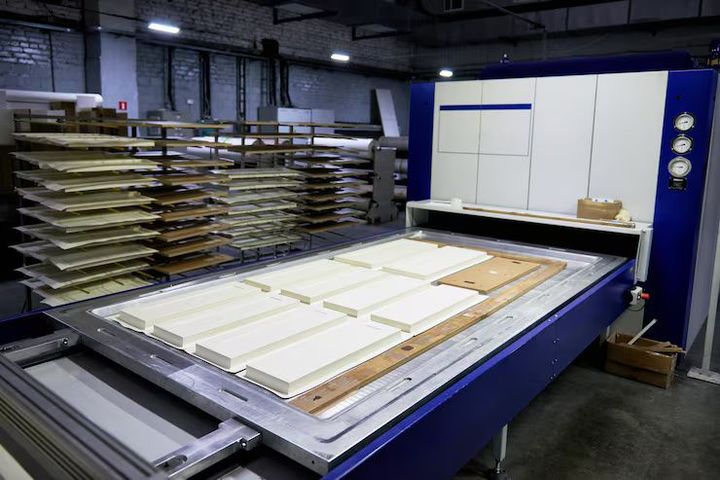
Wood Lamination Machines Guide: Explore Types, Components, Applications, Benefits, and Planning Factors
Wood lamination machines are industrial or workshop machines used to bond layers of wood, veneer, decorative sheets, or related materials into a combined panel or laminated component. A wood lamination machines guide helps explain the machine types, major components, applications, operating principles, benefits, and planning factors involved in laminated wood production.
Wood lamination is based on a simple principle: separate layers are joined with an adhesive and pressure so that they form a stable composite structure. Traditional woodworking relied heavily on manual adhesive application and mechanical clamping, while modern production uses controlled pressing, feeding, heating, and monitoring systems.
The exact machine configuration depends on the material and lamination method. Some equipment is designed for veneer bonding, while other systems are used for decorative laminates, plywood-related production, furniture panels, doors, flooring components, and engineered wood products.
What Is a Wood Lamination Machine?
A wood lamination machine applies controlled pressure, and in some designs heat, to materials that have been coated with an appropriate adhesive. The pressure helps maintain contact between the layers while the adhesive develops sufficient bonding strength.
Depending on the design, the machine may operate as a batch press or as part of a continuous production line. Hydraulic, pneumatic, mechanical, and electrically controlled systems can all be found in woodworking environments.
Basic Lamination Process
A typical process involves several stages:
- Surface preparation removes dust and unwanted particles.
- Material preparation establishes the required dimensions and arrangement of layers.
- Adhesive application places a controlled layer of bonding material between surfaces.
- Layer assembly positions veneers, sheets, or wood components in the intended sequence.
- Pressing applies controlled pressure to bring the layers together.
- Heating, where applicable, accelerates adhesive curing.
- Cooling or conditioning allows the laminated material to stabilize.
- Inspection checks dimensions, bonding, surface appearance, and other relevant properties.
The actual sequence varies according to the adhesive, wood species, panel construction, and machine design.
Importance
Wood lamination machines are important because laminated wood products are used in furniture, interior panels, doors, flooring, construction components, cabinetry, and other applications. Combining multiple layers can produce panels and components with characteristics that differ from those of a single solid piece of wood.
Controlled lamination can also help manufacturers process thin veneers, decorative surfaces, and engineered wood materials in a repeatable manner. The process is particularly useful when a specific panel thickness, surface pattern, or layered structure is required.
Applications of Wood Lamination Machines
Wood lamination equipment can be used in several areas:
- Furniture panels and cabinet components
- Plywood and veneer-based products
- Decorative wall and ceiling panels
- Laminated doors and door components
- Flooring elements
- Engineered wood structures
- Curved wooden components
- Decorative wood surfaces
- Interior architectural components
The required machine configuration changes with the dimensions, thickness, adhesive system, and production volume of the material.
Benefits of Wood Lamination
One important benefit is controlled bonding. A suitable press can distribute pressure across a panel more consistently than manual clamping, which can help reduce uneven bonding.
Lamination can also allow thin wood layers to be combined into larger or thicker components. Decorative surfaces can be integrated into panels, while different wood layers may be arranged to achieve particular structural or visual characteristics.
Another benefit is process repeatability. Machines can maintain defined pressure, temperature, pressing duration, and alignment parameters, reducing dependence on manual variation.
Types of Wood Lamination Machines
Wood lamination equipment is available in several configurations, each intended for different production conditions.
Hydraulic Lamination Press
Hydraulic presses use hydraulic cylinders to generate pressing force. They are commonly associated with panel production where controlled pressure across a relatively large surface is required.
Cold Press
Cold presses apply pressure without deliberately heating the workpiece. They are used with adhesive systems that cure under ambient or controlled-temperature conditions.
Hot Press
Hot presses combine pressure with heat. Heating can accelerate curing for suitable adhesive systems and is widely associated with plywood, veneer, laminate, and engineered wood production.
Roller Lamination Machine
Roller systems use rotating rollers to apply pressure while materials move through the machine. They can be useful for continuous or semi-continuous processing of sheets and surface materials.
Vacuum Lamination Machine
Vacuum lamination systems create pressure by removing air from a sealed area around the material. They can be used for veneers and decorative surfaces, particularly where the material has contours or complex shapes.
Automatic Lamination Line
Automatic systems can integrate material feeding, adhesive application, alignment, pressing, and material handling. The degree of automation varies according to the production setup.
Components
The components of a wood lamination machine vary by machine type, but several elements are commonly found.
Main Machine Components
The principal components can include:
- Pressing frame: Supports the pressing mechanism and transfers force to the workpiece.
- Hydraulic or pneumatic system: Generates and controls pressure in machines using fluid or compressed air.
- Heating system: Provides controlled heat in hot-press configurations.
- Pressing plates: Apply pressure across the laminated material.
- Rollers: Move material and provide continuous pressure in roller-based machines.
- Adhesive application unit: Applies adhesive to the required surface.
- Control panel: Allows operators to monitor and adjust process parameters.
- Temperature sensors: Monitor heating conditions where heat is used.
- Pressure sensors: Help monitor pressing conditions.
- Safety guards: Reduce exposure to moving or heated machine parts.
- Frame and support structure: Maintains machine alignment during operation.
The size and arrangement of these components depend on whether the equipment is designed for small panels, large sheets, curved parts, or continuous production.
How the Components Work Together
The machine begins by positioning the prepared materials in the correct sequence. Adhesive is applied according to the process requirements, and the layers are aligned before entering the pressing stage.
The pressing system then applies pressure across the material. If heat is part of the process, heating elements raise the pressing surface or workpiece to the required operating condition. Sensors and controls can monitor selected parameters during the cycle.
After the specified pressing period, the pressure is released and the laminated material is removed or transferred to the next production stage.
Recent Updates
From 2024 through 2026, wood-processing equipment has continued moving toward automation, digital controls, improved process monitoring, and greater integration between individual machines. These developments reflect a broader shift toward connected manufacturing and more controlled production processes.
Modern lamination systems may incorporate programmable controllers, digital pressure regulation, temperature monitoring, automatic material feeding, and data recording. Automated alignment and handling can also reduce manual movement of large panels.
Another development is increased attention to adhesive performance and emissions from wood-based products. Indian standards have continued to address plywood, particle boards, adhesives, formaldehyde content, and related material characteristics. BIS documentation for IS 303:2024, for example, identifies plywood grades, appearance categories, and formaldehyde classes.
BIS material also shows recent standards activity involving marine plywood and medium-density particle boards, including requirements related to moisture, bonding, mechanical properties, and formaldehyde measurements.
Digital Monitoring
Digital controls allow selected machine parameters to be monitored more precisely. Pressure, temperature, pressing duration, and machine status can be displayed through electronic control interfaces.
Some production environments also connect machine controls with broader manufacturing information systems. This can help record process information and identify changes between production cycles.
Energy and Material Efficiency
Current equipment development also places attention on controlled heating, optimized pressing cycles, and material handling. Reducing unnecessary processing time or excessive heat can be relevant to energy management and product consistency.
The practical effect depends on the machine design, adhesive system, material thickness, and production conditions.
Laws or Policies
In India, woodworking machinery used in industrial workplaces can fall under occupational safety requirements applicable to factories and manufacturing environments. Requirements may address machine guarding, worker safety, electrical systems, ventilation, fire precautions, and safe operating procedures.
The Occupational Safety, Health and Working Conditions Code framework is relevant to workplace health and safety in covered establishments. The Ministry of Labour and Employment provides information and legislative resources concerning occupational safety and working conditions.
Wood-processing environments also require attention to airborne dust. Cutting, sanding, routing, and other woodworking operations can generate particulate matter, making suitable dust extraction, housekeeping, ventilation, and protective measures important considerations.
Bureau of Indian Standards resources are relevant to wood-based products and their technical specifications. Recent standards include IS 303:2024 for plywood for general purposes and IS 710:2024 for marine plywood. These standards include requirements concerning properties such as dimensions, moisture, bonding, and formaldehyde classification or testing.
The exact legal and technical requirements depend on the workplace, machine, product, adhesive, and intended application. Applicable national, state, and local requirements should therefore be checked for a particular installation.
Tools and Resources
Several resources can help readers understand wood lamination equipment and plan a suitable process.
Machine Specification Sheets
A machine specification sheet normally identifies pressing dimensions, pressure range, heating method, electrical requirements, control functions, and material-handling capabilities. Comparing these parameters can help clarify whether a machine fits a particular panel format.
Adhesive Technical Data
Adhesive technical documentation normally provides information about mixing, application rate, curing conditions, open time, pressing requirements, moisture sensitivity, and handling precautions. These details are important because lamination conditions vary significantly between adhesive systems.
Moisture Measurement Tools
Wood moisture meters can be used to assess the moisture condition of wood materials before lamination. Moisture content can influence adhesive behavior, dimensional stability, and bonding conditions.
Pressure and Temperature Monitoring
Pressure gauges, electronic sensors, and temperature measurement devices can help verify whether machine settings correspond with the intended process. Records can also be maintained for process comparison.
BIS Standards Resources
The Bureau of Indian Standards provides searchable standards information covering plywood, particle boards, wood-based panels, adhesives, and related materials. BIS records show standards such as IS 303:2024 and IS 710:2024, along with testing information for characteristics including bonding and formaldehyde.
Planning Factors
Before selecting or configuring wood lamination equipment, several technical factors should be considered:
| Planning factor | Key consideration |
|---|---|
| Material | Wood species, veneer, plywood, MDF, particle board, or laminate |
| Panel dimensions | Length, width, and thickness |
| Adhesive | Type, application method, curing requirements |
| Pressing method | Hydraulic, pneumatic, mechanical, vacuum, or roller |
| Temperature | Ambient or heated pressing |
| Pressure | Required pressure for the material and adhesive |
| Production pattern | Batch or continuous processing |
| Automation | Manual, semi-automatic, or automated controls |
| Workplace | Floor area, ventilation, electrical supply, and material movement |
| Safety | Guards, emergency controls, dust management, and operator protection |
These factors influence the machine configuration and the surrounding production environment.
FAQs
What is a wood lamination machine used for?
A wood lamination machine is used to bond layers of wood, veneer, decorative sheets, or related materials under controlled pressure. Applications include furniture panels, doors, flooring components, plywood-related products, and interior panels.
How does a wood lamination machine work?
The machine brings prepared layers together after adhesive application and applies controlled pressure. Depending on the design and adhesive, heat may also be applied to support the curing process.
What are the main components of a wood lamination machine?
Common components include a pressing frame, pressing plates, hydraulic or pneumatic mechanisms, heating elements where applicable, sensors, controls, material supports, and safety guards. Roller and vacuum machines use additional components suited to their operating method.
What factors should be considered when planning a wood lamination machine setup?
Important factors include material dimensions, adhesive requirements, pressing pressure, temperature, production pattern, machine capacity, available floor space, electrical requirements, ventilation, dust control, and workplace safety.
Are wood lamination machines used for plywood production?
Yes. Lamination and pressing equipment can be part of plywood and veneer-based production processes. Applicable product requirements depend on the plywood type and relevant standards, including specifications such as IS 303:2024 and IS 710:2024 in India.
Conclusion
Wood lamination machines use controlled pressure, and sometimes heat, to join layers of wood, veneer, and related materials into laminated products. Their configurations range from hydraulic and hot presses to roller, vacuum, and automated systems. Machine selection and process planning depend on material characteristics, adhesive requirements, panel dimensions, production patterns, and workplace conditions. Recent developments have increased the use of digital controls, automation, monitoring systems, and standards addressing wood-based product characteristics.