Wine Bottling Machines Guide: Explore Types, Components, Capacity, Applications, and Efficiency Factors
Wine bottling machines are equipment systems designed to transfer wine into containers and prepare bottles for sealing, labeling, and further packaging. A wine bottling machine may perform only the filling stage, or it may be part of an integrated bottling line that includes bottle rinsing, filling, corking or capping, capsule application, labeling, and conveying.
The development of wine bottling equipment is closely connected with the growth of organized wine production. Earlier bottling methods depended heavily on manual filling and sealing, while modern systems can coordinate several operations through mechanical drives, sensors, programmable controls, and automated handling.
Wine bottles can have different shapes, sizes, neck finishes, and closure types. As a result, bottling equipment is designed in several configurations to accommodate still wine, sparkling wine, different bottle formats, and different production requirements.
What a Wine Bottling Machine Does
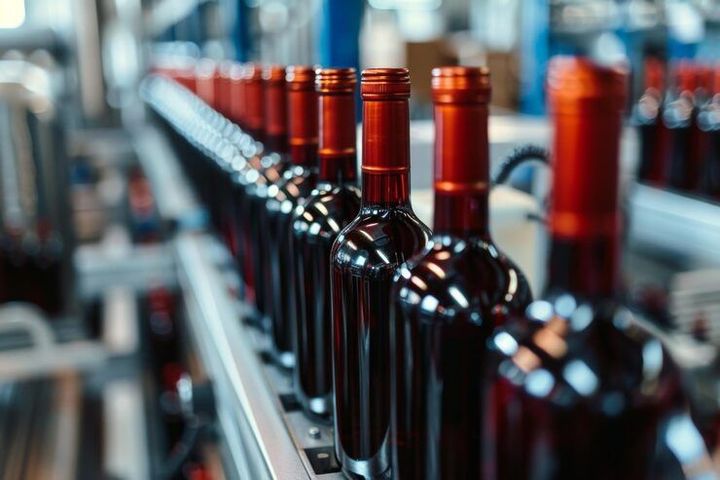
The basic function of a wine bottling machine is to move wine from a holding tank or supply system into bottles under controlled conditions. After filling, the bottle generally moves to a closure station where a cork, screw cap, or another suitable closure is applied.
A complete line can then apply capsules and labels before bottles are transferred to inspection, case packing, or palletizing equipment. The individual machines can operate separately or be integrated into a continuous production line.
Main Stages of Wine Bottling
A typical bottling sequence can include:
- Bottle preparation or rinsing
- Wine filling
- Corking or capping
- Capsule application
- Label application
- Bottle inspection
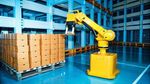
- Case packing and palletizing
Not every facility uses all of these stages, and the exact sequence depends on the wine type, bottle design, closure, and packaging format.
Importance
Bottling is an important stage because the wine must be transferred from a production or storage container into its final package while maintaining controlled filling, sealing, and handling conditions. Poorly coordinated equipment can create problems such as inconsistent fill levels, bottle breakage, leakage, product loss, or interruptions between production stages.
Wine bottling machines are used by wineries, contract bottling operations, beverage packaging facilities, and other organizations involved in wine production and packaging. Equipment configurations range from manually operated fillers to automated systems designed for continuous production.
Why Filling Control Matters
Filling accuracy affects the amount of liquid placed in each bottle and the consistency of the finished package. Different filling technologies use different methods to control liquid level or volume.
Vacuum and liquid-level systems are commonly associated with still wine, while pressure-controlled filling is relevant to sparkling or carbonated products. The appropriate technology depends on the characteristics of the wine and the required packaging process.
Why Line Integration Matters
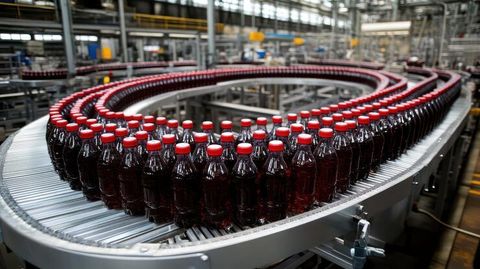
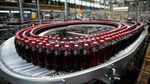
A bottling line works as a sequence of connected operations. Conveyors move bottles between stations, while controls coordinate the timing of filling, sealing, labeling, and other processes.
When equipment is integrated, the operating speed of one station can affect the entire line. A filler running faster than the capper, for example, may create accumulation between stations unless the system is designed to manage the difference.
Recent Updates
From 2024 through 2026, wine bottling technology has continued to move toward automation, process monitoring, compact integrated systems, and greater compatibility with different bottle and closure formats. Current equipment discussions increasingly focus on combining rinsing, filling, and capping functions into integrated machines or monoblock systems.
Automation is also becoming more closely connected with electronic controls and sensors. These systems can monitor operating conditions, coordinate bottle movement, and support repeatable filling and closure operations.
Automation and Digital Controls
Modern automatic lines may use programmable logic controllers, sensors, variable-speed drives, and operator interfaces. These components allow machine sequences to be coordinated and operating parameters to be monitored.
Automation can be particularly useful where the same bottle format and process are repeated for extended production runs. However, machine capability depends on the specific equipment configuration and production environment.
Different Filling Technologies
Wine filling equipment can use several approaches. Gravity filling relies on the natural movement of liquid from a higher level, while vacuum systems use pressure differences to assist filling. Isobaric filling uses controlled pressure and is particularly relevant to sparkling beverages.
Some systems also use inert gases such as nitrogen to manage oxygen exposure during particular stages. The selection depends on wine characteristics, bottle format, closure requirements, and the intended bottling process.
Compact and Integrated Equipment
Integrated machines combine multiple operations within a smaller equipment footprint. A monoblock configuration may connect bottle rinsing, filling, and capping on one machine frame, reducing the need for separate transfers between these stages.
Laws or Policies
In India, wine production and packaging are influenced by food-safety regulations as well as state-level rules governing alcoholic beverages. The Food Safety and Standards Authority of India (FSSAI) lists the Food Safety and Standards (Alcoholic Beverages) Regulations, 2018 among its product regulations, alongside packaging and labeling requirements.
FSSAI's alcoholic beverage requirements include specific labeling provisions for wine. The regulatory material includes requirements relating to information such as wine origin, sugar range, grape or fruit variety where applicable, and certain processing residues or additives. It also contains provisions concerning sulfite declarations and statutory health warnings.
Packaging and labeling requirements also apply to packaged food products, with separate provisions and amendments maintained through FSSAI's regulatory resources.
Labeling Considerations
Wine labels may need to contain regulatory information in addition to product identification. Requirements can include alcohol content, volume, origin, responsible-party information, batch or code information, and other declarations depending on the product and applicable rules.
Imported alcoholic beverages may have additional requirements. Current guidance concerning products imported into India identifies information such as country of origin, alcohol content, volume, ingredients, residual sugar for wines, FSSAI information, and responsible-party details among labeling considerations.
Because alcoholic beverage regulation can involve both national and state-level requirements, businesses should verify the rules applicable to their particular product, location, and packaging arrangement.
Tools and Resources
Several technical resources can help readers understand wine bottling machines and evaluate how a bottling line operates.
Machine Manuals and Technical Specifications
Equipment manuals normally provide information about bottle dimensions, operating speed, filling systems, closure compatibility, electrical requirements, cleaning procedures, and safety precautions. These documents are important because specifications vary considerably between machine models.
Capacity Planning Tools
A simple production calculation can help relate machine capacity to production requirements. If a machine operates at a stated number of bottles per hour, theoretical hourly output can be estimated by multiplying the operating rate by planned operating hours.
Actual production can be lower because of bottle changes, cleaning, adjustments, maintenance, line stoppages, inspections, and other interruptions.
Bottling Line Components
A typical integrated line may contain the following equipment:
| Component | Main function |
|---|---|
| Bottle rinser | Removes dust or particles before filling |
| Filler | Transfers wine into bottles |
| Corker or capper | Applies the selected closure |
| Capsule applicator | Places a capsule around the bottle neck |
| Labeler | Applies required product labels |
| Conveyor | Moves bottles between stations |
| Inspection system | Checks selected bottle or packaging conditions |
| Case packer | Groups bottles into cases |
| Palletizer | Arranges cases for handling and storage |
The exact configuration varies by production scale and packaging format. A complete bottling line may combine several of these machines into a coordinated system.
Capacity and Efficiency Factors
Machine capacity is usually expressed in bottles per hour, but rated capacity does not necessarily equal actual production output. Important factors include bottle size, filling method, closure type, changeover frequency, operator involvement, cleaning requirements, and equipment downtime.
| Factor | Potential effect on operation |
| Bottle size | Changes filling volume and handling requirements |
| Wine type | Influences filling technology |
| Closure type | Determines corking or capping equipment |
| Line speed | Determines theoretical throughput |
| Changeovers | Can reduce productive operating time |
| Cleaning | Requires planned equipment downtime |
| Bottle handling | Affects transfer speed and breakage risk |
| Automation level | Influences operator involvement |
| Inspection | Adds a quality-control stage |
| Packaging format | Determines downstream equipment |
These factors should be considered together rather than judging a wine bottling machine solely by its stated speed.
FAQs
What is a wine bottling machine?
A wine bottling machine transfers wine into bottles under controlled conditions. Depending on its configuration, it may also rinse bottles, apply corks or caps, and connect with labeling and packaging equipment.
What are the main types of wine bottling machines?
Common configurations include manual, semi-automatic, and automatic systems. Filling methods can include gravity, vacuum, liquid-level, and isobaric systems, with the appropriate configuration depending on the wine and packaging requirements.
What components are included in a wine bottling machine?
Common components include bottle rinsers, filling valves, liquid tanks or bowls, pumps or pressure systems where applicable, corkers or cappers, conveyors, controls, and protective guards. Complete bottling lines may also include capsule applicators and labelers.
How is wine bottling machine capacity measured?
Capacity is commonly expressed in bottles per hour. Actual output can differ from rated capacity because of cleaning, changeovers, bottle handling, interruptions, inspections, and other operating factors.
What regulations apply to wine bottling in India?
Wine packaging in India is subject to applicable FSSAI requirements, including the Food Safety and Standards (Alcoholic Beverages) Regulations and relevant labeling and packaging provisions. State-level alcoholic beverage rules may also apply.
Conclusion
Wine bottling machines form part of the packaging stage that transfers wine into bottles and prepares them for closure, labeling, and further handling. Equipment can range from manually operated fillers to automated lines combining rinsing, filling, sealing, labeling, and packaging operations. Capacity depends on factors such as filling technology, bottle format, closure type, automation, changeovers, and operating conditions. In India, applicable FSSAI requirements and state-level alcoholic beverage regulations also influence wine packaging and labeling practices.