What Is a Transformer? A Simple Guide to Electrical Transformers
Electricity powers homes, offices, hospitals, schools, factories, and transport systems. Yet the electricity generated at a power plant is not always in the right form for every stage of its journey. Before it can travel long distances safely and then reach homes and devices at a usable level, its voltage often needs to be changed. This is where a transformer becomes important.
A transformer is an electrical device that changes the voltage of alternating current (AC) electricity from one level to another. It can increase voltage for efficient transmission across long distances or reduce voltage so electricity can be used safely in buildings, appliances, and equipment. Although transformers often sit quietly on poles, in substations, or inside electronic products, they play a major role in modern life.
Understanding transformers helps explain how electricity moves from generation stations to homes and workplaces. It also helps people understand why the power system is built the way it is, why some equipment needs special voltage levels, and how energy can be transferred more efficiently. This article explains what a transformer is, how it works, the main parts inside it, common types, everyday uses, and why it remains essential in electrical systems around the world.
What Is a Transformer?
A transformer is a device used in electrical systems to transfer electrical energy between circuits through electromagnetic induction. In simple terms, it changes the voltage level of AC electricity without changing its frequency.
For example, electricity may leave a power station at one voltage, be increased to a much higher voltage for transmission across long distances, and later be reduced again before it reaches homes, shops, and offices. A transformer makes these voltage changes possible.
Transformers work only with alternating current because they rely on a changing magnetic field. Direct current (DC) does not naturally create the same continuous change in magnetic field needed for standard transformer operation.
Why Voltage Needs to Change
To understand the purpose of a transformer, it helps to think about how electricity travels.
When electricity is sent over long distances, some energy is lost as heat in transmission lines. One way to reduce these losses is to send electricity at a higher voltage and lower current. Higher-voltage transmission allows power to travel more efficiently across large distances.
However, homes, lighting systems, office equipment, and many machines do not use such high voltages directly. Before electricity reaches users, the voltage must be lowered to a safer and more practical level. This is why electrical networks use many transformers between generation points and end users.
In short, transformers help:
- increase voltage for long-distance transmission
- Reduce voltage for safe local distribution
- Match the voltage to the needs of different equipment
- improve efficiency in power systems
How a Transformer Works
A transformer works based on electromagnetic induction. While the internal physics can become complex, the basic idea is fairly easy to understand.
A transformer usually has two coils of wire wrapped around a magnetic core:
- Primary winding – connected to the incoming electrical supply
- Secondary winding – connected to the outgoing circuit
When alternating current flows through the primary winding, it creates a changing magnetic field around the core. This changing magnetic field passes through the secondary winding and induces a voltage in it.
The amount of voltage produced in the secondary winding depends mainly on the number of turns in each coil.
Step-Up and Step-Down Action
If the secondary winding has more turns than the primary winding, the transformer increases the voltage. This is called a step-up transformer.
If the secondary winding has fewer turns than the primary winding, the transformer reduces the voltage. This is called a step-down transformer.
For example:
- A step-up transformer may raise voltage for transmission lines.
- A step-down transformer may lower the voltage before electricity enters homes or a device charger.
Main Parts of a Transformer
Although transformer designs vary depending on size and use, many include the same basic components.
1. Core
The core is usually made of laminated iron or steel sheets. Its purpose is to carry the magnetic flux created by the primary winding and guide it efficiently to the secondary winding. The laminated design helps reduce energy losses caused by eddy currents.
2. Primary Winding
This is the coil connected to the incoming AC supply. It receives electrical energy and creates the changing magnetic field.
3. Secondary Winding
This is the coil connected to the output side. The changing magnetic field from the core induces a voltage in this winding.
4. Insulation
Insulation separates electrical parts and helps prevent short circuits. It also improves safety and reliability.
5. Tank and Cooling System
Large power transformers often include a metal tank filled with insulating oil. The oil helps with cooling and electrical insulation. Some units also use radiators, fans, or other cooling arrangements to manage heat.
6. Bushings
Bushings allow conductors to enter and leave the transformer safely while maintaining insulation from the outer body.
Common Types of Transformers
Transformers are used in many settings, from giant power grids to small household electronics. Because of this, they come in several types.
Power Transformer
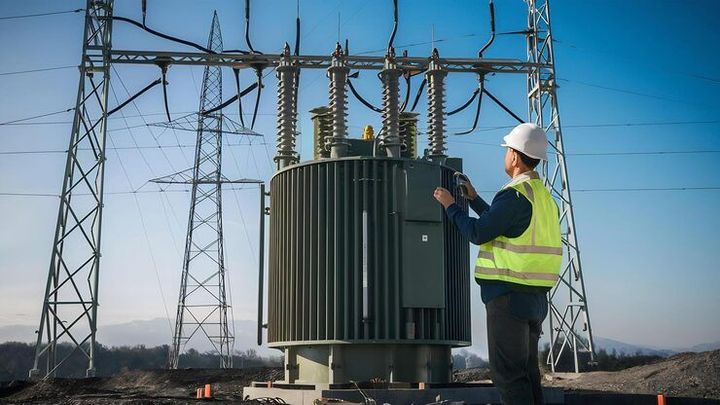
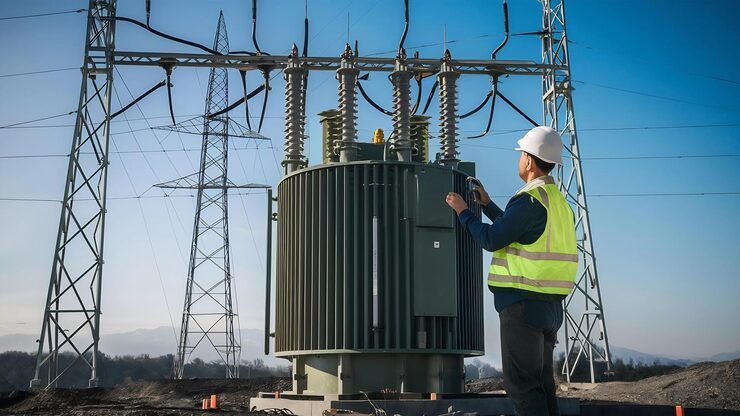
Power transformers are used in transmission networks and large substations. They handle high voltage levels and large amounts of electrical power. Their role is often connected with transferring electricity between the generation and transmission stages.
Distribution Transformer
Distribution transformers are used closer to homes, shops, and local facilities. They reduce the voltage from distribution lines to the level needed by end users.
Step-Up Transformer
A step-up transformer increases voltage from the primary side to the secondary side. It is commonly used where electricity needs to travel long distances efficiently.
Step-Down Transformer
A step-down transformer lowers the voltage to a more usable level. These are common in local electricity distribution and in many electronic devices.
Isolation Transformer
An isolation transformer transfers electrical power between two circuits while keeping them electrically separated. It is often used for safety, noise reduction, and equipment protection.
Instrument Transformer
These transformers are used for measurement and protection in electrical systems. They help monitor equipment and protective devices that work with high-voltage systems more safely.
Where Transformers Are Used
Transformers are part of daily life, even if they are not always noticed.
Electricity Transmission and Distribution
This is the most visible role of transformers. Electricity is generated, stepped up for transmission, and then stepped down multiple times before reaching homes and businesses.
Residential Areas
The transformer mounted on a utility pole or placed in a ground-level cabinet near homes reduces distribution voltage to the level used inside buildings.
Industrial Facilities
Factories often use transformers to match the voltage requirements of machinery, motors, and production equipment.
Commercial Buildings
Shopping centers, offices, hospitals, and educational campuses use transformers for safe and stable power distribution.
Consumer Electronics
Many chargers, adapters, and internal power supplies use transformer-based designs to adjust voltage for devices such as televisions, routers, audio systems, and other equipment.
Renewable Energy Systems
Solar and wind installations also use transformers to connect generated electricity to local systems or the wider power grid.
Why Transformers Matter
Transformers are essential because they make large electrical systems practical, efficient, and adaptable. Without them, modern power networks would be far more difficult to operate.
1. They improve transmission efficiency
By increasing voltage for long-distance transmission, transformers help reduce energy losses in power lines.
2. They make electricity usable
Different buildings, devices, and industrial systems need different voltage levels. Transformers help match the supply to those needs.
3. They support electrical safety
Lowering the voltage before it reaches homes and equipment makes electricity safer to use.
4. They help connect many parts of the grid
Transformers link power plants, substations, neighborhoods, and equipment into one working system.
5. They support modern infrastructure
From transport systems to communication networks and data facilities, many important systems depend on reliable voltage conversion.
Transformer Efficiency and Losses
No transformer is perfectly efficient, although many are highly efficient. Some energy is lost during operation. The main losses include:
- Copper losses – caused by resistance in the windings
- Core losses – caused by magnetic effects in the core, including hysteresis and eddy currents
- Stray losses – smaller losses from leakage fields and other factors
Engineers reduce these losses through improved materials, better design, cooling systems, and proper maintenance. Even small efficiency improvements can matter when transformers operate continuously for years.
Maintenance and Safety Considerations
Large transformers in substations and industrial environments require regular inspection and maintenance. Typical checks may include:
- monitoring temperature
- checking insulation condition
- testing oil quality in oil-filled units
- inspecting bushings and connections
- listening for unusual noise or vibration
Safety is also important because transformers may operate at high voltage. Work on these systems should be handled by trained personnel using proper procedures and protective equipment.
The Future of Transformers
Transformers continue to evolve as electrical systems change. Growing electricity demand, renewable energy expansion, electric vehicle charging infrastructure, and digital grid technologies are shaping transformer design and usage.
Modern transformers may include smarter monitoring systems, improved insulation materials, and designs that support more flexible energy networks. As power systems become more connected and data-driven, transformers remain a central part of the infrastructure that keeps electricity moving where it is needed.
Conclusion
A transformer is one of the quiet foundations of modern electrical life. It changes AC voltage from one level to another, helping electricity move efficiently from generation stations to transmission lines, substations, neighborhoods, buildings, and devices. Its basic principle—electromagnetic induction—makes it possible to raise voltage for efficient transmission and lower it for practical everyday use.
Although transformers are often hidden in utility equipment, industrial systems, and electronic products, their role is everywhere. They improve efficiency, support safety, and help connect the many stages of the electrical grid. For anyone trying to understand how electricity reaches homes and workplaces, the transformer is one of the most important devices to know.