Auto Industry Guide: Trends, Technology, and Future Changes
The auto industry touches everyday life in ways many people do not stop to think about. It affects how people travel to work, how goods move across cities and countries, and how communities are connected. From family cars and buses to electric vehicles and advanced safety systems, the auto industry plays a major role in modern life.
At its core, the auto industry includes the design, development, manufacturing, distribution, and maintenance of motor vehicles. It also includes the wide network of parts makers, software developers, battery producers, logistics companies, and infrastructure providers that support transportation. In simple terms, it is not just about making cars. It is a much larger system that connects engineering, energy, technology, public policy, and consumer behavior.
Over the past century, the auto industry has changed dramatically. Early vehicles were mechanical and relatively simple compared with today’s connected and software-driven models. Over time, manufacturers introduced safety improvements, fuel-efficiency upgrades, stronger production methods, and digital features that changed how vehicles are built and used. Today, the industry is in another period of major change, shaped by electrification, automation, environmental goals, and changing transportation habits.

What the Auto Industry Includes
The auto industry is often associated with passenger cars, but it covers much more than that. It includes:
- Passenger vehicles such as hatchbacks, sedans, SUVs, and vans
- Commercial vehicles such as trucks, delivery vans, and buses
- Electric vehicles and hybrid vehicles
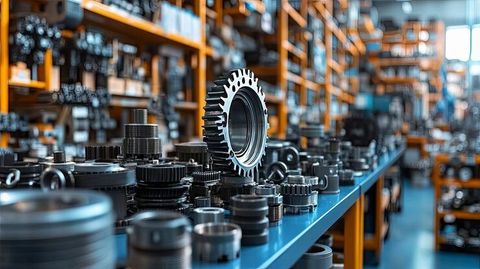
- Auto parts and component manufacturing
- Batteries, electronics, sensors, and software systems
- Vehicle assembly plants and supply chain operations
- Charging infrastructure and related transportation technology
This broad structure means that changes in the industry affect many areas at once. For example, a shift toward electric vehicles not only changes the vehicles themselves. It also changes battery production, raw material demand, charging infrastructure planning, repair training, and even power grid discussions.
Why the Auto Industry Matters
The auto industry matters because transportation is deeply linked to economic activity and daily routines. Vehicles help people commute, support public transportation systems, move raw materials to factories, and deliver finished products to homes and businesses. In many regions, the auto sector is also closely tied to industrial output, export activity, and technological innovation.
The industry also influences environmental policy. Road transport is a major source of greenhouse gas emissions in many countries, which is why vehicle efficiency and cleaner power systems are receiving more attention. Governments, manufacturers, and consumers are all part of this shift. Rules around emissions, safety, and fuel economy continue to shape what vehicles are produced and how quickly new technologies are adopted.
For households, the industry affects convenience, mobility, and safety. Newer vehicles may include driver-assistance features, improved braking systems, better crash protection, and more efficient engines or batteries. These changes can influence travel comfort and long-term transportation choices.
How Vehicles Are Made
Making a vehicle involves a long and highly coordinated process. It begins with research and design. Engineers and designers work on the shape of the vehicle, engine,e or battery system, safety structure, software, and interior features. Once the design is finalized, manufacturers source thousands of parts from suppliers. These parts include tires, seats, wiring, sensors, brakes, glass, steel components, and electronic control units.
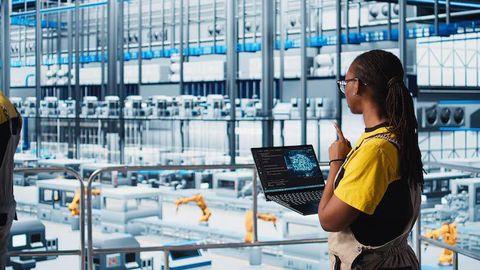
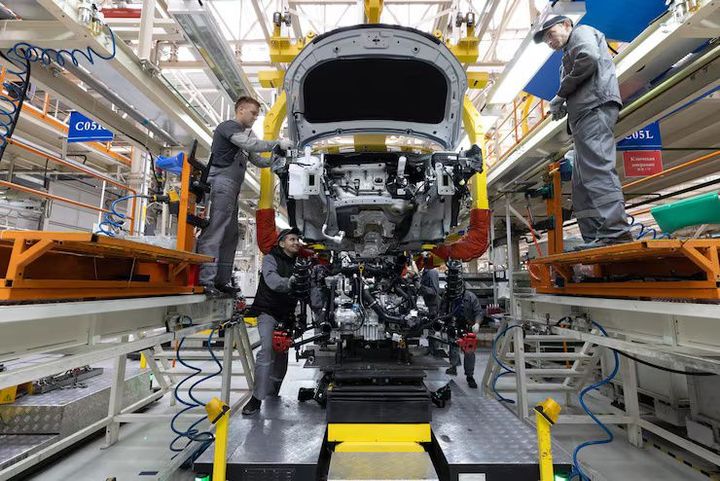
The assembly stage brings all of these parts together. Large factories use a mix of automated systems and human labor to weld body structures, install powertrains, fit interiors, paint the vehicle, and run quality checks. Modern plants often rely on robotics for precision tasks, while trained workers handle inspection, adjustments, and more complex assembly work.
After assembly, vehicles go through testing for performance, safety, emissions compliance, and reliability. Only after these steps are complete do they move through distribution channels and reach dealerships, fleet operators, or transportation networks.
The Rise of Electric Vehicles
One of the biggest changes in the auto industry is the growth of electric vehicles, often called EVs. Unlike traditional vehicles that use gasoline or diesel engines, EVs run on electric motors powered by rechargeable batteries. This shift is changing how vehicles are designed, built, and supported.
Electric vehicles have gained attention for several reasons. They can help reduce tailpipe emissions, support energy transition goals, and lower dependence on fossil fuels. Improvements in battery technology have also helped increase driving range and performance. At the same time, challenges remain. Battery production requires raw materials such as lithium, nickel, and cobalt, and charging infrastructure still needs to expand in many places.
Hybrid vehicles, which combine a fuel engine with an electric motor, have also become an important part of the transition. For some consumers, hybrids act as a middle path between traditional fuel vehicles and fully electric models.
Technology Is Reshaping the Driving Experience
The modern vehicle is no longer only a mechanical machine. It is increasingly a digital platform on wheels. Many vehicles now include touchscreen systems, navigation tools, smartphone integration, rear-view cameras, parking sensors, and advanced driver-assistance features.
These technologies are changing the way people interact with vehicles. Features such as lane warnings, adaptive cruise control, collision alerts, and automated emergency braking are designed to improve awareness and reduce accidents. Some higher-end systems can assist with steering, parking, and highway driving under specific conditions, although they still require driver attention.
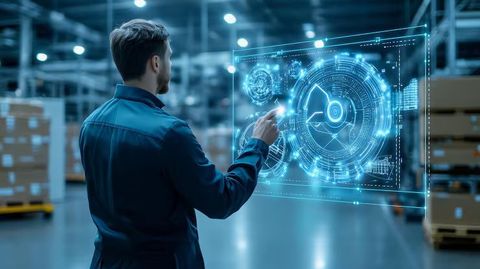
Software is also becoming more important in vehicle maintenance and updates. In some cases, vehicle functions can be improved through remote software updates, similar to how phones and computers receive updates. This has changed how manufacturers think about vehicle development, cybersecurity, and long-term performance.
Supply Chains and Global Connections
The auto industry depends on a complex global supply chain. A single vehicle may include materials and parts from many different countries. Steel, aluminum, semiconductors, batteries, rubber, plastics, and electronic components all move through a large international network before reaching the final assembly line.
This global structure can improve efficiency, but it also creates risk. In recent years, supply chain disruptions have shown how quickly production can be affected by shortages of semiconductors, shipping delays, trade restrictions, or geopolitical tensions. When one critical part is delayed, entire production schedules can be affected.
Because of this, many companies are now reviewing how they source parts and materials. Some are diversifying suppliers, building regional supply hubs, or investing in local battery and chip production to reduce dependence on a single source.
Environmental Pressure and Industry Change
Environmental concerns are a major force shaping the future of the auto industry. Governments in many countries are setting stricter emissions standards and encouraging cleaner transport systems. This has pushed manufacturers to invest more heavily in electric vehicles, fuel efficiency improvements, lightweight materials, and battery research.
Sustainability discussions now go beyond tailpipe emissions. Companies are also looking at how vehicles are produced, how batteries are recycled, and how raw materials are sourced. Manufacturing plants are exploring lower-emission operations, and researchers are studying ways to reuse battery materials and reduce waste.
This does not mean the transition is simple. It involves infrastructure planning, energy supply questions, raw material access, and consumer education. But it does mean that environmental goals are no longer a side issue. They are now central to long-term planning in the auto sector.
Changing Consumer Expectations
Consumer expectations have changed along with the industry itself. People now look at more than just engine size or exterior design. They may also consider fuel efficiency, charging access, safety technology, digital features, interior comfort, and long-term reliability.
Urbanization has also influenced transportation habits. In some cities, people are relying more on shared mobility, ride-hailing, public transit, and short-distance electric transport options. This has pushed parts of the auto industry to think beyond personal vehicle ownership and consider mobility as a broader ecosystem.
At the same time, demand remains varied across regions. In some areas, larger vehicles remain popular due to road conditions, family needs, or work-related use. In others, compact electric vehicles and urban mobility solutions are receiving more attention.
What the Future May Look Like
The future of the auto industry will likely be shaped by four major themes: electrification, software integration, automation, and sustainability. Electric vehicles are expected to keep growing as battery technology improves and charging networks expand. Software will continue to influence navigation, safety, diagnostics, and in-car experiences. Automation may improve manufacturing and gradually expand driver-assistance capabilities. Sustainability will remain a key focus across production, materials, and policy.
Still, change in the auto industry rarely happens all at once. Different countries, companies, and consumers move at different speeds depending on infrastructure, regulations, income levels, and local transportation needs. That is why the industry will likely remain mixed for years, with fuel vehicles, hybrids, and EVs all continuing to play a role.
Conclusion
The auto industry is far more than a collection of car manufacturers. It is a global network that connects transportation, technology, manufacturing, energy, and public policy. It influences how people move, how goods are delivered, and how countries think about economic development and environmental responsibility.
Today, the industry is in the middle of a major transformation. Electric vehicles, digital systems, changing supply chains, and sustainability goals are reshaping what vehicles are and how they fit into daily life. For the general public, understanding these changes can make it easier to follow transportation trends, policy shifts, and the technologies that are becoming part of everyday driving. The auto industry will continue to evolve, but its role in shaping mobility and modern life is unlikely to become any less important.