What Is Rubber Machinery? A Simple Guide to Machines and Uses
Rubber machinery plays an important role in the products people use every day, even if most people never notice it. From car tires and conveyor belts to seals, hoses, gloves, and flooring materials, many rubber items begin their journey through specialized machines. These machines help mix, shape, press, heat, and finish rubber so it can be turned into useful products for homes, factories, transport systems, and healthcare settings.
For someone outside the manufacturing world, the term “rubber machinery” may sound highly technical. In reality, it refers to a group of machines designed to handle rubber materials during different stages of production. Some machines prepare raw rubber by blending it with chemicals and fillers. Others shape it into sheets, strips, or molded parts. Some are used to heat and cure rubber so it becomes strong, flexible, and durable.
Understanding rubber machinery matters because rubber products are closely tied to daily life and modern industry. Cars rely on rubber tires, seals, and vibration-control parts. Buildings use rubber flooring, insulation components, and waterproof materials. Industrial plants use rubber belts, rollers, and gaskets. Even simple household items such as mats, footwear, and kitchen tools may depend on machinery that processes rubber efficiently and consistently.

What Is Rubber Machinery?
Rubber machinery is a broad term for equipment used in the processing and manufacturing of rubber products. Rubber itself can be natural, synthetic, or blended, depending on the intended use. Before rubber becomes a finished product, it often passes through several stages, and each stage may require a different type of machine.
These machines are designed to handle tasks such as:
- Mixing rubber with additives
- Forming rubber into specific shapes
- Heating and curing the material
- Cutting, cooling, or finishing final products
- Recycling leftover rubber material in some cases
The exact machinery used depends on the type of rubber product being made. For example, a factory producing tires may use different systems from one making rubber gloves or industrial seals.
Why Rubber Needs Specialized Machinery
Rubber is a flexible material, but it can also be difficult to process without the right equipment. It may need to be softened, blended with chemicals, heated at controlled temperatures, and shaped under pressure. Small differences in timing, temperature, or mixing quality can affect the final result.
Specialized rubber machinery helps manage these variables. It allows manufacturers to produce rubber products with greater consistency, better surface quality, and more reliable performance. Machinery also helps reduce manual handling, improve speed, and support larger-scale production.
In simple terms, rubber machinery makes it possible to turn a sticky, elastic raw material into a finished product that is practical, durable, and ready for real-world use.
Main Types of Rubber Machinery
Rubber processing usually involves more than one machine. Each machine has a specific role in the production chain. Below are some of the most common types.
1. Mixing Mills
Mixing mills are used to blend raw rubber with other materials such as carbon black, oils, curing agents, and pigments. These machines often use two rotating rollers that squeeze and knead the rubber until the ingredients are evenly distributed.
This stage is important because the quality of the mixture affects the final product’s strength, flexibility, color, and resistance to heat or wear.
2. Internal Mixers
Internal mixers perform a similar role to mixing mills but are often used for larger-scale production. They mix rubber and additives inside a closed chamber. This can improve speed, consistency, and control over the process.
Internal mixers are commonly used in factories that produce large volumes of rubber compounds for tires, industrial parts, and other heavy-duty applications.
3. Extruders
Extruders push rubber through a shaped opening, known as a die, to create continuous forms such as tubes, strips, seals, or profiles. This is useful when a product needs a long, uniform shape.
For example, weather seals for doors and windows, rubber hoses, and cable coverings may be produced through extrusion.
4. Calendar Machines
Calender machines use a series of rollers to press rubber into sheets or layers. These machines are often used when rubber needs to be spread into a thin, even form or combined with fabric, metal, or other materials.
Calendering is common in the production of rubber sheets, coated fabrics, and some tire components.
5. Compression and Injection Molding Machines
Molding machines are used to create rubber parts with specific shapes. In compression molding, rubber is placed into a heated mold and pressed into shape. In injection molding, rubber material is injected into a mold cavity under pressure.
These machines are useful for producing items such as seals, gaskets, bushings, medical parts, and custom industrial components.
6. Vulcanizing Presses
Vulcanization is one of the most important steps in rubber production. It involves heating rubber with curing agents so that the material becomes stronger, more elastic, and more stable. Vulcanizing presses apply heat and pressure to complete this process.
Without vulcanization, many rubber products would remain too soft or unstable for practical use.
7. Cutting and Finishing Equipment
After shaping and curing, rubber products may need trimming, cutting, inspection, or surface finishing. These final steps help prepare products for packaging or further assembly.
How Rubber Machinery Fits into the Production Process
Although the exact process can vary, rubber manufacturing often follows a general path:
- Raw Material Preparation – Natural or synthetic rubber is collected and prepared for processing.
- Mixing – Rubber is blended with additives to create the required compound.
- Shaping – The compound is formed into sheets, tubes, profiles, or molded parts.
- Curing or Vulcanization – Heat and pressure are applied to improve material properties.
- Finishing – The product is cut, checked, and prepared for final use.
This process shows why rubber machinery is not just one machine but a connected system. Each stage builds on the previous one.
Common Products Made with Rubber Machinery
Rubber machinery supports the production of a wide variety of products across many industries. Some common examples include:
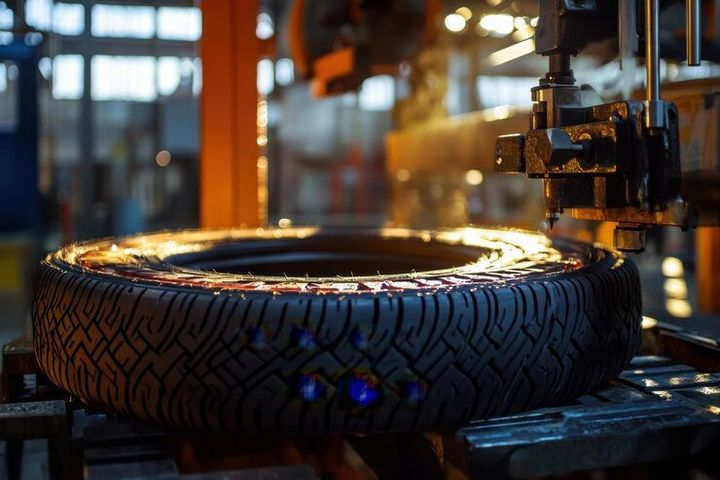
- Tires and tire components
- Industrial hoses and tubing
- Conveyor belts
- Seals and gaskets
- Rubber gloves
- Shoe soles and footwear parts
- Flooring materials and mats
- Automotive bushings and vibration-control parts
- Cable insulation and protective coverings
- Medical and laboratory rubber components
Because rubber can be made soft, hard, flexible, heat-resistant, or chemical-resistant, it is used in many environments. Machinery helps tailor the material for those different needs.
Industries That Depend on Rubber Machinery
Rubber machinery is closely linked to several sectors:
Automotive
Vehicles use rubber in tires, seals, hoses, mounts, and interior components. Reliable machinery helps maintain uniform quality across these parts.
Construction
Rubber materials are used in flooring, waterproofing systems, seals, and insulation-related applications.
Manufacturing and Industrial Operations
Factories often use rubber belts, rollers, gaskets, and protective parts in machinery and equipment.
Healthcare
Some medical items, gloves, and flexible components rely on carefully processed rubber or rubber-like materials.
Consumer Goods
Everyday items such as footwear, mats, kitchen grips, and sports products may all involve rubber processing equipment.
Key Factors That Influence Machine Selection
Not every rubber machine is suitable for every production setup. Manufacturers usually look at several factors before choosing equipment:
- Type of rubber material – natural, synthetic, or blended
- Product shape and size – sheets, molded parts, tubes, or complex components
- Production volume – small batch or continuous large-scale output
- Temperature and pressure requirements
- Automation level – manual, semi-automatic, or automated operation
- Maintenance needs and energy use
These factors help determine which machines fit the intended process.
Trends in Rubber Machinery
Rubber machinery has changed over time as manufacturing becomes more precise and data-driven. A few noticeable trends include:
Greater Automation
Many modern machines include automated controls that manage temperature, pressure, timing, and material flow. This can improve consistency and reduce operator error.
Energy Efficiency
Manufacturers are paying more attention to machines that use energy more efficiently, especially in heat-intensive stages such as curing and mixing.
Digital Monitoring
Some systems now include sensors and software that track machine performance, material usage, and maintenance needs.
Material Flexibility
As industries explore recycled rubber, specialty compounds, and performance-focused materials, machinery is being adapted to handle a wider range of formulations.
Why Rubber Machinery Matters Beyond the Factory Floor
Rubber machinery may not be visible in everyday life, but its impact is easy to find. It helps produce the tires that support transport, the seals that prevent leaks, the gloves used in healthcare, and the industrial components that keep equipment moving.
In that sense, rubber machinery is part of a much larger story. It connects raw materials to practical products that support mobility, safety, comfort, and industrial production. Understanding these machines gives people a clearer picture of how ordinary items are made and why manufacturing equipment matters so much behind the scenes.
Conclusion
Rubber machinery is the backbone of rubber processing and product manufacturing. It includes equipment for mixing, shaping, molding, curing, and finishing rubber materials so they can be used in countless products across automotive, industrial, construction, healthcare, and consumer sectors.
While the machinery itself can be complex, the basic idea is simple: it helps transform raw rubber into useful, reliable products through a series of controlled steps. For general readers, understanding rubber machinery offers a practical look into a manufacturing field that quietly supports everyday life. From tires and hoses to seals and mats, many familiar items begin with machines designed to handle rubber carefully and efficiently.