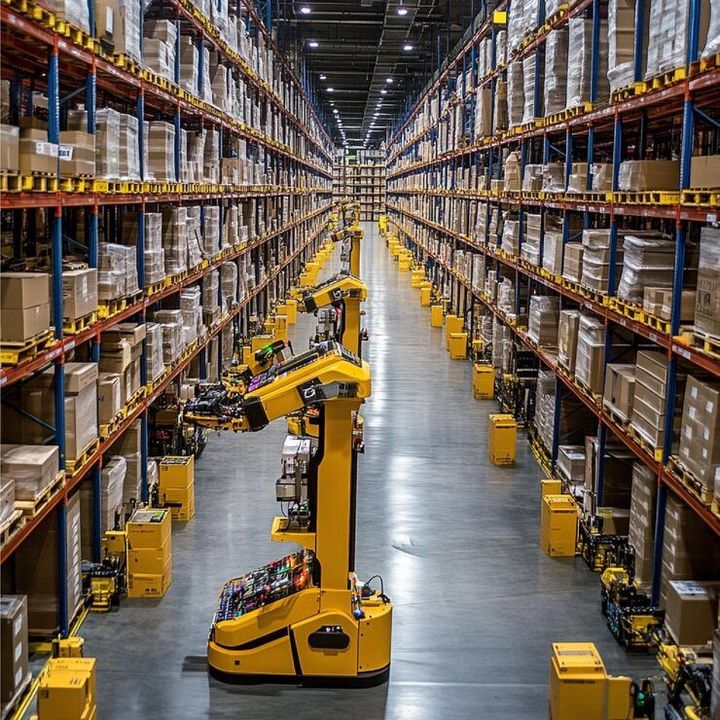
Warehouse Automation Solutions Overview: Facts, Resources, and Best Practices
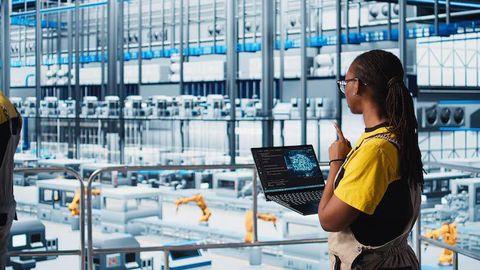
Warehouse automation solutions refer to technologies and systems that automate material handling, inventory management, storage, retrieval, picking, packing, and shipping processes within warehouses and distribution centers. These solutions range from barcode scanners and warehouse management software to autonomous mobile robots (AMRs), automated storage and retrieval systems (AS/RS), artificial intelligence (AI), and industrial Internet of Things (IIoT) technologies.
The importance of warehouse automation has increased significantly in recent years due to growing e-commerce demand, rising labor costs, supply chain disruptions, and increasing customer expectations for faster deliveries. Businesses are under pressure to improve operational efficiency while maintaining inventory accuracy and reducing fulfillment errors.
Recent industry trends show organizations investing in robotics, machine learning, digital twins, predictive analytics, and cloud-based warehouse management platforms. These technologies help organizations handle higher-order volumes, improve worker productivity, and optimize warehouse space utilization.
As global supply chains become more complex, warehouse automation is evolving from a competitive advantage into a strategic operational necessity for many industries, including manufacturing, retail, healthcare, logistics, and consumer goods distribution.
Who It Affects and What Problems It Solves
Warehouse automation affects a wide range of stakeholders throughout the supply chain ecosystem.
Manufacturers use automation to streamline production logistics and ensure the timely movement of materials between facilities. Retailers depend on automated warehouses to support omnichannel fulfillment and manage fluctuating consumer demand. Third-party logistics providers (3PLs) leverage automation to increase throughput and improve service levels. Warehouse employees often benefit from reduced repetitive tasks and enhanced workplace safety when automation is implemented appropriately.
Consumers are also indirectly affected because efficient warehouse operations can contribute to faster deliveries, improved order accuracy, and better product availability. Government agencies and regulators monitor automated facilities to ensure compliance with workplace safety standards and data protection requirements.
Problems Warehouse Automation Solves
Warehouse automation solutions address several common operational challenges:
| Operational Challenge | How Automation Helps |
|---|---|
| Labor shortages | Reduces dependency on manual processes |
| Order fulfillment delays | Accelerates picking and packing operations |
| Inventory inaccuracies | Provides real-time inventory visibility |
| High operational costs | Improves efficiency and resource utilization |
| Warehouse congestion | Optimizes storage and material movement |
| Human error | Enhances consistency and accuracy |
| Workplace injuries | Reduces repetitive and physically demanding tasks |
| Demand fluctuations | Supports scalable operations during peak periods |
By solving these challenges, automation can help organizations improve productivity while maintaining operational resilience.
Recent Updates and Industry Trends
The warehouse automation landscape has experienced significant developments over the past year.
Growth of Autonomous Mobile Robots (AMRs)
Many organizations are adopting AMRs to support inventory movement, order picking, and internal transportation tasks. Unlike traditional automated guided vehicles (AGVs), AMRs can navigate dynamic environments using sensors and AI-based path planning.
Artificial Intelligence Integration
AI-powered warehouse systems are increasingly used for demand forecasting, inventory optimization, route planning, and predictive maintenance. These capabilities help reduce downtime and improve operational decision-making.
Expansion of Micro-Fulfillment Centers
Retailers and e-commerce businesses continue investing in smaller automated fulfillment facilities located closer to consumers. This trend supports faster delivery expectations and improves last-mile logistics efficiency.
Increased Focus on Sustainability
Warehouse operators are implementing energy-efficient automation systems, smart lighting, battery management technologies, and optimized transportation workflows to reduce environmental impact.
Digital Twin Adoption
Digital twins—virtual models of warehouse operations—are becoming more common for testing process improvements before deployment. Organizations use these simulations to identify bottlenecks and optimize facility layouts.
Cloud-Based Warehouse Management
Cloud-enabled warehouse management systems continue gaining popularity because they support scalability, remote monitoring, integration capabilities, and data-driven decision-making.
Warehouse Automation Solutions Comparison Table
| Solution Type | Primary Function | Best For | Key Benefits | Typical Complexity |
|---|---|---|---|---|
| Warehouse Management System (WMS) | Inventory and workflow control | Most warehouses | Visibility and accuracy | Low to Medium |
| Automated Storage & Retrieval System (AS/RS) | Automated storage and retrieval | High-volume operations | Space optimization | High |
| Autonomous Mobile Robots (AMRs) | Material transportation | Dynamic environments | Flexibility | Medium |
| Automated Guided Vehicles (AGVs) | Fixed-route transportation | Structured facilities | Consistency | Medium |
| Conveyor Systems | Product movement | High-throughput warehouses | Faster processing | Medium |
| Robotic Picking Systems | Automated order picking | E-commerce fulfillment | Labor reduction | High |
| RFID Technology | Inventory tracking | Inventory-intensive operations | Real-time visibility | Medium |
| AI Analytics Platforms | Operational optimization | Data-driven warehouses | Predictive insights | Medium |
Warehouse Automation Maturity Overview
| Automation Level | Characteristics |
|---|---|
| Manual | Human-driven operations |
| Assisted | Basic software support |
| Semi-Automated | Combination of human and automated systems |
| Highly Automated | Extensive robotic and automated workflows |
| Intelligent Warehouse | AI-driven decision making and optimization |
Laws, Regulations, and Government Policies
Warehouse automation operates within several regulatory frameworks that vary by country and industry.
Workplace Safety Regulations
Automated equipment must comply with workplace safety standards governing machinery operation, employee protection, emergency procedures, and maintenance practices.
For example:
- Occupational safety regulations often require risk assessments for robotic systems.
- Safety barriers, emergency stop mechanisms, and operator training programs may be mandatory.
- Automated systems must meet machinery safety requirements established by national regulatory authorities.
Data Protection and Cybersecurity
Modern warehouse automation relies heavily on connected devices and cloud-based platforms. Organizations must comply with data protection regulations governing:
- Employee information
- Customer data
- Operational records
- Cybersecurity controls
Industrial Standards
Many organizations follow recognized standards related to:
- Robotics safety
- Industrial automation
- Functional safety systems
- Equipment interoperability
Government Support Programs
Several countries offer incentives encouraging digital transformation and smart manufacturing adoption through:
- Technology modernization grants
- Industry 4.0 initiatives
- Tax incentives for automation investments
- Workforce development programs
Practical Guidance
Organizations should consider:
| Situation | Recommended Approach |
|---|---|
| Small warehouse | Start with WMS and inventory automation |
| Growing e-commerce operation | Evaluate robotic picking and AMRs |
| Labor shortage concerns | Prioritize automated transportation systems |
| Limited warehouse space | Consider AS/RS implementation |
| Regulatory compliance focus | Conduct regular safety and cybersecurity audits |
| Multi-site operations | Adopt cloud-based warehouse management platforms |
Tools and Resources
Several tools and resources can support warehouse automation planning, implementation, and optimization.
Warehouse Management Platforms
- Oracle Warehouse Management
- SAP Extended Warehouse Management
- Manhattan Active Warehouse Management
- Blue Yonder Warehouse Management
- Microsoft Dynamics 365 Supply Chain Management
Robotics and Automation Providers
- ABB
- KUKA
- Honeywell
- Dematic
- Swisslog
Analytics and Optimization Tools
- Business intelligence dashboards
- Predictive maintenance platforms
- Inventory optimization software
- Digital twin simulation systems
Helpful Resources
- Industry 4.0 implementation frameworks
- Warehouse capacity planning templates
- ROI assessment calculators
- Supply chain benchmarking reports
- Safety compliance checklists
Performance Metrics to Track
| Metric | Purpose |
|---|---|
| Order Accuracy Rate | Measures fulfillment quality |
| Inventory Accuracy | Tracks stock reliability |
| Picking Productivity | Evaluates worker efficiency |
| Throughput Rate | Measures processing capacity |
| Labor Cost per Order | Assesses operational efficiency |
| Equipment Utilization | Tracks automation effectiveness |
| Order Cycle Time | Measures fulfillment speed |
Frequently Asked Questions
What is warehouse automation?
Warehouse automation is the use of technology, software, robotics, and automated systems to perform warehouse tasks with reduced manual intervention.
Is warehouse automation only suitable for large companies?
No. Small and medium-sized businesses can implement scalable solutions such as warehouse management systems, barcode tracking, and automated inventory management tools.
What are the main benefits of warehouse automation?
Key benefits include improved efficiency, higher inventory accuracy, reduced errors, increased throughput, enhanced safety, and better operational visibility.
How long does warehouse automation implementation take?
Implementation timelines vary depending on system complexity. Basic software deployments may take weeks, while large robotic automation projects can require several months or longer.
Does automation eliminate warehouse jobs?
Automation typically changes job responsibilities rather than eliminating all positions. Employees often transition toward supervision, maintenance, analytics, and system management roles.
Conclusion
Warehouse automation solutions continue to play an increasingly important role in modern supply chain operations. Growing e-commerce demand, labor market challenges, and the need for operational efficiency have accelerated automation adoption across industries.
Organizations implementing warehouse management systems, robotics, AI-driven analytics, and automated material handling technologies often gain improved inventory visibility, faster fulfillment processes, and enhanced operational consistency. However, successful implementation requires careful planning, workforce training, cybersecurity considerations, and regulatory compliance.
For most organizations, the optimal approach is not full automation from the beginning but a phased strategy aligned with operational goals, budget constraints, and business requirements. Starting with foundational technologies such as warehouse management systems and inventory automation often provides a practical pathway toward more advanced automation capabilities over time.
As warehouse operations become increasingly data-driven and interconnected, automation is expected to remain a key enabler of efficiency, scalability, and supply chain resilience in the years ahead.