Vehicle Assembly Line Automation Guide: Explore Robotics, Processes, Systems, Benefits, and Planning Factors
Vehicle assembly line automation refers to the use of industrial robots, automated machinery, sensors, software, conveyors, and control systems to perform or support activities involved in vehicle manufacturing. Instead of relying entirely on manual movement and assembly, automated systems coordinate equipment and production steps according to defined processes.
The modern assembly line developed from the idea of dividing vehicle production into sequential workstations. As vehicle designs became more complex and production volumes increased, manufacturers introduced mechanical handling systems, programmable controls, robots, machine vision, and computerized production monitoring.
Today, vehicle assembly lines can combine manual and automated operations. The exact level of automation depends on vehicle design, factory layout, production volume, process requirements, workforce structure, and the degree of flexibility needed.
Main Areas of Vehicle Assembly Automation
Automation can be applied to many stages of vehicle production. Common areas include body construction, painting, powertrain assembly, component installation, inspection, material handling, and final assembly.
A typical automated production environment may contain:
- Industrial robotic arms
- Automated guided vehicles (AGVs)
- Autonomous mobile robots (AMRs)
- Programmable logic controllers (PLCs)
- Machine vision systems
- Conveyor and transfer systems
- Sensors and industrial networks
- Human-machine interfaces (HMIs)
- Manufacturing execution systems (MES)
- Automated inspection equipment
These technologies communicate through industrial control and information systems to coordinate individual processes with wider production activities.
How an Assembly Line Is Organized
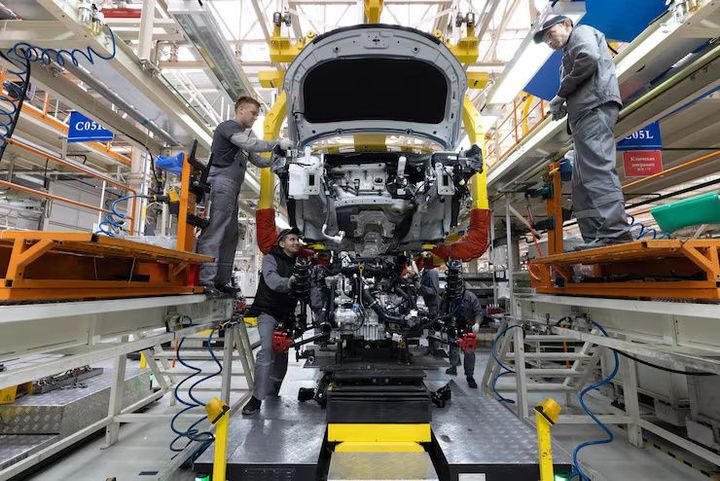
A vehicle assembly plant generally divides production into multiple stages. Body panels may first be joined into a vehicle body, followed by surface treatment and painting. Later stages involve installing wiring, interior components, glazing, powertrain components, wheels, electronic systems, and other parts.
Each stage can contain dedicated workstations. Automation connects these stations through material-handling systems and production controls, allowing components and partially completed vehicles to move through a defined sequence.
Importance
Vehicle manufacturing involves thousands of individual components and many repeated processes. Automation can help coordinate these activities while maintaining defined process parameters and production sequences.
The importance of automation has increased as vehicles have incorporated more electronic systems, advanced driver-assistance features, software-controlled functions, and different powertrain technologies. Electric vehicles also introduce different assembly requirements, particularly around battery packs, electric drive systems, high-voltage components, and thermal management systems.
Production Consistency
Automated equipment can repeat programmed movements and process steps. For operations such as robotic welding, fastening, adhesive application, and material handling, consistent machine movement can help maintain a defined production process.
However, automation does not eliminate variation entirely. Equipment condition, material differences, calibration, programming, tooling, and environmental conditions can all influence results.
Worker Safety and Ergonomics
Some assembly operations involve repetitive movements, awkward positions, heavy components, or exposure to industrial equipment. Automated handling systems can perform selected physically demanding activities while workers supervise processes, conduct inspections, manage equipment, and perform other tasks.
Safety depends on proper system design. Robots and automated machinery require safeguards such as protective barriers, safety scanners, interlocks, emergency-stop systems, and appropriate operating procedures.
Production Flexibility
Modern vehicle factories may produce multiple models or variants on related production lines. Programmable automation can allow equipment to change operating parameters for different vehicle configurations.
The level of flexibility depends on machine design, tooling, software architecture, product variation, and production planning. Highly customized systems may require substantial engineering work when the vehicle design changes.
Recent Updates
From 2024 through 2026, vehicle assembly automation has increasingly focused on robotics, software integration, machine vision, flexible production, and data-driven manufacturing. These developments are connected with changes in vehicle architectures and the growth of electric vehicle production.
Robotics and Collaborative Systems
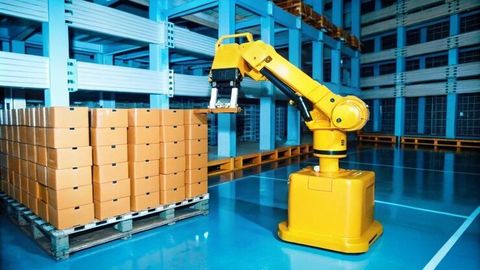
Industrial robots remain widely used for repetitive and precision-oriented activities such as welding, adhesive application, material handling, painting, and component positioning. Newer production environments are also exploring collaborative robots, which are designed for certain tasks involving closer interaction with people.
Collaborative operation does not mean that conventional safeguards are unnecessary. A risk assessment is still required because the robot, tooling, workpiece, and surrounding process can create different hazards.
Machine Vision
Machine vision systems use cameras, lighting, image-processing software, and other sensors to inspect components or guide automated equipment. They can identify characteristics such as position, orientation, dimensions, surface conditions, or assembly presence.
Vision technology is increasingly connected with automated quality-control processes. Its effectiveness depends on factors such as lighting, camera configuration, image quality, software parameters, and the characteristics of the component being inspected.
Electric Vehicle Production
Electric vehicle manufacturing has introduced additional automation requirements for battery modules, battery packs, electric motors, power electronics, and high-voltage systems. Battery assembly may involve controlled handling, fastening, adhesive application, inspection, electrical testing, and thermal-management processes.
These operations require specific engineering controls because battery cells and high-voltage systems present hazards that differ from those associated with conventional vehicle assembly.
Digital Production Systems
Manufacturing plants increasingly connect shop-floor equipment with production software. PLCs control individual machines, while MES platforms can coordinate production information, work instructions, quality records, and production status.
Industrial Internet of Things technologies can also collect data from sensors and equipment. This data may be used to monitor machine conditions, identify process changes, and support maintenance planning.
Laws or Policies
Vehicle assembly automation is influenced by workplace safety, machinery safety, electrical safety, environmental requirements, and vehicle-specific regulations. The exact requirements depend on the country, factory activity, machinery, and vehicle type.
In India, workplace safety requirements are covered by the Occupational Safety, Health and Working Conditions Code framework and associated rules. The Ministry of Labour and Employment provides information and official documents relating to occupational safety and working conditions. Applicable state rules and sector-specific requirements may also apply.
Industrial machinery may also be subject to applicable Bureau of Indian Standards requirements. Standards can address areas such as electrical safety, machinery safety, protective systems, testing, and equipment design.
For vehicle manufacturing itself, the Ministry of Road Transport and Highways administers India's Central Motor Vehicles Rules and related requirements. Vehicle manufacturers must consider applicable type-approval, safety, emissions, and technical requirements for vehicles intended for the Indian market.
Factories using robots and automated production systems also need appropriate risk assessments and safety procedures. These can include guarding, access control, emergency stops, lockout or isolation procedures, electrical protection, operator training, and maintenance controls.
Because requirements can vary by equipment and facility, applicable legislation, standards, and technical documentation should be checked for the specific installation.
Tools and Resources
Planning and operating an automated vehicle assembly line involves several categories of technical tools and information resources.
Production Planning Software
Manufacturing planning systems can help organize production schedules, material requirements, workstation capacity, and production sequences. MES platforms can connect production information with shop-floor activities.
Robot Simulation Software
Robot simulation tools allow engineers to model robot movements, workstation layouts, reachability, cycle sequences, and potential interference before equipment is physically installed. These simulations can help evaluate alternative layouts during the planning stage.
Digital Twin Platforms
A digital twin can represent equipment, production processes, or an entire manufacturing environment digitally. Depending on the system, it may combine engineering models with operational data to support analysis and process monitoring.
Machine Vision Tools
Machine vision systems typically include industrial cameras, lenses, lighting, image-processing software, and communication interfaces. Vision tools can be used for inspection, positioning, identification, and process verification.
Key Planning Measurements
Several measurements are commonly considered when planning an automated assembly line:
| Planning factor | What it describes |
|---|---|
| Cycle time | Time required for a defined production operation |
| Takt time | Production pace needed to meet planned demand |
| Throughput | Number of units processed over a defined period |
| OEE | Measure combining availability, performance, and quality |
| Robot reach | Physical working area accessible to a robot |
| Line balance | Distribution of work across production stations |
| Changeover time | Time required to change between production configurations |
| Equipment availability | Portion of planned operating time when equipment is operational |
These measurements help engineers compare workstation requirements and identify potential production constraints.
Safety and Risk Assessment Resources
Risk assessment methods, machinery manuals, safety standards, electrical documentation, and equipment-specific procedures are important resources for automated production environments. Safety documentation should address normal operation, maintenance, setup, troubleshooting, and abnormal conditions.
FAQs
What is vehicle assembly line automation?
Vehicle assembly line automation uses robots, machines, sensors, software, conveyors, and control systems to perform or coordinate manufacturing and assembly activities. It can be used alongside manual work rather than replacing every production task.
What robots are used in vehicle assembly?
Industrial robotic arms are commonly used for welding, painting, material handling, adhesive application, and component positioning. Collaborative robots may be used for selected tasks where their design and the risk assessment permit closer interaction with workers.
How does vehicle assembly automation improve production processes?
Automation can provide repeatable machine movements, controlled process parameters, automated material handling, and integrated monitoring. Its effect depends on equipment design, programming, maintenance, materials, and production conditions.
What systems are used in an automated vehicle assembly line?
Common systems include PLCs, robotic controllers, HMIs, machine vision, conveyors, AGVs, AMRs, sensors, industrial networks, SCADA systems, and MES platforms. Different factories use different combinations depending on their manufacturing requirements.
What factors should be considered when planning vehicle assembly automation?
Important planning factors include vehicle design, production volume, cycle time, workstation layout, material flow, robot reach, tooling, safety requirements, maintenance access, quality inspection, software integration, workforce requirements, and future product changes.
Conclusion
Vehicle assembly line automation combines robotics, machinery, sensors, software, material-handling systems, and human expertise to coordinate vehicle production. Automation is used across activities such as welding, painting, component installation, inspection, and logistics. Recent developments have emphasized flexible robotics, machine vision, connected production systems, and automation for electric vehicle manufacturing. Successful planning requires consideration of production requirements, system integration, safety, maintenance, regulatory requirements, and the physical characteristics of the vehicle.