Smart Manufacturing Details: Explore Technologies, Systems, Applications, Benefits, and Planning Factors
Smart manufacturing refers to the use of connected digital technologies, automation, data, and intelligent control methods across manufacturing operations. It connects machines, production processes, software, people, and data so that information can be collected and used to understand and manage manufacturing activities. NIST describes smart manufacturing as an approach that combines advanced manufacturing capabilities with digital technologies to support monitoring, analysis, modeling, simulation, and decision-making.
The development of smart manufacturing is closely associated with Industry 4.0, industrial automation, the Industrial Internet of Things (IIoT), and cyber-physical production systems. Traditional factories often relied on separate machines and manually collected information, while smart manufacturing aims to create stronger connections between operational technology and information technology.
How Smart Manufacturing Developed
Manufacturing has progressed through several technological stages. Mechanization introduced powered equipment, automation added programmable controls, and computerized manufacturing introduced digital systems for production planning and control. Smart manufacturing builds on these developments by connecting equipment and information systems and applying analytics to manufacturing data.
A smart manufacturing environment can include sensors on production equipment, programmable logic controllers, industrial robots, manufacturing execution systems, enterprise software, cloud or edge computing, and analytical applications. These components may operate as part of a connected manufacturing system rather than as isolated technologies.
Main Characteristics
Smart manufacturing systems commonly involve several characteristics:
- Connectivity between machines, sensors, software, and production systems
- Real-time or near-real-time collection of operational information
- Automated monitoring and control
- Data analysis for production and maintenance decisions
- Integration between operational and business systems
- Flexible production processes
- Digital records throughout parts of the product lifecycle
- Cybersecurity controls for connected industrial environments
The exact architecture varies according to the size, industry, production method, and existing infrastructure of a manufacturing organization.
Importance
Smart manufacturing matters because manufacturers operate in environments where production conditions, product requirements, equipment status, material availability, and supply networks can change. Connected information systems can help organizations understand these changes and coordinate responses across different parts of an operation.
For workers and managers, smart manufacturing can provide greater visibility into production conditions. Instead of relying entirely on periodic manual checks, information from sensors and machines can be collected continuously and displayed through monitoring systems.
Manufacturing Challenges It Addresses
Traditional manufacturing environments can experience problems involving equipment downtime, disconnected information, manual data collection, inconsistent process monitoring, and limited visibility between departments. Smart manufacturing technologies are designed to address some of these challenges through connectivity and data integration.
NIST notes that smart manufacturing depends on the ability of systems to exchange information and respond to changing conditions. Interoperability, standards, cybersecurity, and reliable data therefore remain important considerations when developing connected manufacturing systems.
Benefits of Smart Manufacturing
Potential benefits depend on the technologies implemented and how well they fit the production environment. Common areas of improvement include:
- Production monitoring: Machine and process information can be viewed through centralized or distributed monitoring systems.
- Maintenance planning: Equipment data can support condition monitoring and maintenance analysis.
- Quality control: Sensors and inspection systems can collect information about product and process conditions.
- Production planning: Digital information can support scheduling and resource coordination.
- Energy management: Connected measurement systems can identify patterns in energy use.
- Process flexibility: Programmable equipment can support changes in production requirements.
- Traceability: Digital records can help connect production information with particular batches, components, or processes.
These benefits are not automatic. Data quality, system integration, employee training, cybersecurity, and appropriate process design influence how effectively a smart manufacturing system performs.
Recent Updates
Smart manufacturing has continued to develop from basic machine connectivity toward more integrated systems involving artificial intelligence, digital twins, robotics, advanced sensing, edge computing, and industrial data platforms.
A notable recent development is the growing focus on AI and machine learning for manufacturing. In 2026, NIST published a roadmap describing applications that include industrial data analytics, advanced sensing, autonomous systems, additive and laser-based manufacturing, digital twins, robotics, supply-chain optimization, and sustainable manufacturing. The roadmap also identifies challenges involving industrial data, heterogeneous sensing and control systems, and the need for trustworthy and reliable AI in industrial environments.
India has also placed increased attention on advanced manufacturing technologies. A 2025 NITI Aayog roadmap identified AI and machine learning, advanced materials, digital twins, and robotics among priority frontier technologies for Indian manufacturing.
In 2026, the Indian government also held consultations concerning an Advanced Manufacturing Systems Mission, with discussions covering CNC machine tools and controllers, advanced machines, testing and metrology infrastructure, robotics, robotic arms, and additive manufacturing.
Artificial Intelligence and Machine Learning
AI and machine learning can analyze large quantities of manufacturing information to identify patterns, classify conditions, detect anomalies, and support predictions. Potential applications include quality inspection, process monitoring, equipment health analysis, production planning, and optimization.
However, industrial AI requires suitable data and reliable integration with existing control systems. NIST's 2026 roadmap highlights data management, integration, explainability, reliability, and trustworthy operation as continuing challenges.
Digital Twins
A digital twin is a digital representation of a physical asset, process, or system that can use information from the corresponding physical environment. In manufacturing, digital twins can represent machines, production lines, products, or entire processes.
They can be used for simulation, monitoring, analysis, process development, and scenario evaluation. Their usefulness depends on the accuracy, availability, and timeliness of the data supporting the digital representation.
Robotics and Advanced Automation
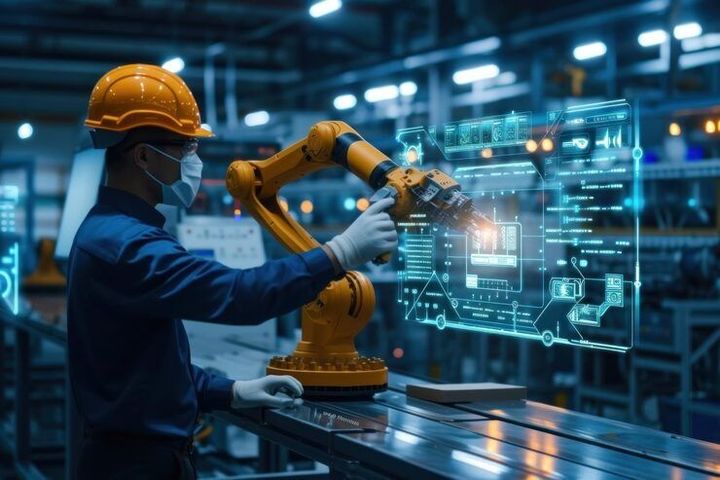
Industrial robots have long been used for tasks such as assembly, material handling, welding, painting, and inspection. Smart manufacturing adds connectivity and data capabilities that allow robotic systems to participate in broader production information networks.
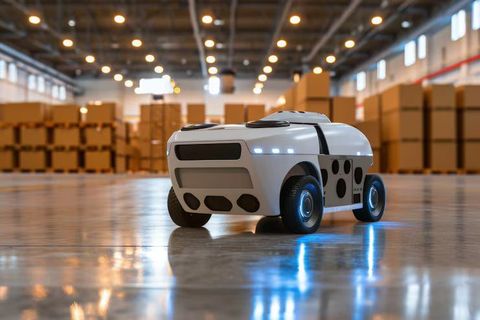
Collaborative robots, machine vision, autonomous mobile robots, and automated inspection systems are also contributing to the development of more connected production environments.
Technologies and Systems
Smart manufacturing is not a single machine or software application. It is usually an ecosystem made up of several technologies that work together.
Industrial Internet of Things
The Industrial Internet of Things connects industrial equipment, sensors, controllers, and other devices to communication networks. Sensors can collect information such as temperature, pressure, vibration, speed, position, flow, energy use, or equipment status.
This information can then be transmitted to monitoring, analytics, or control systems. NIST identifies IIoT and related standards as important elements in enabling connectivity and interoperability within smart manufacturing environments.
Industrial Control Systems
Industrial control systems manage physical manufacturing processes. PLCs, distributed control systems, supervisory control and data acquisition systems, and industrial computers can perform different control and monitoring functions.
Smart manufacturing may connect these operational systems with higher-level manufacturing and business applications while maintaining appropriate separation and security controls.
Manufacturing Execution Systems
A manufacturing execution system, commonly called an MES, manages and tracks production activities between the planning level and the shop floor. Depending on the implementation, an MES can manage production orders, work instructions, quality information, material tracking, equipment status, and production records.
Cloud and Edge Computing
Cloud computing can provide centralized infrastructure for storing and analyzing manufacturing information across multiple locations. Edge computing processes information closer to machines or production equipment.
Edge processing can be useful where fast response, local operation, limited network connectivity, or data-volume considerations make centralized processing less suitable.
Data Analytics Platforms
Manufacturing analytics platforms organize and analyze information from machines, sensors, production systems, and business applications. Analytics can include descriptive reporting, anomaly detection, predictive models, statistical analysis, and optimization.
The quality of the output depends heavily on the quality and context of the underlying data.
Applications
Smart manufacturing technologies can be applied across many stages of production.
Predictive and Condition-Based Maintenance
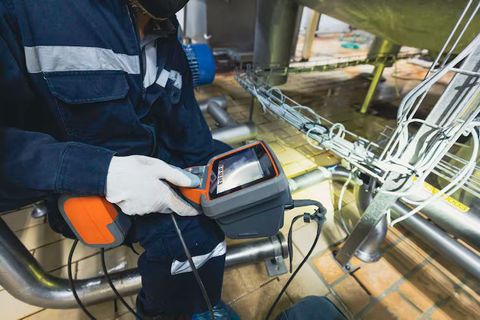
Sensors can monitor equipment conditions such as vibration, temperature, pressure, and electrical characteristics. Analytics can then help identify unusual patterns that may require further inspection.
Condition-based approaches differ from fixed maintenance schedules because they use information about equipment condition rather than relying only on elapsed operating time.
Automated Quality Inspection
Machine vision, sensors, measurement equipment, and AI-based analysis can support automated inspection. These systems may identify dimensional differences, surface defects, assembly problems, or other measurable characteristics.
Human inspection can still remain part of the process, particularly where decisions require contextual judgment or where automated inspection does not cover all relevant characteristics.
Production Optimization
Manufacturing data can be analyzed to understand machine utilization, process conditions, production flow, material movement, and bottlenecks. This information can support production planning and process improvement.
Supply Chain and Logistics
Connected manufacturing systems can exchange information with inventory, procurement, warehouse, and logistics systems. This can provide greater visibility into material movement and production requirements.
Smart manufacturing therefore extends beyond individual machines and can involve connections across the wider manufacturing network. NIST research emphasizes integration across manufacturing systems and enterprise-level information flows.
Planning Factors
Planning a smart manufacturing system requires more than selecting individual technologies. The existing production environment, business objectives, workforce capabilities, data architecture, and security requirements all need to be considered.
Assessing Existing Infrastructure
The first planning step is understanding the current manufacturing environment. Important information can include machine age, available communication interfaces, existing PLCs, software systems, sensors, network infrastructure, production data, and maintenance practices.
Older equipment may require gateways, additional sensors, or communication adapters before it can participate in a connected system.
Defining Objectives and Measurements
A smart manufacturing project should have clearly defined objectives and measurable indicators. Examples include equipment availability, production throughput, defect rates, energy use, changeover time, maintenance response, or production schedule adherence.
Measurements should relate to actual operational requirements rather than simply tracking the number of connected devices.
Interoperability
Different machines and software platforms may use different communication methods and data structures. Interoperability planning helps determine how information will move between equipment, production applications, enterprise systems, and analytical platforms.
Standards and common data structures can reduce integration challenges. NIST research identifies standards as an important foundation for repeatable and interoperable smart manufacturing systems.
Cybersecurity
Connected production equipment creates additional digital connections that must be considered in security planning. Access controls, network segmentation, authentication, software updates, monitoring, backup procedures, and incident-response processes can all be relevant.
Security measures should account for the operational requirements of industrial systems, including safety, availability, timing, and reliability.
Workforce and Skills
Smart manufacturing changes the skills required to operate and maintain production environments. Workers may need knowledge of industrial automation, data analysis, networking, cybersecurity, robotics, equipment diagnostics, or digital production systems.
Training and clear responsibilities can help organizations manage the transition between traditional manufacturing processes and connected systems.
Scalability
A smart manufacturing system should be considered in terms of its future expansion. A small pilot may begin with one machine, production line, maintenance process, or inspection application before additional systems are connected.
A phased approach can make it easier to evaluate data quality, integration requirements, cybersecurity controls, and operational results before expanding the system.
Tools and Resources
Several resources can help readers understand smart manufacturing technologies and planning methods.
NIST Smart Manufacturing Resources
NIST provides research and technical information covering smart manufacturing systems, measurement methods, standards, interoperability, cybersecurity, data analytics, and system performance. Its smart manufacturing resources can be useful for understanding the technical foundations of connected production systems.
Manufacturing Execution and Production Software
MES, enterprise resource planning platforms, supervisory control systems, industrial data platforms, and production dashboards can provide different layers of manufacturing information. Their roles should be evaluated according to the existing production architecture.
Digital Twin and Simulation Tools
Simulation and digital twin platforms can represent equipment, processes, or production environments. They can be used to study process behavior, test scenarios, and evaluate proposed changes without immediately modifying physical operations.
Assessment Templates
A basic smart manufacturing assessment can record:
| Planning area | Information to review |
|---|---|
| Equipment | Machines, controllers, sensors, age, interfaces |
| Connectivity | Networks, protocols, gateways, data access |
| Software | MES, ERP, SCADA, analytics platforms |
| Data | Sources, quality, storage, ownership, retention |
| Security | Access controls, segmentation, monitoring, backups |
| Workforce | Technical skills, training, responsibilities |
| Performance | Production, quality, maintenance, energy indicators |
| Scalability | Pilot scope and possible future expansion |
These categories can provide a structured starting point for understanding the current manufacturing environment.
FAQs
What is smart manufacturing?
Smart manufacturing is an approach that connects manufacturing equipment, software, people, and data to improve monitoring, analysis, control, and decision-making. It commonly incorporates automation, IIoT, analytics, and connected production systems.
What technologies are used in smart manufacturing?
Common technologies include IIoT sensors, industrial robots, PLCs, MES platforms, SCADA systems, machine vision, AI and machine learning, cloud computing, edge computing, digital twins, industrial networks, and data analytics.
What are the main benefits of smart manufacturing?
Potential benefits include improved production visibility, condition monitoring, data-based decision-making, automated inspection, better process coordination, and greater flexibility. Actual results depend on implementation, data quality, system integration, and operational requirements.
How does AI support smart manufacturing?
AI can analyze manufacturing data for tasks such as anomaly detection, quality inspection, predictive analysis, process optimization, and production planning. Industrial AI also requires attention to data quality, system integration, reliability, and explainability.
What should be considered when planning a smart manufacturing system?
Important planning factors include existing equipment, connectivity, data architecture, interoperability, cybersecurity, workforce skills, performance measurements, system scalability, and the specific operational objectives of the manufacturing environment.
Conclusion
Smart manufacturing connects industrial equipment, digital systems, data, and people to create more integrated manufacturing environments. Technologies such as IIoT, AI, robotics, digital twins, edge computing, analytics, and MES can support applications ranging from equipment monitoring to quality inspection and production planning. Current developments are increasingly focused on AI, advanced automation, interoperability, and trustworthy industrial data systems. Effective planning requires attention to existing infrastructure, measurable objectives, cybersecurity, workforce capabilities, data quality, and long-term system integration.