Rubber Production Guide: Explore Processes, Materials, Equipment, Applications, and Quality Factors
Rubber production is an industrial process used to transform natural or synthetic rubber materials into products with useful properties such as flexibility, elasticity, resistance to wear, and protection against environmental conditions. Rubber is used in products ranging from tires and seals to hoses, belts, vibration-control components, footwear, and industrial parts.
Natural rubber originates mainly from latex obtained from rubber trees, while synthetic rubber is produced through chemical processes using petroleum-based or other chemical feedstocks. Both material groups can be modified with additives to achieve particular physical and chemical characteristics.
The basic rubber production process involves several stages. Raw materials are prepared and mixed with selected additives, followed by shaping, forming, and curing. Additional operations such as trimming, surface treatment, inspection, and testing may be carried out depending on the finished product.
Natural and Synthetic Rubber
Natural rubber is primarily based on polyisoprene obtained from natural latex. It has useful elasticity and mechanical properties, making it suitable for numerous applications.
Synthetic rubber includes several polymer families developed for different operating conditions. Examples include styrene-butadiene rubber, nitrile rubber, ethylene propylene rubber, butyl rubber, silicone rubber, and chloroprene rubber.
Each rubber type has different characteristics. For example, nitrile rubber is commonly associated with resistance to oils and fuels, while silicone rubber is known for maintaining useful properties across a relatively broad temperature range.
Main Materials Used
Rubber compounds generally contain more than the base polymer. A typical formulation may include:
- Base rubber or polymer
- Reinforcing fillers
- Plasticizers or processing aids
- Vulcanizing agents
- Accelerators
- Antioxidants and antiozonants
- Pigments
- Stabilizers
- Specialty additives
The precise formulation depends on the intended application and required physical properties.
Importance
Rubber production supports many industries because rubber components can provide flexibility, sealing, vibration control, insulation, and resistance to repeated movement. Automotive, construction, industrial machinery, electrical equipment, consumer products, and transportation systems all use various rubber-based components.
For manufacturers, controlling the production process is important because small changes in material composition, temperature, pressure, or curing conditions can affect the final properties of a rubber product.
Applications Across Industries
Rubber products appear in many everyday and industrial environments. Common examples include:
- Automotive tires and hoses
- Engine and transmission seals
- Conveyor belts
- Industrial gaskets
- Hydraulic and pneumatic seals
- Electrical insulation
- Vibration mounts
- Flexible couplings
- Footwear components
- Medical and laboratory products
- Construction seals
- Industrial rollers
The required rubber formulation changes according to the environment in which the component will operate.
Why Material Selection Matters
Rubber can be exposed to heat, cold, sunlight, oils, fuels, chemicals, water, ozone, abrasion, and repeated mechanical movement. A formulation designed for one environment may not perform in the same way under another set of conditions.
For example, a sealing component exposed to petroleum-based fluids may require a different elastomer from one used primarily in outdoor weather conditions. Material selection therefore considers the expected temperature, chemical exposure, mechanical loading, and operating duration.
Recent Updates
From 2024 through 2026, rubber manufacturing has continued to develop around automation, material efficiency, recycling, traceability, and environmental considerations. Manufacturers are increasingly examining ways to improve process monitoring and reduce material waste while maintaining consistent product characteristics.
Digital manufacturing technologies can monitor parameters such as temperature, pressure, mixing conditions, curing behavior, and equipment performance. Automated control systems can help record process information and identify deviations from defined production conditions.
Recycling and Circular Material Use
Recycling remains an important area of development for the rubber sector, particularly for end-of-life tires and rubber components. Mechanical processing, devulcanization, pyrolysis, and other approaches are being studied or applied to recover useful materials from discarded rubber products.
Recycled rubber can be used in selected applications, although its suitability depends on particle characteristics, contamination, previous formulation, and the requirements of the new product.
Bio-Based and Alternative Materials
Research and industrial development are also examining alternative feedstocks and bio-based materials. These approaches include efforts to reduce dependence on fossil-based raw materials and increase the use of renewable resources.
The environmental performance of a rubber product depends on the entire production chain, including raw-material sourcing, energy consumption, manufacturing, product lifespan, and end-of-life treatment. As a result, sustainability assessments increasingly consider the complete life cycle rather than a single production stage.
Automated Production and Quality Monitoring
Automation is being applied to mixing, molding, extrusion, inspection, and material handling. Machine vision can assist with identifying visible defects, while sensors can monitor production conditions.
Data collection can also support traceability by linking material batches and production parameters with individual production runs. The level of automation varies substantially between manufacturing facilities and product categories.
Laws or Policies
Rubber production is influenced by regulations concerning workplace safety, environmental management, chemical handling, waste management, emissions, and product standards. Requirements differ according to the country, facility, product, and manufacturing process.
In India, factories are subject to occupational safety requirements under the applicable workplace legislation and regulatory framework. The Occupational Safety, Health and Working Conditions Code provides a consolidated legal framework covering occupational safety and working conditions, while implementation details depend on applicable rules and authorities.
Environmental requirements can also apply to rubber manufacturing facilities. The Central Pollution Control Board and State Pollution Control Boards administer environmental regulations involving areas such as industrial emissions, wastewater, hazardous materials, and waste management.
Rubber products may also be subject to product-specific Indian Standards or other technical requirements. The Bureau of Indian Standards maintains standards covering numerous rubber materials and products, including testing methods and specifications.
Manufacturers need to determine which requirements apply to their particular facility and product. General information about rubber production does not replace applicable legal, environmental, workplace, or technical guidance.
Tools and Resources
Several resources can help readers understand rubber materials, manufacturing processes, and quality evaluation.
Rubber Material Data Sheets
Technical data sheets provide information about elastomer characteristics, temperature ranges, chemical resistance, hardness, tensile properties, elongation, and other material characteristics. They are useful for comparing material specifications.
Rubber Testing Equipment
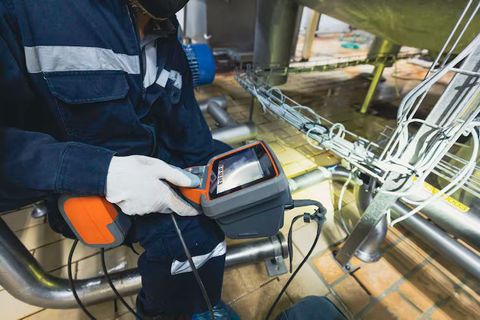
Laboratories and production facilities use different testing instruments to evaluate rubber properties. Common equipment includes hardness testers, tensile testing machines, rheometers, abrasion testers, compression-set testers, and aging chambers.
Mixing and Compounding Equipment
Internal mixers and two-roll mills are commonly used to incorporate polymers, fillers, curing agents, and other additives into rubber compounds. The mixing process must control factors such as temperature, mixing time, material sequence, and shear.
Rubber Processing Equipment
Different products require different equipment. Common categories include:
- Extruders for continuous profiles, tubes, hoses, and similar products
- Compression molding machines for shaped components
- Injection molding machines for repeated molded parts
- Calendering equipment for sheets, coated fabrics, and films
- Vulcanization equipment for curing rubber compounds
- Cutting and trimming systems for finished components
Quality Control Records
A production record can help organize important process information:
| Quality factor | Typical information recorded |
|---|---|
| Raw material | Polymer type and batch |
| Compound formulation | Material and additive quantities |
| Mixing | Time, temperature, and processing conditions |
| Forming | Extrusion or molding parameters |
| Curing | Temperature, pressure, and time |
| Dimensions | Length, thickness, diameter, or profile |
| Hardness | Measured hardness value |
| Tensile properties | Tensile strength and elongation |
| Appearance | Surface defects or irregularities |
| Final inspection | Test results and acceptance criteria |
The exact tests and acceptance limits depend on the rubber product and applicable specification.
FAQs
What is rubber production?
Rubber production is the process of preparing rubber materials, combining them with selected additives, shaping the compound, and curing it to produce a finished rubber component or product.
What materials are used in rubber production?
Rubber production can use natural rubber, synthetic elastomers, fillers, plasticizers, curing agents, antioxidants, pigments, stabilizers, and other formulation-specific additives.
What equipment is used in rubber production?
Common rubber production equipment includes mixers, two-roll mills, extruders, molding machines, calenders, curing systems, cutting equipment, and inspection instruments.
What are the main rubber production processes?
The main stages generally include material preparation, compounding, mixing, forming, curing or vulcanization, finishing, inspection, and testing. The exact sequence varies according to the product.
How is rubber product quality evaluated?
Quality can be evaluated through dimensional inspection and tests for properties such as hardness, tensile strength, elongation, abrasion resistance, compression set, aging behavior, and chemical resistance. The appropriate tests depend on the product specification.
Conclusion
Rubber production combines polymer materials, additives, processing equipment, forming methods, and curing techniques to create products for many industries. Natural and synthetic rubber provide different characteristics, while formulation and processing conditions strongly influence the final properties. Recent developments have focused on automation, digital monitoring, recycling, material efficiency, and alternative feedstocks. Quality evaluation and applicable safety, environmental, and product requirements remain important parts of rubber manufacturing.