Industrial Noise Monitoring Guide: Explore Equipment, Sound Levels, Regulations, Applications, and Safety Factors
Industrial noise monitoring is the process of measuring, recording, and evaluating sound produced by machinery, production activities, transportation equipment, ventilation systems, and other industrial sources. An industrial noise monitoring program can help workplaces understand how sound levels vary across production areas and how nearby environments may be affected.
Noise is measured in decibels (dB), while measurements using the A-weighting scale are commonly expressed as dB(A). The A-weighting system adjusts measurements to reflect the frequency response of human hearing. For environmental assessment in India, equivalent continuous sound level, written as dB(A) Leq, represents the time-weighted average sound level over a specified period.
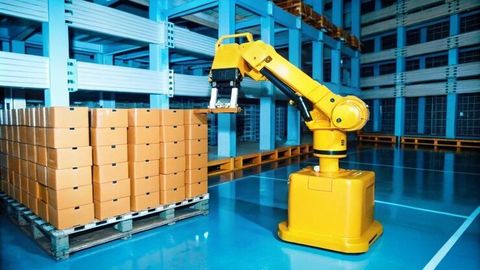
Industrial noise has existed alongside mechanized production since the development of powered machinery. Engines, compressors, pumps, fans, presses, generators, cutting equipment, and material-handling systems can all create sound. As factories became larger and more mechanized, systematic noise measurement became increasingly important for workplace planning and environmental assessment.
What Industrial Noise Monitoring Involves
Industrial noise monitoring normally involves selecting measurement locations, using suitable sound-measuring equipment, recording sound levels, and comparing the results with applicable criteria.
Measurements may be taken near individual machines, throughout production areas, at workplace boundaries, or at nearby community locations. The measurement approach depends on whether the purpose is occupational exposure assessment, environmental noise assessment, equipment investigation, or regulatory documentation.
Common Noise Sources
Industrial facilities can generate noise from many sources, including:
- Compressors and pumps
- Diesel generator sets
- Presses and stamping equipment
- Cutting and grinding machinery
- Fans and ventilation systems
- Material-handling equipment
- Boilers and process equipment
- Conveyors and motors
- Construction and maintenance activities
The sound pattern can be continuous, intermittent, fluctuating, or impulsive. Understanding this pattern is important because a single instantaneous reading may not describe the overall exposure or environmental condition.
Importance
Industrial noise monitoring matters because excessive or poorly controlled sound can affect workers, surrounding communities, equipment operation, and workplace communication. Monitoring provides measurable information that can be used to understand where noise is generated and how levels change during different operating conditions.
For workers, noise can interfere with communication and warning signals and may contribute to hearing-related risks when exposure is sufficiently high or prolonged. For nearby communities, industrial noise can become an environmental concern when sound levels exceed applicable limits.
Why Sound Levels Are Measured
A noise measurement provides an objective numerical description of sound at a particular location and time. Measurements can help distinguish between normal operating conditions and unusual increases caused by equipment changes, maintenance issues, or altered production activity.
Regular measurements can also create historical records. Comparing records from different periods may reveal changes in machinery noise or identify areas that require closer investigation.
People and Areas Affected
Industrial noise monitoring can be relevant to several groups:
- Factory workers exposed to production noise
- Facility managers responsible for workplace conditions
- Environmental personnel assessing boundary noise
- Engineers investigating noisy equipment
- Nearby residents affected by industrial activity
- Regulatory authorities responsible for environmental noise controls
The appropriate monitoring method depends on the specific purpose. Workplace exposure and community noise are related but are not necessarily assessed using the same measurement approach.
Key Sound Measurement Terms
Several terms are commonly encountered in noise monitoring. dB describes sound level on a logarithmic scale, while dB(A) applies A-frequency weighting. Leq represents an energy-based average over a defined period. Peak or maximum measurements describe short-duration sound events rather than the same type of average represented by Leq.
Understanding these differences is important when interpreting an industrial noise monitoring report. Two measurements with the same numerical value may represent different conditions if their measurement periods or weighting methods differ.
Recent Updates
From 2024 through 2026, industrial noise monitoring has continued to move toward digital measurement, continuous monitoring, automated data collection, and broader environmental noise mapping. Modern monitoring systems can record measurements electronically and organize readings according to time, location, and operating conditions.
CPCB maintains resources covering noise regulation, national noise data, real-time noise data, special monitoring, manual monitoring, and technical reports. This reflects the continuing use of both continuous and periodic approaches to environmental noise assessment in India.
Continuous and Remote Monitoring
Digital sound monitoring systems can collect measurements over extended periods rather than relying only on individual spot readings. Continuous records can make it easier to identify recurring patterns, such as higher sound levels during particular production shifts or equipment operating cycles.
Remote monitoring can also reduce the need for personnel to remain at a measurement point throughout an observation period. Depending on the equipment, recorded information may include sound level, time, location, and other measurement parameters.
Noise Mapping
Noise mapping is another area receiving attention in environmental monitoring. Maps can represent sound levels across different locations and help identify areas where noise conditions require further assessment. CPCB documents describe noise mapping and identification of noise hot spots as part of environmental noise planning.
Digital Data Management
Modern noise monitoring equipment may connect with computers or data platforms for storage and analysis. Digital records can help organize large quantities of measurements and make comparisons between locations or operating periods easier.
These developments do not eliminate the need for correct instrument placement, calibration, appropriate measurement procedures, and competent interpretation. Digital equipment can produce detailed data, but the quality of the conclusions still depends on how measurements are collected.
Laws or Policies
In India, environmental noise is regulated primarily through the Noise Pollution (Regulation and Control) Rules, 2000, issued under the Environment (Protection) Act, 1986. The rules establish ambient noise limits for industrial, commercial, residential, and silence-zone categories. CPCB maintains the current rules and related implementation information.
The ambient limits specified under the rules are expressed in dB(A) Leq and differ between daytime and nighttime periods. Daytime is defined as 6:00 a.m. to 10:00 p.m., while nighttime runs from 10:00 p.m. to 6:00 a.m.
| Area category | Day limit | Night limit |
|---|---|---|
| Industrial area | 75 dB(A) Leq | 70 dB(A) Leq |
| Commercial area | 65 dB(A) Leq | 55 dB(A) Leq |
| Residential area | 55 dB(A) Leq | 45 dB(A) Leq |
| Silence zone | 50 dB(A) Leq | 40 dB(A) Leq |
The rules state that state governments categorize areas into industrial, commercial, residential, or silence zones for implementation of the standards. Silence zones may include areas around hospitals, educational institutions, and courts when designated by the competent authority.
The Noise Rules also assign enforcement responsibilities to designated authorities. CPCB and State Pollution Control Boards have roles in environmental noise monitoring and implementation, while local requirements can differ depending on the location and applicable state provisions.
Workplace noise is a separate consideration from ambient environmental noise. Industrial workplaces may also be subject to occupational safety requirements and applicable factory rules concerning worker exposure to machinery noise. Therefore, an industrial facility should distinguish between environmental boundary measurements and measurements intended to evaluate worker exposure.
Tools and Resources
Industrial noise monitoring requires equipment that is appropriate for the measurement objective. Different instruments provide different levels of measurement detail and are intended for different applications.
Sound Level Meters
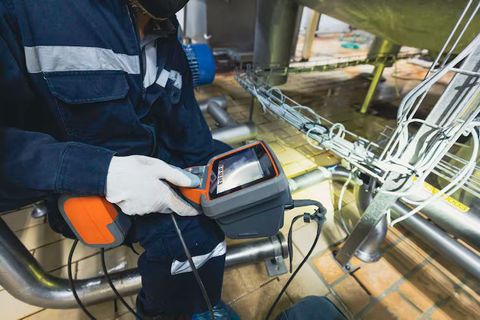
A sound level meter measures sound pressure levels at a particular location. Depending on its design, it may provide instantaneous, maximum, minimum, or time-averaged readings.
For regulatory or technical measurements, the instrument's specifications, calibration status, measurement settings, and applicable standards should be considered before use.
Noise Dosimeters
A personal noise dosimeter is designed to measure sound exposure over a period while being worn by an individual. This can be useful when a worker moves between several areas rather than remaining near one fixed noise source.
Dosimetry can provide information about personal exposure that a stationary sound level meter may not capture.
Acoustic Calibrators
An acoustic calibrator provides a known reference signal for checking a sound measurement instrument before and after measurement activities. Calibration checks help identify potential changes in instrument performance.
Data Logging and Analysis Platforms
Modern systems may include internal memory, computer connections, cloud-based dashboards, geographic positioning, or automated reporting features. These functions can help organize measurements by location and time.
Useful records may include:
- Measurement location
- Date and time
- Instrument identification
- Calibration information
- Sound level readings
- Measurement duration
- Weather conditions for outdoor monitoring
- Equipment operating conditions
- Observations about unusual sounds
CPCB Resources
The Central Pollution Control Board provides access to India's noise rules, noise monitoring information, reports, and related environmental resources. Its website is a useful reference for understanding national environmental noise requirements and monitoring activities.
FAQs
What is industrial noise monitoring?
Industrial noise monitoring is the measurement and evaluation of sound generated by machinery, production processes, transportation equipment, and other industrial activities. It can be conducted for workplace exposure assessment, environmental assessment, or investigation of specific noise sources.
What equipment is used for industrial noise monitoring?
Common equipment includes sound level meters, personal noise dosimeters, acoustic calibrators, microphones, data loggers, and analysis software. The equipment selected depends on whether the measurement concerns a fixed location, personal exposure, or long-term environmental conditions.
What are the industrial noise limits in India?
Under India's Noise Pollution (Regulation and Control) Rules, 2000, the ambient limit for an industrial area is 75 dB(A) Leq during daytime and 70 dB(A) Leq during nighttime. Other limits apply to commercial, residential, and designated silence zones.
Why is sound level measured in dB(A)?
dB(A) uses frequency weighting that approximates the response of human hearing. It is commonly used for environmental noise assessment because it provides a standardized way to express sound levels in relation to human auditory sensitivity.
What safety factors should be considered during noise monitoring?
Important factors include appropriate hearing protection where required, safe positioning around machinery, awareness of moving equipment, correct instrument handling, and compliance with workplace procedures. Monitoring personnel should not enter hazardous areas solely to obtain a measurement when a safer measurement method is available.
Conclusion
Industrial noise monitoring provides measurable information about sound generated by machinery, production processes, and industrial activities. Sound level meters, dosimeters, calibrators, and digital monitoring systems can be used for different measurement purposes. In India, the Noise Pollution (Regulation and Control) Rules, 2000 establish ambient limits for different area categories, while workplace requirements may involve additional occupational considerations. Recent developments include continuous monitoring, digital data management, remote measurement, and noise mapping.