Industrial Mixer Guide: Explore Types, Components, Applications, Capacity, and Selection Factors
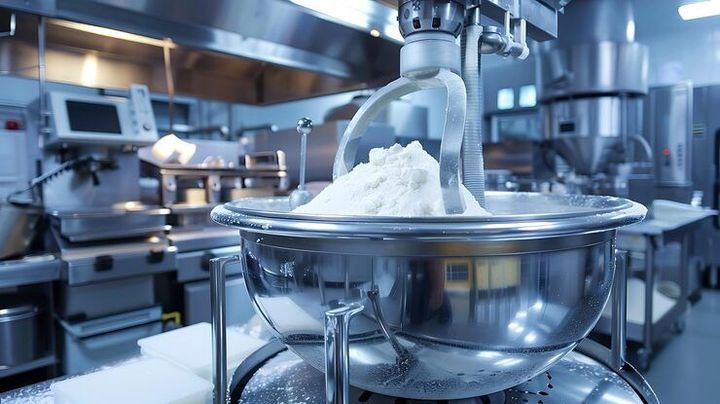
An industrial mixer is a machine designed to combine, blend, disperse, dissolve, or homogenize two or more materials. Industrial mixers are used in manufacturing environments where consistent material distribution is important for products such as chemicals, foods, pharmaceuticals, paints, coatings, construction materials, plastics, and other processed materials.
The basic idea behind mixing is simple: different materials are brought together and moved in a controlled way until the desired level of uniformity is reached. Industrial equipment applies this principle on a larger scale than household or laboratory mixers, using specific mixing elements, motors, vessels, and control systems.
Industrial mixer designs vary according to the physical properties of the materials being processed. Liquids, powders, pastes, slurries, and highly viscous materials can require very different mixing mechanisms. Factors such as viscosity, density, particle size, temperature, batch size, and required mixing time influence the machine configuration.
How Industrial Mixing Developed
Early industrial mixing processes relied heavily on manual labor and simple mechanical equipment. As manufacturing became more standardized, powered mixers were developed to handle larger quantities and provide more controlled movement.
Modern industrial mixers may use rotating shafts, impellers, paddles, ribbons, turbines, blades, or other mixing elements. Some machines operate in batches, while continuous mixers process material as it moves through a production line.
Main Functions of an Industrial Mixer
An industrial mixer can perform several functions depending on its design. Common functions include:
- Blending two or more liquids
- Combining powders with powders
- Dispersing solid particles into liquids
- Suspending particles in a liquid
- Incorporating powders into viscous materials
- Homogenizing materials
- Dissolving soluble ingredients
- Maintaining uniformity during processing
A single mixer is not automatically suitable for every material. The mixing mechanism must correspond with the characteristics of the material and the intended process.
Importance
Industrial mixers play an important role because many manufactured products require uniform composition. Uneven mixing can create differences in concentration, texture, color, particle distribution, or other product characteristics.
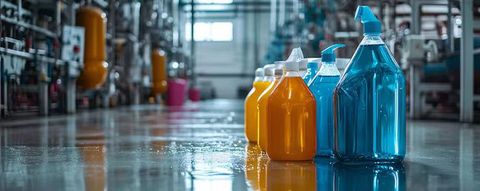
The topic affects a wide range of industries. Food manufacturers use mixers for ingredients and formulations, chemical plants combine liquids and powders, construction-material producers mix cement-based materials, and paint manufacturers use mixing and dispersion equipment for pigments and other components.
Why Mixing Uniformity Matters
Uniformity is particularly important when a formulation contains multiple ingredients in specific proportions. A properly designed mixing process helps distribute those ingredients throughout the batch.
Mixing also affects production efficiency and process consistency. Factors such as mixing time, impeller geometry, rotational speed, vessel design, and material properties can influence how quickly and effectively a mixture reaches the required condition.
Industries That Use Industrial Mixers
Industrial mixers are found in many processing environments, including:
- Food and beverage production
- Chemical processing
- Pharmaceutical manufacturing
- Paint and coating production
- Plastics and polymers
- Cosmetics manufacturing
- Construction materials
- Adhesives and sealants
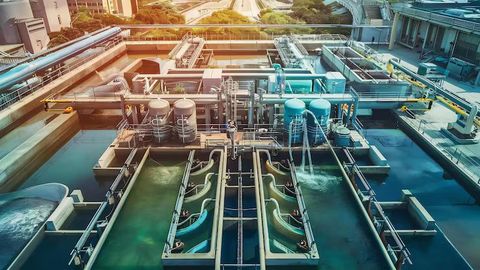
- Water and wastewater treatment
- Agricultural and fertilizer processing
Different industries may use different standards, materials of construction, hygiene requirements, and process controls.
Recent Updates
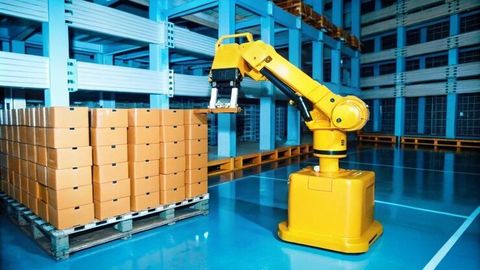
From 2024 through 2026, industrial mixing technology has increasingly been connected with automation, process monitoring, energy management, and digital manufacturing systems. Modern installations may incorporate programmable controls, variable-speed drives, sensors, and automated process records.
Digital controls can allow operators to monitor variables such as mixing speed, temperature, batch duration, motor load, and other process conditions. These systems can provide more information about how a mixing cycle is progressing and can support repeatable operating procedures.
Automation and Digital Monitoring
Automated mixing systems can coordinate material loading, mixing, temperature control, discharge, and cleaning sequences depending on the plant configuration. Programmable logic controllers and human-machine interfaces are commonly used to manage machine functions.
Sensor technology is also becoming more relevant. Measurements such as torque, temperature, pressure, or motor load can provide information about changes in material behavior during processing.
Variable-Speed Mixing
Variable-frequency drives allow motor speed to be adjusted according to process requirements. Lower speeds may be appropriate for certain sensitive or highly viscous materials, while higher speeds can be used where greater turbulence or dispersion is required.
The correct speed depends on the mixer design and material properties. Higher rotational speed does not automatically produce better mixing because excessive shear, heat generation, foaming, or material degradation can occur in some processes.
More Integrated Machine Safety
Machine safety remains an important part of modern industrial equipment design. BIS currently provides resources covering machinery safety certification and related product-specific information under its certification framework.
BIS also provides a searchable standards portal where users can locate Indian Standards by standard number or keyword and review associated documents and amendments.
Laws or Policies
In India, industrial mixer requirements can depend on the industry, machine configuration, workplace conditions, electrical equipment, materials being processed, and applicable regulations. Machinery used in factories must be operated within the relevant occupational safety framework.
The Bureau of Indian Standards maintains standards and certification information for machinery and electrical equipment. BIS states that certification is generally voluntary, although specific products can become subject to mandatory requirements through government notifications and Quality Control Orders.
For equipment connected with food processing, additional hygiene and machinery requirements may apply. BIS has published standards covering specific food-processing machines, including dough mixers, with requirements related to safety and hygiene.
Workplace Safety Considerations
Industrial mixers contain moving components that can create mechanical hazards if guards, interlocks, or operating procedures are inadequate. Appropriate protection is therefore important around rotating shafts, impellers, couplings, drive systems, and access points.
A workplace should also consider electrical protection, emergency stopping arrangements, equipment grounding, maintenance procedures, and safe isolation before maintenance activities. The exact requirements depend on the machine and workplace.
Because regulations can change and may differ according to the industrial activity, applicable Indian laws, standards, and state-level requirements should be checked for the specific installation.
Tools and Resources
Several technical resources can help explain industrial mixer operation and support equipment planning.
Mixer Specification Sheets
A specification sheet normally provides information such as vessel volume, working capacity, motor rating, rotational speed, shaft dimensions, impeller type, material of construction, and operating conditions. Comparing these parameters helps explain how different mixer designs are intended to function.
Capacity Calculators
Mixing calculations can involve vessel volume, working volume, material density, viscosity, batch size, and equipment geometry. A basic volume calculation can estimate the amount of material that a vessel can physically contain, but practical working capacity is normally lower than the total vessel volume.
Process Data Sheets
A process data sheet can record important information such as:
| Parameter | Typical information recorded |
|---|---|
| Material | Liquid, powder, paste, or slurry |
| Batch size | Required processing quantity |
| Vessel volume | Total vessel capacity |
| Working volume | Intended operating volume |
| Viscosity | Material flow resistance |
| Density | Mass per unit volume |
| Mixer type | Agitator, ribbon, paddle, turbine, or other design |
| Speed | Rotational operating range |
| Motor rating | Connected drive capacity |
| Mixing time | Required processing period |
| Temperature | Operating or controlled range |
These parameters provide a structured way to describe a mixing process.
BIS Standards Resources
The BIS “Know Your Standard” portal allows users to search standards using an Indian Standard number or keyword. It also provides access to information such as amendments, notifications, testing information, and related documents.
For machinery safety matters, BIS also publishes product-specific information and certification guidance. The current BIS resources include machine-safety information under Scheme-X.
Equipment Manuals
The technical manual for a particular industrial mixer is an important reference because it contains machine-specific information about operating limits, controls, inspection points, maintenance procedures, and safety precautions. Generic information cannot replace the instructions applicable to a particular machine.
FAQs
What is an industrial mixer?
An industrial mixer is equipment used to combine, blend, disperse, dissolve, or homogenize materials on a manufacturing scale. It can process liquids, powders, slurries, pastes, and other materials depending on its design.
What are the main types of industrial mixers?
Common industrial mixer types include paddle mixers, ribbon mixers, turbine mixers, planetary mixers, high-shear mixers, static mixers, drum mixers, and agitator systems. Each design creates a different type of material movement.
What are the main industrial mixer components?
Typical components include a motor, gearbox or drive system, shaft, impeller or mixing element, vessel, seals, bearings, support structure, controls, and safety guards. Additional components can include heating or cooling systems, sensors, and discharge mechanisms.
How is industrial mixer capacity measured?
Industrial mixer capacity is commonly described using vessel volume and working volume. Total vessel capacity represents the physical volume of the vessel, while working capacity refers to the practical amount of material intended for processing during normal operation.
How do you select an industrial mixer?
Industrial mixer selection depends on material characteristics, viscosity, density, particle size, batch volume, required mixing action, mixing time, temperature, hygiene requirements, and the desired level of automation. The equipment configuration should match the actual process rather than relying on capacity alone.
Conclusion
Industrial mixers combine materials through controlled mechanical movement and are used across food, chemical, construction, pharmaceutical, coating, and other processing industries. Their design can vary considerably, with different impellers, shafts, vessels, drives, and control systems suited to particular materials and processes. Recent developments have increased the use of automation, variable-speed control, sensors, and digital monitoring. Capacity and equipment selection depend on material properties, batch requirements, mixing objectives, safety considerations, and applicable standards.