Hospital Waste Incinerators Guide: Explore Types, Components, Applications, Emissions, and Safety Factors
Hospital waste incinerators are thermal treatment systems designed to process certain categories of biomedical waste through controlled high-temperature combustion. A hospital waste incinerator guide helps explain the different types of equipment, major components, applications, emissions, operating principles, and safety factors involved in this form of waste treatment.
Healthcare facilities generate several types of waste, including contaminated materials, anatomical waste, discarded medicines, laboratory materials, sharps, plastics, and general non-hazardous waste. These materials require segregation because not every type of healthcare waste is suitable for incineration.
Incineration uses controlled heat to reduce combustible waste into gases and a smaller quantity of solid residue. A typical system includes combustion chambers, a fuel or air supply, temperature controls, a flue-gas path, emission-control equipment, and a stack.
How Hospital Waste Incineration Works
The basic process involves introducing suitable waste into a primary combustion chamber. Heat breaks down and oxidizes combustible materials, while gases produced during the initial combustion move into a secondary chamber for further treatment.
The secondary chamber operates at a higher temperature and provides additional residence time and oxygen for combustion. Afterward, the hot gases pass through pollution-control equipment before being released through the stack.
The exact design varies according to capacity, waste composition, combustion technology, and applicable environmental requirements.
Why Waste Segregation Matters
Incineration begins with correct waste segregation. Biomedical waste rules distinguish different categories of waste and prescribe different treatment methods. Materials such as recyclable plastics, sharps, contaminated waste, and other categories may require different treatment depending on their classification and applicable rules.
Incorrect segregation can affect combustion conditions, emissions, ash characteristics, and worker safety. For this reason, waste handling is an important part of an overall healthcare waste-management system rather than a separate activity performed only at the incinerator.
Importance
Hospital waste management has implications for public health, environmental protection, and workplace safety. Poorly managed healthcare waste can expose workers and the surrounding environment to infectious materials, hazardous substances, sharps, and pollutants.
Incineration can be used for specific waste streams where thermal treatment is appropriate. Its role is particularly associated with waste that requires destruction or significant reduction through high-temperature treatment.
Where Hospital Waste Incinerators Are Used
Applications can include hospitals, healthcare facilities, laboratories, research institutions, and common biomedical waste treatment facilities. In many locations, centralized treatment facilities process waste from multiple healthcare establishments.
The appropriate treatment method depends on the waste category. Autoclaving, microwaving, chemical treatment, shredding, and other approaches may be used for waste streams that are not intended for incineration.
Main Components
A hospital waste incinerator generally contains several interconnected systems:
- Primary combustion chamber for initial thermal treatment.
- Secondary combustion chamber for further oxidation of combustion gases.
- Loading system for controlled waste introduction.
- Burner system for maintaining required operating conditions.
- Air-supply system for controlling combustion.
- Temperature sensors and control instruments.
- Pollution-control devices for treating flue gases.
- Ash-removal arrangement for handling solid residue.
- Stack for controlled discharge of treated gases.
- Monitoring equipment for combustion and emissions.
The configuration can differ significantly between small captive systems and larger common biomedical waste treatment facilities.
Types of Hospital Waste Incinerators
Different incinerator designs are used according to the waste characteristics and operating requirements.
| Incinerator type | General operating principle | Typical application |
|---|---|---|
| Multiple-chamber incinerator | Uses separate combustion stages | Biomedical waste treatment |
| Dual-chamber incinerator | Primary and secondary combustion chambers | Healthcare and institutional waste |
| Rotary kiln incinerator | Waste moves through a rotating chamber | Various heterogeneous waste streams |
| Controlled-air incinerator | Regulates primary and secondary air supplies | Selected biomedical waste |
| Plasma-based system | Uses high-energy plasma for thermal treatment | Specialized waste-treatment applications |
The suitability of a particular design depends on waste composition, throughput, regulatory requirements, emission-control technology, and operating conditions.
Recent Updates
From 2024 through 2026, the general direction of biomedical waste incineration has continued toward stronger emissions monitoring, improved pollution-control systems, and greater attention to operating conditions. The Central Pollution Control Board maintains technical material covering biomedical waste incineration and related treatment requirements.
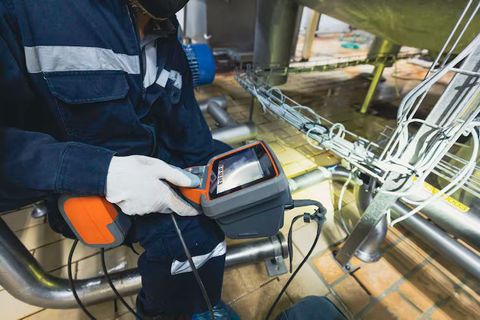
Digital monitoring is also becoming more relevant to waste-treatment facilities. Continuous emission monitoring systems can provide ongoing measurements for specified parameters, while combustion-gas analyzers can help operators monitor gases such as carbon dioxide, carbon monoxide, and oxygen.
Emission Monitoring
Indian biomedical waste requirements include monitoring provisions for stack emissions. The applicable framework requires specified operators to monitor gaseous emissions periodically and provides for continuous emission monitoring for parameters identified by the relevant State Pollution Control Board or Pollution Control Committee.
Monitoring can help identify changes in combustion conditions and pollution-control performance. Measurements should be interpreted according to the applicable standards, sampling requirements, and authorization conditions.
Pollution-Control Equipment
Modern incineration systems may incorporate equipment such as scrubbers, filters, cyclones, activated-carbon systems, or other technologies selected according to the pollutants that need to be controlled.
The purpose of these systems is to reduce pollutants in flue gas before discharge. The exact configuration depends on the incinerator design, waste characteristics, emission requirements, and regulatory authorization.
Alternative Thermal Technologies
Plasma pyrolysis and gasification are also recognized within India's biomedical waste framework as alternative thermal treatment approaches. CPCB material describes operating requirements for these technologies, including controlled temperature, gas residence time, oxygen conditions, and emission controls.
These technologies should not automatically be treated as interchangeable with conventional combustion incinerators. Their operating principles and equipment configurations differ.
Laws or Policies
In India, hospital waste incineration is governed primarily through the Bio-Medical Waste Management Rules, 2016, issued under the Environment (Protection) Act, along with amendments, applicable CPCB guidance, and authorization requirements administered through State Pollution Control Boards or Pollution Control Committees.
State Pollution Control Boards and Pollution Control Committees act as prescribed authorities for implementing the biomedical waste framework for healthcare facilities in their respective jurisdictions.
Incineration Standards
The biomedical waste framework establishes operating and emission requirements for incinerators. These include requirements relating to combustion efficiency, chamber temperatures, secondary-chamber residence time, particulate matter, nitrogen oxides, hydrogen chloride, dioxins and furans, mercury compounds, and stack height.
The standards include a minimum primary-chamber temperature of 800°C, a secondary chamber temperature of 1,050°C with a permitted variation, and a secondary-chamber gas residence time of at least two seconds. The framework also specifies a minimum stack height of 30 meters above ground level.
The rules additionally require appropriate emission monitoring and pollution-control measures. For example, CPCB material states that stack gaseous emissions are to be monitored periodically, while dioxins and furans require specific monitoring arrangements.
Ash Management
Incineration does not eliminate the need for residue management. Ash generated from biomedical waste incineration must be handled according to applicable hazardous-waste and biomedical-waste requirements.
The regulatory framework provides for disposal at a common hazardous waste treatment and disposal facility, with limited circumstances under which municipal landfill disposal may apply based on toxic-metal concentrations and applicable requirements.
Chlorinated Materials
The biomedical waste framework places restrictions on certain chlorinated materials and specifies that waste intended for incineration should not be chemically treated with chlorinated disinfectants. Requirements concerning chlorinated plastic waste also form part of the broader biomedical waste framework.
Because environmental requirements can change and authorization conditions may contain additional provisions, healthcare facilities and operators should consult the current rules and the requirements issued by their applicable pollution-control authority.
Tools and Resources
Several resources can help readers understand hospital waste incineration and its regulatory requirements.
CPCB Resources
The Central Pollution Control Board publishes technical documents concerning biomedical waste treatment, incinerator design, emissions, common biomedical waste treatment facilities, and monitoring. Its standards documentation provides technical references for operating and emission requirements.
CPCB also provides revised technical guidance covering biomedical waste incinerators and discusses the relationship between incineration requirements and the Bio-Medical Waste Management Rules.
State Pollution Control Boards
State Pollution Control Board websites can provide information about authorization, applicable forms, compliance requirements, monitoring, and biomedical waste regulations. For example, state-level resources identify the SPCB or Pollution Control Committee as the prescribed authority for biomedical waste management.
Operating and Monitoring Records
A basic operating record can organize important information such as:
- Waste category and quantity processed
- Primary and secondary chamber temperatures
- Operating duration
- Fuel or energy use
- Combustion-gas readings
- Emission-monitoring results
- Pollution-control equipment condition
- Ash quantity and disposal information
- Maintenance and inspection activities
Maintaining accurate records helps document operating conditions and supports regulatory monitoring where required.
Safety Equipment and Procedures
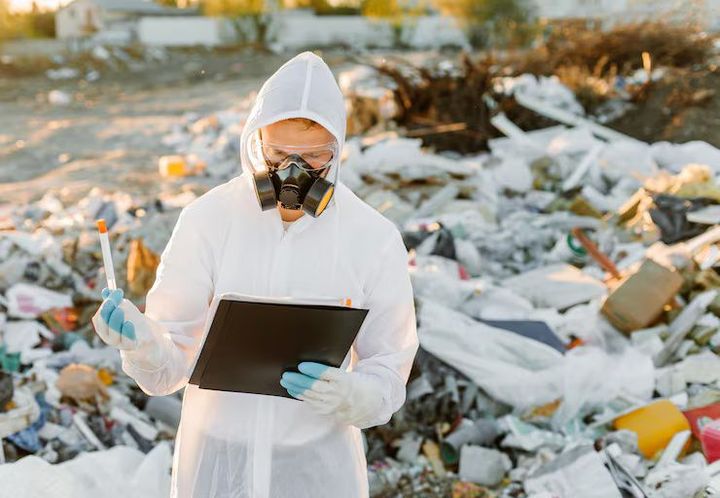
Safety planning can include appropriate personal protective equipment, restricted access to operating areas, warning signs, fire-control equipment, ventilation arrangements, emergency procedures, and training for personnel who handle waste or operate equipment.
Safety requirements should be based on the machine manufacturer's instructions, workplace risk assessment, applicable regulations, and authorization conditions.
FAQs
What is a hospital waste incinerator?
A hospital waste incinerator is a thermal treatment system designed to process selected categories of biomedical waste through controlled high-temperature combustion. It normally uses primary and secondary combustion stages followed by flue-gas treatment.
What are the main components of a hospital waste incinerator?
Major components can include primary and secondary combustion chambers, burners, air-supply systems, temperature sensors, controls, pollution-control equipment, ash-handling systems, and a stack.
What emissions come from hospital waste incinerators?
Potential emissions include particulate matter, nitrogen oxides, hydrogen chloride, carbon monoxide, mercury compounds, and dioxins and furans. The quantities depend on waste composition, combustion conditions, pollution-control equipment, and operating practices. Indian biomedical waste standards establish limits for several of these pollutants.
What safety factors are important for hospital waste incinerators?
Important factors include correct waste segregation, controlled combustion conditions, appropriate operating temperatures, functioning safety systems, emission monitoring, proper ash handling, protective equipment, and compliance with applicable authorization conditions.
Are all hospital waste materials suitable for incineration?
No. Healthcare waste includes multiple categories that may require different treatment methods. Proper segregation is necessary to determine which materials can be treated by incineration and which require other approved treatment or disposal methods.
Conclusion
Hospital waste incinerators use controlled thermal treatment to process selected categories of biomedical waste and reduce the volume of combustible materials. Their operation depends on combustion chambers, temperature and air controls, pollution-control equipment, emission monitoring, and appropriate residue management. In India, biomedical waste incineration is governed by environmental rules and technical requirements covering operating conditions, emissions, monitoring, and ash disposal. Understanding these factors provides a general foundation for evaluating how hospital waste incineration fits into broader healthcare waste management.