Face Wash Filling Machines Guide: Explore Types, Components, Capacity, Applications, and Planning Factors
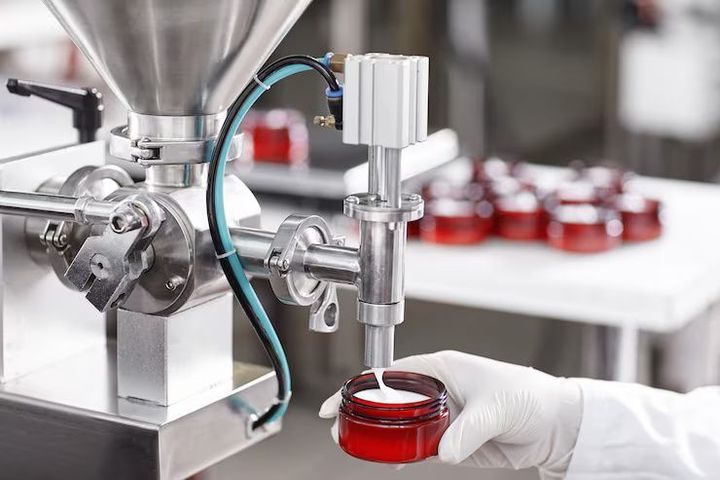
Face wash filling machines are used to place measured quantities of liquid, gel, or cream-based facial cleansing formulations into containers such as bottles, jars, pouches, or tubes. A face wash filling machines guide helps explain the different machine types, major components, filling capacities, applications, and planning factors involved in this packaging process.
Face wash products can vary considerably in thickness, texture, foaming behavior, and packaging format. Some formulations flow relatively easily, while others are thicker and require controlled pumping or piston-based filling. The machine must therefore match the physical characteristics of the formulation and the container being filled.
The basic filling process involves bringing containers into position, measuring or controlling the product quantity, dispensing the formulation, and moving the filled containers to the next packaging stage. Depending on the equipment configuration, filling may be performed manually, semi-automatically, or automatically.
How Face Wash Filling Developed
Early cosmetic packaging relied heavily on manual measuring and filling. As production volumes increased, mechanical filling systems were introduced to provide more consistent quantities and reduce repetitive handling.
Modern systems can integrate filling with container feeding, capping, sealing, labeling, coding, and conveyor movement. Current equipment can also use programmable controls and sensors to coordinate different stages of the packaging line.
Types of Containers
Face wash formulations can be packaged in several formats. Common examples include:
- Plastic bottles with pump or flip-top closures
- Laminated or plastic tubes
- Small jars or containers
- Sachets and flexible pouches
- Airless containers for selected formulations
The container design influences the filling nozzle, holding mechanism, product path, and downstream equipment required.
Importance
Consistent filling is important because the quantity of product placed into each container affects packaging uniformity and production records. Variations can occur when the formulation changes viscosity, when the filling mechanism is unsuitable, or when machine settings are not properly adjusted.
Face wash filling machines are relevant to cosmetic manufacturers, contract packaging operations, personal-care production facilities, and organizations handling different facial cleanser formulations. The equipment can be integrated into small production arrangements or larger automated packaging lines.
Matching the Machine to the Formulation
Viscosity is one of the major factors in filling equipment selection. A thin liquid may move effectively through gravity or overflow systems, while a thicker face wash may require a piston or pump-based mechanism.
Formulations containing suspended particles, exfoliating materials, or other ingredients may require additional attention to nozzle dimensions and product-path design. Foaming behavior is another consideration because excessive foam can affect filling accuracy and container appearance.
Why Capacity Matters
Machine capacity generally refers to how much product can be handled per filling cycle or how many containers can be processed during a specified period. Actual output depends on the number of filling heads, container size, product characteristics, machine configuration, operator involvement, and the speed of associated equipment.
The following table provides general planning categories rather than fixed production specifications:
| Machine configuration | Typical use | Main consideration |
|---|---|---|
| Manual filler | Small batches | Operator-controlled filling |
| Semi-automatic filler | Small to medium production | Balance between manual and automated steps |
| Automatic inline filler | Continuous production | Conveyor and filling-head coordination |
| Rotary filler | Higher-volume packaging | Multiple filling positions |
| Tube filling machine | Face wash in tubes | Tube positioning and sealing |
| Monoblock system | Integrated packaging | Filling combined with additional stages |
Actual machine capacity should be determined from the equipment specification and the formulation being processed.
Consistency and Process Control
Controlled filling can help maintain a consistent quantity from container to container. Many modern systems use sensors, programmable controls, adjustable filling parameters, and automatic container detection.
A no-container-no-fill arrangement can prevent product from being dispensed when a container is absent. Some systems also incorporate drip-control features to reduce product remaining around the filling nozzle.
Recent Updates
From 2024 through 2026, cosmetic filling equipment has continued moving toward automation, programmable controls, improved changeover arrangements, and greater integration with complete packaging lines. Current industry equipment descriptions commonly include systems designed for different viscosity ranges and packaging formats.
Servo-driven mechanisms and electronic controls are increasingly used where manufacturers need repeatable filling movements. Sensors and programmable logic controllers can coordinate container positioning, filling cycles, conveyor movement, and other packaging stages.
Automation and Digital Controls
Automatic face wash filling machines can combine multiple functions within a connected production line. Depending on the configuration, a line may include bottle feeding, filling, capping, labeling, coding, and product discharge.
Digital control panels can allow operators to adjust parameters such as filling volume, cycle timing, conveyor speed, and the number of filling heads. These functions vary by machine design and manufacturer.
Tube Filling Developments
Tube packaging remains an important format for facial cleansers. Current tube filling systems can combine tube loading, product filling, sealing, coding, and discharge into coordinated operations.
Some current equipment specifications show face wash tube systems designed for plastic or laminated tubes, with configurable filling ranges and multiple operating speeds. Such figures are equipment-specific and should not be treated as universal capacity values.
Hygiene and Material Selection
Cosmetic production places attention on the surfaces that come into contact with the formulation. Stainless-steel product-contact components are commonly used in cosmetic processing equipment because they can be cleaned and maintained according to applicable production requirements.
The Cosmetics Rules, 2020 also identify filling and sealing equipment among the equipment associated with manufacturing certain cosmetic categories, including creams, lotions, emulsions, pastes, cleansing milks, shampoos, and related products.
Laws or Policies
For an India-focused article, face wash manufacturing and packaging are primarily connected with the regulatory framework for cosmetics. The Central Drugs Standard Control Organization maintains the Cosmetics Rules, 2020 and related regulatory information.
The rules apply to cosmetics as defined under the Drugs and Cosmetics Act, 1940. They address areas including manufacturing, testing, labeling, packaging, standards, and other regulatory requirements.
Manufacturing Requirements
The Cosmetics Rules include requirements concerning premises, equipment, manufacturing practices, records, and quality-related procedures. For relevant cosmetic categories, the equipment provisions include mixing and storage tanks, heating equipment where applicable, agitators, homogenizers where necessary, filling and sealing equipment, and weighing or measuring devices.
Manufacturing records can include information such as product name, batch size, batch number, ingredient quantities, production dates, analytical references, and finished-pack information.
Labeling and Product Information
Cosmetic products must comply with applicable labeling and packaging requirements. CDSCO states that cosmetics imported into India must meet applicable registration requirements, while cosmetics manufactured or imported must comply with relevant quality and safety provisions. The regulator also states that cosmetic claims must not be false or misleading.
Regulatory requirements can change, and the Cosmetics Rules have undergone amendments. Current requirements should therefore be checked against official CDSCO publications and applicable government notifications before planning a manufacturing facility.
Tools and Resources
Several resources can help with planning and understanding face wash filling equipment.
Product Specification Sheets
Machine specification sheets normally provide information about filling ranges, container dimensions, filling-head arrangements, product-contact materials, control systems, and machine configuration. These details help establish whether a particular machine is technically compatible with a formulation and container.
Viscosity Information
A formulation's viscosity should be measured or documented before selecting the filling mechanism. A laboratory or production specification can provide useful information about how easily the face wash flows under defined conditions.
Capacity Calculations
A basic theoretical output calculation can be expressed as:
Hourly output = Containers per cycle × Cycles per hour
For machines with multiple filling heads, the number of containers processed during each cycle depends on the number of active heads and the machine configuration. Real production output may be lower because of container loading, changeovers, cleaning, adjustments, interruptions, and other operational factors.
Planning Checklist
Important planning factors include:
- Product viscosity and texture
- Filling volume
- Container material and dimensions
- Bottle, tube, jar, or pouch format
- Required filling-head arrangement
- Desired level of automation
- Product-contact materials
- Cleaning requirements
- Available floor space
- Conveyor configuration
- Electrical and pneumatic requirements
- Integration with capping and labeling equipment
- Batch size and production schedule
- Applicable regulatory requirements
A technical evaluation should consider the complete packaging process rather than looking only at filling speed.
FAQs
What is a face wash filling machine?
A face wash filling machine is equipment designed to dispense controlled quantities of facial cleansing formulations into containers. Depending on the formulation and package, it may use piston, pump, gravity, overflow, or other filling mechanisms.
How does a face wash filling machine work?
The machine positions a container beneath one or more filling nozzles, measures or controls the required quantity, dispenses the formulation, and then moves the container to the next stage. Automatic systems coordinate these actions through sensors and electronic controls.
What are the main components of a face wash filling machine?
Common components include a product hopper or tank, pump or piston mechanism, filling nozzles, valves, container holders, conveyor, control panel, sensors, frame, and protective guards. The exact arrangement varies according to the machine type.
What determines the capacity of a face wash filling machine?
Capacity depends on filling volume, number of filling heads, machine cycle speed, formulation characteristics, container type, and the degree of automation. Manufacturer specifications should be evaluated together with actual production conditions.
Which filling machine is suitable for thick face wash?
Thicker formulations may require piston or pump-based filling systems because these mechanisms can provide controlled product movement. The appropriate system depends on the formulation's viscosity, particle content, foaming behavior, container design, and required filling range.
Conclusion
Face wash filling machines provide a controlled method for placing cosmetic cleansing formulations into bottles, tubes, jars, and other containers. Their design can range from manual equipment to automated systems incorporating multiple filling heads, sensors, conveyors, and programmable controls. Capacity and machine selection depend on formulation properties, container format, filling volume, automation level, and production requirements. In India, applicable cosmetic manufacturing, packaging, labeling, and recordkeeping requirements should also be considered when planning related equipment.