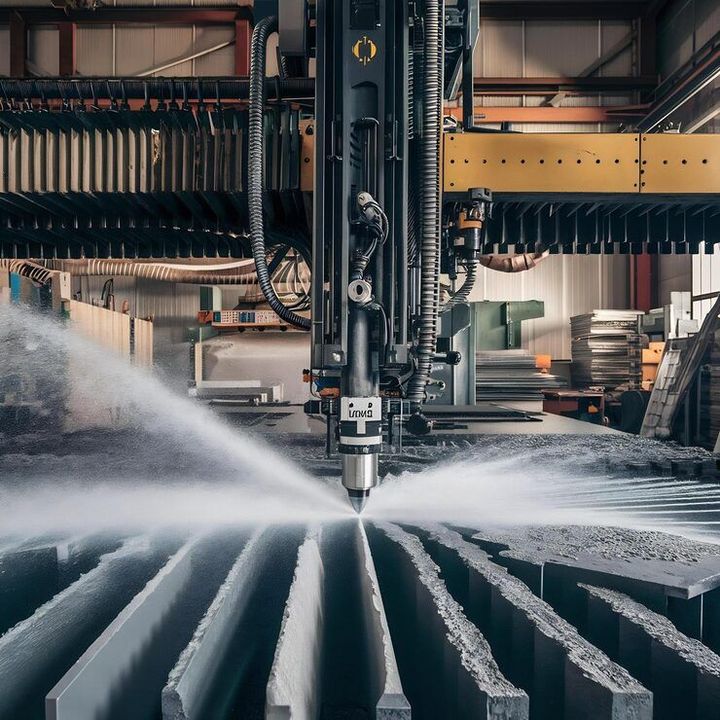
Waterjet cutting uses ultra-high-pressure water streams, sometimes mixed with abrasive particles, to cut through materials without generating heat. Unlike laser or plasma cutting, this process avoids heat-affected zones, making it useful for applications where material integrity is critical. Aerospace, automotive, medical device manufacturing, construction, and electronics industries increasingly rely on this technology for detailed and complex cutting operations.
The comparison between waterjet cutting and other machining technologies matters today because manufacturers are facing pressure to improve sustainability, reduce waste, and maintain precision across diverse materials. Recent developments in automation, CNC integration, and software-driven machining have further expanded the role of waterjet systems in modern factories.
As global manufacturing trends move toward customization and smart production systems, waterjet cutting continues to gain attention as a flexible and environmentally conscious machining option.
Understanding Waterjet Cutting and the Problems It Solves
Waterjet cutting is a machining process that uses highly pressurized water, often exceeding 50,000 PSI, to erode and cut materials into desired shapes. In abrasive waterjet systems, garnet or similar abrasive materials are added to increase cutting capability for hard materials such as steel, titanium, and granite.
The technology affects a wide range of industries and professionals, including:
-
Manufacturing engineers
-
Fabrication workshops
-
Aerospace component producers
-
Automotive suppliers
-
Construction and stone-processing industries
-
Medical equipment manufacturers
-
Research and prototyping facilities
One of the primary reasons industries adopt waterjet technology is its ability to cut heat-sensitive materials without thermal distortion. Traditional cutting methods may create cracks, warping, or hardened edges because of high temperatures. Waterjet cutting minimizes these risks while maintaining dimensional accuracy.
Common Problems Waterjet Cutting Helps Solve
| Industrial Challenge | How Waterjet Cutting Helps |
|---|
| Heat damage during cutting | The cold cutting process avoids thermal stress |
| Material waste | A narrow cutting stream improves material utilization |
| Complex shape requirements | CNC systems allow intricate patterns |
| Multi-material fabrication | Cuts metals, composites, ceramics, and plastics |
| Secondary finishing costs | Produces smoother edges in many applications |
| Delicate material handling | Lower mechanical stress reduces cracking risks |
Another important advantage is versatility. A single waterjet machine can process multiple materials without changing major tooling systems. This reduces setup time and supports flexible manufacturing operations.
Recent Updates and Industry Trends
Recent developments in waterjet cutting technology reflect broader trends in industrial automation and sustainable manufacturing.
Increased CNC and Automation Integration
Modern waterjet systems increasingly use advanced CNC controllers, AI-assisted path optimization, and automated material handling systems. These improvements help manufacturers reduce operator intervention while improving consistency.
Factories adopting smart manufacturing systems often integrate waterjet machines into larger digital production environments. This trend aligns with broader Industry 4.0 initiatives focused on connected equipment and production monitoring.
Growth in Aerospace and Electric Vehicle Manufacturing
The growth of aerospace manufacturing and electric vehicle production has increased demand for precision cutting technologies capable of handling lightweight alloys and composite materials. Waterjet cutting is frequently used because it preserves material properties and reduces microstructural damage.
Sustainability and Reduced Material Waste
Environmental concerns have encouraged manufacturers to evaluate machining technologies with lower waste generation. Waterjet cutting can reduce scrap material through nesting software and precise cuts. Some systems also recycle water and abrasive materials to reduce environmental impact.
Hybrid Manufacturing Systems
Some manufacturers now use hybrid systems combining waterjet cutting with laser or milling technologies. These setups help facilities balance speed, precision, and operational costs depending on the application.
Labor and Skill Challenges
Despite automation improvements, skilled operators remain important. Companies continue investing in operator training programs related to CNC programming, machine maintenance, and process optimization.
Comparison of Waterjet Cutting With Other Cutting Technologies
| Feature | Waterjet Cutting | Laser Cutting | Plasma Cutting |
|---|
| Heat Generation | Minimal | High | High |
| Material Compatibility | Very broad | Mostly metals and thin materials | Primarily conductive metals |
| Edge Quality | Smooth in many applications | Very precise on thin materials | Rougher edges possible |
| Thickness Capability | Excellent for thick materials | Limited at extreme thickness | Good for thick metals |
| Environmental Concerns | Water and abrasive management needed | Energy-intensive | Produces fumes and heat |
| Initial Equipment Cost | High | Moderate to high | Moderate |
| Operating Speed | Moderate | Fast | Fast |
| Suitable for Heat-Sensitive Materials | Yes | Limited | Limited |
Typical Materials Used in Waterjet Cutting
| Material Category | Examples |
|---|
| Metals | Steel, aluminum, titanium, copper |
| Stone | Marble, granite, slate |
| Glass | Tempered glass, decorative glass |
| Plastics | Acrylic, PVC, rubber |
| Composites | Carbon fiber, fiberglass |
| Ceramics | Industrial ceramics, tiles |
Laws, Policies, and Industrial Regulations
Waterjet cutting operations are affected by workplace safety standards, environmental rules, and industrial manufacturing regulations. Requirements differ by country and region, but several areas commonly influence machine operation.
Workplace Safety Regulations
Industrial safety agencies often require:
-
Protective barriers around cutting zones
-
Noise reduction measures
-
Proper handling of high-pressure systems
-
Operator training certification
-
Emergency shutdown systems
In many countries, manufacturing facilities must comply with occupational safety standards related to machinery hazards and pressurized systems.
Environmental Regulations
Waterjet cutting operations may also be regulated through:
-
Wastewater disposal requirements
-
Abrasive material disposal policies
-
Water recycling standards
-
Industrial emissions guidelines
Facilities using abrasive waterjet systems may need proper filtration and waste management systems to comply with environmental regulations.
Import and Industrial Equipment Standards
Some countries apply certification standards for industrial machinery imports, especially regarding electrical systems, safety controls, and pressure equipment.
Practical Guidance for Businesses
| Situation | Recommended Approach |
|---|
| Small fabrication workshop | Compact CNC waterjet system with basic automation |
| Aerospace manufacturing | High-precision abrasive waterjet with advanced monitoring |
| The stone and tile industry | Large-format cutting table for thick materials |
| Prototype development | Flexible multi-material cutting configuration |
| Heat-sensitive material production | Water-only or low-abrasive precision systems |
Businesses should evaluate production volume, material type, maintenance requirements, and local compliance obligations before selecting industrial cutting equipment.
Tools and Resources Related to Waterjet Cutting
Several software tools, resources, and industrial platforms support waterjet cutting operations and workflow management.
CAD and CAM Software
| Tool Type | Purpose |
|---|
| CAD Software | Create part designs and engineering drawings |
| CAM Software | Generate cutting paths and machine instructions |
| Nesting Software | Optimize material utilization |
| CNC Simulation Tools | Test cutting paths before production |
Useful Industrial Resources
-
Manufacturing process databases
-
CNC programming tutorials
-
Material compatibility charts
-
Pressure and nozzle calculators
-
Abrasive consumption estimators
-
Machine maintenance scheduling systems
Monitoring and Automation Tools
Modern waterjet systems increasingly use:
-
IoT monitoring systems
-
Predictive maintenance software
-
Production analytics dashboards
-
Digital twin simulation platforms
These technologies help manufacturers reduce downtime and improve operational efficiency.
Operational Considerations for Waterjet Cutting
Advantages
-
No heat-affected zones
-
Suitable for complex geometries
-
Broad material compatibility
-
Reduced mechanical stress
-
Minimal tooling changes
Limitations
-
Slower than some thermal cutting methods
-
Abrasive materials increase operating costs
-
Water and waste management requirements
-
Pump maintenance can be expensive
Cost Factors
Several variables influence operational costs:
| Cost Area | Impact |
|---|
| Abrasive usage | Major recurring expense |
| Pump maintenance | High-pressure systems require regular servicing |
| Water consumption | Depends on recycling systems |
| Electricity usage | Influenced by pump size |
| Labor and programming | Skilled operators improve efficiency |
Companies often evaluate total lifecycle cost rather than only initial machine pricing when comparing cutting technologies.
Frequently Asked Questions
What materials can the waterjet cutting process process?
Waterjet cutting can process metals, stone, glass, ceramics, plastics, rubber, and composite materials. Abrasive systems are commonly used for harder materials.
Is waterjet cutting environmentally friendly?
The process can reduce thermal emissions and material waste compared to some traditional methods. However, wastewater treatment and abrasive disposal still require proper management.
How accurate is waterjet cutting?
Modern CNC waterjet systems can achieve high precision suitable for aerospace, automotive, and industrial manufacturing applications.
Does waterjet cutting damage materials?
Because it is a cold cutting process, it generally avoids thermal distortion, warping, and heat-affected zones associated with laser or plasma cutting.
What industries commonly use waterjet cutting?
Industries including aerospace, automotive, construction, electronics, medical manufacturing, and metal fabrication frequently use waterjet technology.
Conclusion
Waterjet cutting has become an important technology in modern manufacturing because it combines precision, material versatility, and reduced thermal impact. As industries continue prioritizing sustainability, automation, and flexible production systems, the role of waterjet cutting is expected to expand further.
Recent developments in CNC integration, smart manufacturing, and hybrid machining systems have improved operational efficiency while supporting increasingly complex manufacturing requirements. The technology remains especially valuable for industries working with heat-sensitive or multi-material components.
Although operating costs and maintenance requirements can be significant, many manufacturers consider waterjet cutting a practical long-term investment due to its flexibility and precision capabilities. For organizations needing accurate cutting across diverse materials without thermal damage, waterjet technology continues to offer a reliable and adaptable manufacturing solution.