Casting Machine Overview: Explore Machinery Types, Materials, Operations, Features, and Applications
A casting machine is equipment used to help produce components by shaping molten or semi-molten material inside a mold. Casting is one of the oldest manufacturing methods, with early forms used to create tools, ornaments, weapons, and other objects from metals. Modern casting machines combine controlled heating, material handling, mold preparation, filling, cooling, and component removal.
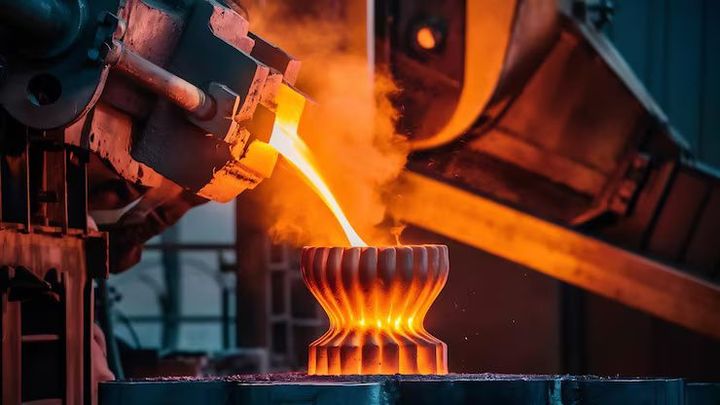
The basic casting process begins with a material being heated until it reaches a suitable liquid or flowable condition. The material is then introduced into a prepared mold, where it takes the shape of the mold cavity as it cools and solidifies. Depending on the process, pressure, gravity, centrifugal force, or other mechanical methods can assist the filling operation.
Modern casting equipment is designed for different materials, component sizes, production volumes, and levels of automation. Common examples include die casting machines, centrifugal casting machines, investment casting equipment, continuous casting systems, and machines used for specialized metal-forming processes.
How Casting Machinery Developed
Traditional casting relied heavily on manually controlled furnaces, ladles, molds, and basic tools. As manufacturing requirements became more precise, mechanical systems were introduced to control material flow, mold movement, temperature, pressure, and component removal.
Today, casting machinery may include programmable controls, sensors, hydraulic systems, automated material handling, temperature monitoring, and computerized process management. These features allow operators to monitor several parts of the casting process while maintaining defined operating conditions.
Basic Casting Operations
A typical casting operation involves several connected stages:
- Preparing or positioning the mold
- Melting and preparing the casting material
- Moving the molten material to the casting area
- Filling the mold cavity
- Allowing the material to cool and solidify
- Opening or removing the casting from the mold
- Inspecting and processing the finished component
The exact sequence differs according to the casting method. A permanent-mold process may use reusable metal molds, while sand casting uses a mold that is normally broken apart to remove the component.
Importance
Casting machinery is important because it allows complex shapes to be produced from materials that can be melted and solidified. Components that would require several manufacturing operations when produced from solid stock can sometimes be formed into a near-final shape through casting.
Casting is used across automotive manufacturing, construction equipment, industrial machinery, energy equipment, transportation, consumer products, and many other industries. Components such as engine parts, housings, pump bodies, valves, wheels, structural pieces, and machine frames can be produced using different casting techniques.
Manufacturing Challenges Addressed by Casting
Casting can address several manufacturing challenges. Complex external and internal shapes can be created by designing an appropriate mold and core system. Large components can also be produced without starting with an equally large solid block of material.
The method is particularly relevant when material properties, geometry, component size, and production requirements make casting appropriate. However, casting also requires careful control because defects such as porosity, shrinkage, inclusions, cracks, incomplete filling, and dimensional variation can occur.
Factors Affecting Casting Results
The final condition of a cast component depends on multiple variables. Important factors include:
- Material composition
- Melting temperature
- Mold temperature
- Mold material
- Filling speed
- Pressure
- Cooling conditions
- Solidification behavior
- Mold design
- Venting and feeding arrangements
Poor control of one or more factors can affect the component's dimensions, internal structure, surface condition, or mechanical characteristics.
Machinery Types
Different casting machine designs are used according to the material, component geometry, mold arrangement, and production method. Each system uses a different approach to introduce and solidify material.
Die Casting Machines
Die casting machines force molten metal into a reusable metal mold under controlled pressure. They are commonly associated with non-ferrous alloys such as aluminum, magnesium, zinc, and certain copper-based alloys.
Two broad machine arrangements are hot-chamber and cold-chamber die casting. Hot-chamber systems keep the injection mechanism associated with the molten metal supply, while cold-chamber systems transfer a measured quantity of molten metal into a separate injection chamber before filling the die.
Centrifugal Casting Machines
Centrifugal casting machines rotate a mold while molten material is introduced. Centrifugal force helps distribute the material against the mold wall during solidification.
This process is commonly associated with cylindrical or tubular components. The rotation speed, material characteristics, mold design, and cooling conditions influence the resulting structure.
Continuous Casting Machines
Continuous casting equipment produces a continuous stream or length of solidified material rather than individual components from separate molds. Molten metal enters a mold and progressively solidifies as it moves through the casting system.
Continuous casting is widely associated with steel, aluminum, copper, and other metals where long products such as slabs, billets, and blooms are required.
Investment Casting Equipment
Investment casting uses a disposable pattern and a ceramic mold system. The process can reproduce relatively detailed shapes and is used for components where geometry and dimensional considerations are important.
Because the mold is prepared around the pattern and removed after casting, the equipment and workflow differ from permanent-mold systems.
Sand Casting Equipment
Sand casting uses a mold formed from specially prepared sand. Some operations remain relatively manual, while modern foundries may use automated molding lines, mechanical material handling, automated pouring systems, and controlled process monitoring.
The method can accommodate a wide range of component sizes and materials, making it a widely used casting approach.
Materials
Casting materials are selected according to their melting behavior, required properties, component geometry, and intended application.
Common Casting Metals
Common casting materials include:
- Aluminum alloys
- Iron and cast iron
- Steel
- Copper alloys
- Brass
- Bronze
- Magnesium alloys
- Zinc alloys
Each material has different melting characteristics, fluidity, solidification behavior, density, and thermal properties. These differences influence furnace selection, mold design, pouring conditions, and cooling requirements.
Mold Materials
Molds can be manufactured from sand, ceramics, metals, graphite, or other specialized materials. A reusable metal mold can withstand repeated casting cycles under appropriate conditions, while sand and ceramic molds are generally associated with processes where the mold is removed after casting.
The mold material affects heat transfer, surface finish, dimensional behavior, and the cooling rate of the casting.
Operations and Features
Casting machines can contain mechanical, electrical, hydraulic, thermal, and control systems. Their features depend on the specific casting method and machine configuration.
Material Heating and Transfer
A furnace or melting system prepares the material for casting. The molten material may then be moved using ladles, transfer systems, pumps, or integrated injection mechanisms.
Temperature control is important because the material must remain sufficiently fluid for the intended filling process without creating unsuitable thermal conditions.
Mold Filling
Mold filling can occur through gravity, pressure, centrifugal force, or controlled mechanical injection. Die casting machines, for example, use an injection system to push molten metal into a die cavity.
Filling behavior affects how completely the mold cavity is occupied and how the material flows around cores, channels, and other mold features.
Cooling and Solidification
After filling, heat moves from the casting into the mold and surrounding environment. The material gradually changes from liquid to solid, and the cooling rate can influence the resulting microstructure and dimensions.
Some casting systems use controlled cooling arrangements to manage the solidification process. The appropriate method depends on the material and casting design.
Automation and Monitoring
Modern casting equipment can include programmable controls, temperature sensors, pressure monitoring, position sensors, automated mold handling, and robotic material movement.
These systems can help operators observe process conditions and maintain repeatable machine sequences. Data collection can also support process analysis and equipment monitoring.
Applications
Casting machinery is used in many manufacturing environments because it can produce components with a wide range of shapes and dimensions.
Automotive and Transportation
Casting processes are used to produce components such as engine housings, transmission cases, wheels, brackets, structural parts, and other metal components. Different casting techniques are selected according to component geometry and material requirements.
Industrial Equipment
Industrial machinery can contain cast pump bodies, valve bodies, housings, machine frames, impellers, and other components. Casting can accommodate both relatively small components and large structures.
Construction and Infrastructure
Construction-related equipment and infrastructure can contain cast metal components, including fittings, housings, structural elements, and machinery parts. The specific casting process depends on the required geometry and material.
Energy and Power Equipment
Casting is also used for components associated with power-generation and energy systems. Applications can include turbine-related parts, pump components, housings, and other engineered metal structures.
Recent Updates
From 2024 through 2026, casting technology has continued to develop around automation, process monitoring, energy management, simulation, and digital manufacturing. Modern foundries increasingly combine casting equipment with sensors, automated handling, programmable controls, and software-based process analysis.
Simulation tools are also used to study mold filling, heat transfer, solidification, and potential defect locations before physical production. Such digital analysis can help engineers evaluate mold and process designs during planning.
Automation is another continuing trend. Robotic pouring, automated mold handling, machine monitoring, and digitally controlled injection systems can reduce the number of manual steps in some casting environments.
Energy efficiency has also received increased attention because melting and maintaining molten metal require substantial thermal energy. Foundries are examining furnace efficiency, heat recovery, process control, and energy monitoring as part of broader manufacturing-efficiency efforts.
Laws or Policies
In India, casting operations are affected by workplace safety, environmental, electrical, pressure-equipment, and industrial regulations depending on the equipment and facility. The applicable requirements can vary according to the type of foundry, machinery, fuel system, emissions, workplace conditions, and materials being processed.
The Occupational Safety, Health and Working Conditions Code, 2020 provides a national framework covering occupational safety and working conditions. Requirements relating to workplace safety, worker welfare, and industrial establishments may apply according to the relevant rules and implementation framework.
Environmental requirements can also apply to foundries because melting and casting operations may generate particulate matter, fumes, gases, noise, waste sand, slag, and other industrial outputs. Facilities may therefore need to comply with applicable requirements administered through India's environmental regulatory framework.
The Bureau of Indian Standards provides Indian Standards covering various engineering products, machinery, materials, and safety-related subjects. The relevant standard depends on the specific casting equipment, material, component, and application.
Because regulations can change and state-level requirements may differ, organizations should refer to the current requirements applicable to their particular facility and equipment. This article provides general information and is not a substitute for regulatory or engineering advice.
Tools and Resources
Several technical resources can help readers understand casting machinery and related manufacturing processes.
Casting Simulation Software
Casting simulation platforms can model mold filling, cooling, solidification, heat transfer, and possible defect areas. These tools are mainly used during engineering and process planning.
Material Reference Tables
Material-property databases and technical handbooks provide information about melting ranges, density, thermal properties, alloy composition, and other characteristics. Such information helps explain why different materials require different casting conditions.
Machine Manuals
Machine manuals provide equipment-specific information about operating procedures, control systems, maintenance requirements, safety features, and machine limitations. They should be consulted when working with a particular casting machine.
Standards and Regulatory Resources
The Bureau of Indian Standards provides information about Indian Standards and related technical documents. Government departments, environmental authorities, and occupational-safety resources can also provide information about applicable requirements.
A basic casting-process record can include:
| Factor | Information commonly recorded |
|---|---|
| Material | Alloy or material type |
| Mold | Sand, ceramic, metal, or other mold |
| Temperature | Material and mold temperatures |
| Filling method | Gravity, pressure, centrifugal, or continuous |
| Machine settings | Relevant pressure, speed, or movement settings |
| Cooling | Cooling conditions and duration |
| Inspection | Dimensional and visual observations |
| Defects | Porosity, cracks, shrinkage, inclusions, or other findings |
FAQs
What is a casting machine?
A casting machine is equipment used to assist in forming components by placing molten or flowable material into a mold and allowing it to solidify. Different machines use different filling and material-handling methods.
What are the main types of casting machinery?
Common types include die casting machines, centrifugal casting machines, continuous casting machines, investment casting equipment, and sand casting equipment. Their designs differ according to the casting method and intended application.
What materials are used in casting machines?
Casting systems can process materials such as aluminum alloys, steel, cast iron, copper alloys, brass, bronze, zinc, and magnesium alloys. The appropriate equipment depends on the material's thermal and physical characteristics.
How does a casting machine work?
A casting machine prepares or receives molten material, introduces it into a mold using an appropriate filling method, and allows the material to cool and solidify. Additional equipment may control temperature, pressure, mold movement, and component removal.
Where are casting machines used?
Casting machinery is used in automotive, transportation, industrial equipment, construction, energy, consumer-product, and other manufacturing applications. The selected casting process depends on component geometry, material, production requirements, and technical specifications.
Conclusion
Casting machines support the production of components by controlling how molten or flowable materials enter molds and solidify into defined shapes. Different machinery types, including die casting, centrifugal, continuous, investment, and sand casting systems, are designed for different materials and manufacturing conditions. Recent developments have focused on automation, process monitoring, simulation, digital controls, and energy management. Safety and environmental requirements also form an important part of modern casting operations, with applicable rules depending on the equipment and facility.