Tile Making Machines Guide: Explore Types, Components, Capacity, Applications, and Planning Factors
Tile making machines are industrial and semi-industrial systems used to shape, press, form, dry, and sometimes finish materials used in tile production. Depending on the tile type, these machines may process ceramic mixtures, cement-based materials, stone composites, clay, or other formulations into standardized shapes and sizes.
Tile production has developed from manual forming and traditional kiln processes into more controlled manufacturing systems. Modern production lines can combine material preparation, mixing, forming, pressing, drying, glazing, firing, sorting, and packaging into connected stages.
A tile making machine is not always a single piece of equipment. In many manufacturing environments, it refers to a particular machine within a larger production line. The equipment required depends on the tile material, dimensions, surface design, production volume, and manufacturing process.
How Tile Production Works
Although processes vary, a typical ceramic tile production sequence may include several stages:
- Raw material preparation involves crushing, grinding, screening, and proportioning materials.
- Mixing combines materials to achieve a consistent composition.
- Forming or pressing gives the material its basic tile shape.
- Drying reduces moisture before further processing.
- Glazing may add a decorative or functional surface layer.
- Firing uses controlled heat to develop the required physical properties.
- Finishing can include cutting, polishing, surface treatment, inspection, and sorting.
Cement-based tiles can follow a different process and may rely more heavily on hydraulic pressing, curing, and surface finishing rather than high-temperature firing.
Why Different Machines Are Used
Tile characteristics vary significantly. Floor tiles, wall tiles, roof tiles, paving tiles, decorative tiles, and large-format slabs may require different forming and processing equipment.
The machine configuration therefore needs to correspond to the material and manufacturing method. A hydraulic press designed for cement-based tiles, for example, operates differently from a ceramic tile press used with powdered ceramic material.
Importance
Tile making machines are important because they help convert prepared raw materials into products with controlled dimensions, shapes, surface characteristics, and production consistency. Manufacturing equipment can also coordinate repetitive operations that would be difficult to perform manually at larger production volumes.
The topic is relevant to manufacturers, plant planners, engineers, maintenance personnel, construction-material professionals, and people researching how tiles are produced.
Production Consistency
Tile dimensions need to remain within specified tolerances for proper installation and appearance. Variations in forming pressure, moisture, material composition, drying, or firing can affect the final product.
Automated controls and standardized production procedures can help monitor these variables. However, the actual result depends on the complete production system rather than the forming machine alone.
Resource and Process Management
Tile production can involve substantial quantities of raw materials, electricity, thermal energy, water, and process equipment. Planning therefore involves more than selecting a forming machine.
Important considerations can include:
- Raw material characteristics
- Tile dimensions and thickness
- Required production capacity
- Forming pressure
- Drying requirements
- Firing temperature and kiln design
- Energy consumption
- Water usage
- Dust control
- Factory layout
- Maintenance requirements
- Quality inspection procedures
Capacity and Production Planning
Machine capacity is often expressed through units produced per hour or tonnes processed over a specified period. Actual output may be lower than a machine's nominal capacity because production includes setup, material changes, maintenance, quality checks, downtime, and other operating conditions.
For example, a basic planning calculation can be represented as:
Daily production = Output per hour × Operating hours per day × Utilization rate
If a machine produces 2,000 tiles per hour, operates for 8 hours, and has an assumed utilization rate of 80%, the calculated production is:
2,000 × 8 × 0.80 = 12,800 tiles per day.
This is a planning calculation rather than a guaranteed production result.
Recent Updates
From 2024 through 2026, tile manufacturing has continued to move toward automation, digital process monitoring, energy management, and larger-format production. Manufacturers are increasingly integrating sensors, programmable controls, automated material handling, and data collection into production lines.
Large-format ceramic tiles and slabs have also influenced equipment design. Producing larger products requires attention to forming pressure, material distribution, drying behavior, handling, kiln dimensions, and deformation control.
Automation and Digital Monitoring
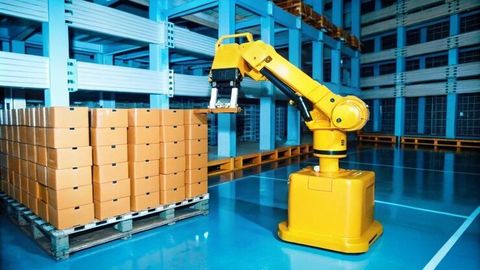
Modern tile production lines may use programmable logic controllers, sensors, automated conveyors, robotic handling systems, and computerized inspection equipment. These systems can monitor process variables and coordinate multiple stages.
Digital monitoring can also support production records. Data such as machine operating time, temperature, pressure, material flow, and equipment status can be collected for process analysis.
Energy Efficiency
Energy management remains an important consideration, particularly in ceramic manufacturing because drying and firing require thermal energy. Current equipment development increasingly focuses on heat recovery, improved kiln insulation, optimized burner systems, and process control.
The European Commission's ceramic manufacturing reference document identifies energy efficiency, emissions control, raw-material management, and process optimization as important areas within ceramic manufacturing.
Automated Inspection
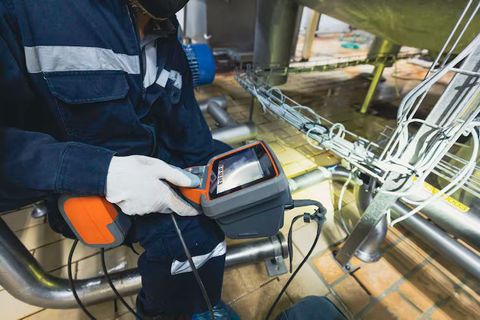
Machine-vision systems can inspect tile surfaces for visible defects, dimensional variation, shade differences, and other quality characteristics. Automated inspection can support sorting and reduce dependence on manual visual inspection.
The capabilities vary according to camera systems, lighting, software, tile characteristics, and production-line configuration.
Laws or Policies
Tile manufacturing is influenced by workplace safety, environmental requirements, product standards, energy regulations, and waste-management rules. The specific requirements depend on the country, state, manufacturing process, materials, and plant size.
In India, manufacturers should consider applicable requirements under occupational safety and environmental frameworks. The Occupational Safety, Health and Working Conditions Code provides a broader framework for workplace health and safety, while environmental requirements may involve air emissions, wastewater, hazardous materials, solid waste, and industrial operations.
The Bureau of Indian Standards maintains standards related to ceramic tiles and other construction products. Applicable standards can address dimensions, physical characteristics, testing methods, marking, and product requirements.
Environmental Considerations
Ceramic tile production can generate dust, wastewater, kiln emissions, rejected products, and other process residues. Cement-based tile production has its own material-handling and dust-control considerations.
Pollution-control requirements can therefore apply to areas such as:
- Particulate emissions
- Kiln and combustion emissions
- Wastewater discharge
- Solid process waste
- Noise
- Storage and handling of raw materials
In India, the applicable requirements may involve the Central Pollution Control Board, State Pollution Control Boards, environmental legislation, and conditions associated with specific industrial activities.
Workplace Safety
Tile production equipment can involve moving parts, hydraulic pressure, high temperatures, electrical systems, dust, noise, and material-handling equipment. Guards, emergency controls, ventilation, personal protective equipment, machine inspection, and operator training are therefore relevant to workplace safety.
The exact safety requirements should be determined from applicable laws, standards, machine documentation, and site-specific risk assessments.
Tools and Resources
Several resources can support research and planning for tile manufacturing equipment.
Capacity Calculators
A production-capacity worksheet can estimate theoretical and practical output. Useful inputs include machine cycle time, tiles produced per cycle, operating hours, utilization, downtime, and planned production days.
A simple calculation is:
Hourly output = Tiles per cycle × Cycles per hour
For machines using continuous processes, output can instead be calculated from line speed, tile dimensions, spacing, and operating time.
Tile Dimension and Area Calculations
Basic dimensional calculations are useful when planning material consumption and production quantities.
For rectangular tiles:
Area = Length × Width
For example, a tile measuring 600 mm × 600 mm has an area of 0.36 square metres.
Manufacturers may use additional calculations to account for thickness, density, moisture content, shrinkage, breakage, and rejected products.
Factory Layout Planning
A tile manufacturing facility generally requires space for raw materials, preparation equipment, forming, drying, firing or curing, finishing, inspection, storage, utilities, maintenance, and internal transportation.
A layout should consider the movement of materials from one process stage to another. Unnecessary movement can increase handling requirements and complicate production flow.
Standards and Technical Documents
Product standards, machine manuals, equipment specifications, kiln documentation, abrasive specifications, electrical standards, and environmental guidelines can provide useful technical references.
When evaluating a particular machine, technical documents should be checked for rated capacity, compatible materials, dimensions, power requirements, operating conditions, maintenance requirements, and safety provisions.
FAQs
What are tile making machines?
Tile making machines are equipment used in different stages of tile manufacturing, including forming, pressing, cutting, drying, glazing, finishing, and handling. The exact machinery depends on the type of tile being produced.
What are the main types of tile making machines?
Common equipment includes hydraulic tile presses, ceramic forming presses, tile cutting machines, glazing systems, drying equipment, kilns, polishing machines, mixing equipment, and automated handling systems. A complete production line may combine several of these machines.
What components are used in tile making machines?
Common components include motors, hydraulic or mechanical drive systems, molds or dies, rollers, conveyors, control panels, sensors, pumps, heating systems, frames, and safety guards. Components vary according to the machine's function.
How is tile machine capacity calculated?
Capacity can be estimated from cycle time, tiles produced per cycle, operating hours, and equipment utilization. For continuous systems, line speed and tile dimensions may also affect calculated output.
What factors should be considered when planning a tile manufacturing line?
Important planning factors include tile type, raw materials, dimensions, production capacity, forming method, drying or curing requirements, firing requirements, energy use, factory layout, environmental controls, maintenance, labor requirements, inspection procedures, and applicable standards.
Conclusion
Tile making machines form part of production systems used to shape, process, finish, and inspect different types of tiles. Their design varies according to material, tile dimensions, production method, and required output. Current manufacturing trends increasingly involve automation, digital monitoring, energy management, large-format production, and automated inspection. Effective planning requires consideration of capacity, equipment integration, factory layout, safety, environmental requirements, and applicable product standards.