Industrial weighing plays a quiet but important role in everyday manufacturing, storage, transport, and packaging. Whether raw materials are being measured in a factory, products are being packed into boxes, or trucks are being checked before leaving a warehouse, accurate weight measurement helps keep operations organized and consistent.
At first glance, weighing in an industrial setting may seem similar to using a household scale. In reality, industrial weighing is designed for much larger loads, more demanding environments, and a wider range of tasks. It is used in food processing plants, construction material yards, chemical facilities, shipping centers, farms, and recycling sites, among many other places.
The main purpose of industrial weighing is simple: to measure weight reliably so that materials, goods, and equipment can be handled correctly. That might mean making sure a bag contains the right amount of flour, checking the weight of metal parts during production, or recording the load of a vehicle at a logistics site.
As industries continue to rely on data, automation, and quality control, weighing systems have become more advanced. Today’s machines often connect with software, display digital records, and help reduce errors that once occurred with manual measurement. Even so, the basic goal remains the same—knowing how much something weighs and using that information to make practical decisions.
What Industrial Weighing Means
Industrial weighing refers to the process of measuring the weight of materials, products, containers, vehicles, or equipment in commercial and industrial environments. These systems are built to handle loads that are often far heavier than what a normal personal or kitchen scale could manage.
Depending on the setting, industrial weighing may be used for:
- measuring raw materials before production begins
- checking product quantities during processing
- filling bags, drums, or containers to a set weight
- monitoring stock levels in storage areas
- verifying truck or pallet loads before transport
- recording data for quality control and reporting
Because many industries depend on precise measurements, even a small weight difference can matter. In food production, it can affect portion control. In manufacturing, it can influence consistency between batches. In logistics, it can affect how safely goods are transported.
Why Industrial Weighing Is Important
Weight is often one of the easiest ways to understand what is happening in a production or handling process. A reliable weighing system can help people confirm that the correct amount of material is being used, moved, or packed.
Here are some common reasons industrial weighing matters:
Accuracy in production
Factories often work with ingredients, powders, liquids, grains, metals, and packaged items. If the weight is not measured correctly, the final output may vary from one batch to another. Consistent measurement helps keep production stable.
Better control of materials
When materials are weighed at different stages, teams can track how much has entered a process, how much remains, and how much has been packaged or shipped. This supports inventory management and planning.
Safer handling of loads
In transport and warehousing, overweight loads can create safety concerns. Weighing helps make sure pallets, containers, and vehicles stay within acceptable limits for lifting, stacking, and movement.
Reduced waste
When filling or batching is measured properly, there is less chance of using too much or too little material. Over time, this can reduce waste and improve consistency.
Clear records
Many industrial sites keep digital records of weight data. This helps with traceability, reporting, stock monitoring, and process review.
Where Industrial Weighing Is Used
Industrial weighing appears in many sectors, often in ways people do not notice.
Manufacturing
Factories weigh raw materials, parts, and finished goods. This can include plastic pellets, metal components, paper rolls, chemicals, powders, and packed items.
Food and beverage
Food facilities use weighing systems for ingredients, batching, filling, portioning, and packaging. Examples include flour, sugar, grains, dairy products, snacks, frozen foods, and bottled liquids.
Logistics and warehousing
Pallets, cartons, and trucks are often weighed before dispatch or after arrival. This helps track shipments and manage storage loads.
Agriculture
Farm operations use weighing systems for animal feed, harvested crops, fertilizers, seeds, and storage bins.
Mining and construction
Heavy materials such as stone, sand, gravel, cement, and ore may be weighed during extraction, transport, or processing.
Waste and recycling
Recycling centers and waste handling sites weigh incoming and outgoing materials to record volume and sort processing loads.
Common Types of Industrial Weighing Equipment
Industrial weighing includes several machine types, each designed for a different purpose. Some are used for small containers, while others are built for vehicles carrying many tons.
Bench Scales
Bench scales are compact units placed on tables or workstations. They are often used for smaller items, parts counting, or package checking. These are common in packing rooms, assembly areas, and laboratories.
Floor Scales
Floor scales are larger and sit at ground level. They are suitable for pallets, drums, and bulky materials that are moved with carts or forklifts. Their low profile makes loading easier.
Platform Scales
Platform scales are similar to floor scales but may come in different sizes and capacities. They are used in warehouses, production lines, and storage areas for medium to heavy loads.
Checkweighers
A checkweigher is used to confirm whether a product falls within a target weight range. These machines are often found on packaging lines where items move quickly through production.
Hopper and Tank Weighing Systems
Some industries weigh materials while they are inside tanks, silos, hoppers, or vessels. This is useful for batching, mixing, and monitoring stored ingredients or liquids.
Crane Scales
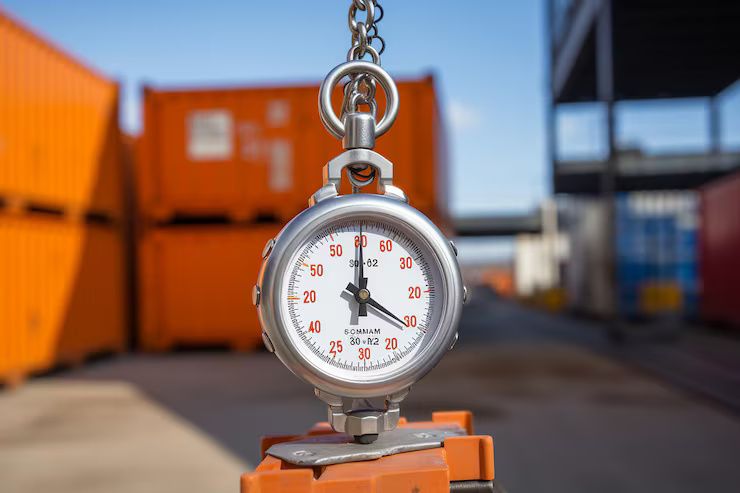
Crane scales are suspended from lifting equipment and measure the weight of items while they are being lifted. They are often used in metal yards, shipping areas, and heavy material handling environments.
Truck Scales
Truck scales, sometimes called weighbridges, are designed to weigh loaded and unloaded vehicles. These systems are widely used in logistics, agriculture, mining, and waste processing.
How an Industrial Weighing System Works
Although equipment designs vary, most industrial weighing systems rely on a sensor called a load cell. A load cell detects force from the weight placed on the scale and converts it into an electrical signal. That signal is then processed and shown as a readable weight on a display or computer system.
A typical setup may include:
- Load cells to sense weight
- A weighing platform or structure to hold the load
- A digital indicator to display the reading
- Software or control systems to record, analyze, or share the data
- Printers, labels, or network connections in more advanced setups
In modern facilities, weighing systems may also connect with automation equipment, inventory software, or reporting tools. This allows weight data to move directly into operational records instead of being written down by hand.
Features That Matter in Industrial Weighing
When people think about weighing equipment, they often focus only on capacity. In practice, several features matter depending on where and how the machine will be used.
Capacity
This is the maximum load the scale can handle safely and accurately. A small bench scale may measure a few kilograms, while a truck scale may measure many tons.
Readability
Readability refers to the smallest change in weight the scale can display. In some settings, small differences matter; in others, a broader measurement is enough.
Durability
Industrial environments can be dusty, wet, hot, cold, or rough. Equipment used in these spaces often needs strong construction and protection against moisture or corrosion.
Speed
On a fast-moving production line, the system may need to weigh items quickly without slowing the process.
Data connectivity
Some sites need weight records to be stored, printed, or transferred into a digital system. In these cases, connectivity becomes important.
Ease of cleaning
Food, pharmaceutical, and chemical environments often require regular cleaning, so the design of the equipment matters.
Challenges in Industrial Weighing
Even with modern systems, industrial weighing can face a few common challenges.
Environmental conditions
Vibration, wind, dust, moisture, and temperature changes can affect readings if the equipment is not designed for the setting.
Incorrect installation
If a scale is not installed on a stable surface or aligned properly, the readings may not be reliable.
Overloading
Placing too much weight on a scale can damage sensors or reduce accuracy over time.
Lack of calibration
Weighing systems should be checked and calibrated at appropriate intervals so the readings remain dependable.
Poor operator training
Even a good machine can produce incorrect results if it is used the wrong way, loaded unevenly, or not maintained properly.
Good Practices for Reliable Weighing
A few simple habits can improve performance and help keep measurements dependable over time.
- Use the scale within its intended weight range
- Keep the weighing area clean and stable
- Place loads evenly on the platform
- Inspect cables, indicators, and sensors regularly
- Follow a routine calibration schedule
- Record unusual readings and investigate patterns
- Protect equipment from avoidable impact or overload
These steps may seem basic, but they can make a noticeable difference in day-to-day use.
The Future of Industrial Weighing
Industrial weighing is becoming more connected and more automated. Digital indicators, cloud-based reporting, and integration with factory software are making weight data easier to track and use. In some settings, weighing systems now support automatic filling, stock monitoring, and production planning with less manual input.
At the same time, the purpose of industrial weighing remains very practical. It helps people know how much material they have, how much they are using, and whether products and loads are within the expected range. In that sense, it is one of the simplest forms of industrial data—and one of the most useful.
Conclusion
Industrial weighing is a basic but essential part of many industries. It supports production, packaging, storage, transport, and material handling by providing accurate weight information at the right time. From small bench scales to large truck weighing systems, these machines help improve consistency, safety, and recordkeeping across a wide range of workplaces.
For non-technical readers, the key idea is straightforward: industrial weighing is about measuring materials and loads in a reliable way so that work can be carried out more smoothly and with fewer mistakes. As equipment becomes more digital and connected, weighing systems are likely to remain a core part of modern industrial operations.