Fruit Juice Evaporators Details: Explore Equipment Types, Capacity, Processing, Maintenance, and Selection Factors
Fruit juice evaporators are processing systems used to remove water from fruit juice and increase its concentration. This process produces a thicker juice or concentrate while allowing manufacturers to manage the volume of liquid before further processing, packaging, or storage.
Evaporation has been used in food processing for many years because fruit juices naturally contain large amounts of water. Modern evaporators provide controlled heating and vapor removal so that water can be separated while important juice characteristics can be managed.
The basic evaporation process involves heating juice until part of its water content changes into vapor. The remaining liquid becomes more concentrated. Because fruit juice can contain heat-sensitive flavors, colors, vitamins, sugars, and aroma compounds, evaporator design and operating conditions are important.
How Fruit Juice Evaporation Works
A typical system circulates juice through a heated surface or chamber. Heat transfers into the juice, causing water to evaporate. The vapor is separated from the concentrated liquid, while the concentrate continues through the system.
Many industrial systems use vacuum conditions. Lower pressure reduces the boiling temperature of water, which can help limit excessive heat exposure during concentration.
Common Applications
Fruit juice evaporators are used for products such as:
- Apple juice
- Orange juice
- Grape juice
- Pineapple juice
- Mango juice
- Tomato-based fruit and vegetable beverages
- Berry concentrates
- Citrus concentrates
The appropriate equipment depends on juice composition, solids content, viscosity, desired concentration, production volume, and sensitivity to heat.
Importance
Fruit juice concentration is important because water represents a significant portion of most fruit juices. Removing part of this water can reduce the volume of the product and create a concentrate suitable for subsequent processing.
Evaporation also plays a role in food manufacturing operations where concentrated ingredients are used in beverages, prepared foods, confectionery products, and other formulations.
Why Concentration Matters
Concentrating juice can change several physical characteristics of the product. As soluble solids increase, the liquid generally becomes more viscous and its density changes.
A controlled evaporation process can help maintain consistent concentration between production batches. Operators commonly monitor parameters such as temperature, pressure, flow rate, feed concentration, and final soluble-solids content.
Factors Affecting Evaporation
The evaporation process is influenced by several variables:
- Juice composition
- Initial soluble-solids concentration
- Target concentration
- Feed temperature
- Operating pressure
- Heating-medium temperature
- Juice flow rate
- Viscosity
- Fouling tendency
- Heat-transfer area
Fruit juices with high sugar or pulp content can behave differently from clearer juices. Pulp, proteins, minerals, and other components may accumulate on heating surfaces and reduce heat-transfer efficiency.
Equipment Types
Different fruit juice evaporators are designed around different methods of moving juice, transferring heat, and separating vapor.
Falling Film Evaporators
Falling film evaporators distribute juice across the inside surface of vertical heating tubes. The juice flows downward as a thin film while heating causes water to evaporate.
This configuration is widely associated with continuous food-processing applications because the thin liquid film can provide efficient heat transfer and relatively short residence times.
Rising Film Evaporators
Rising film systems use vapor formation to help move the liquid upward through heating tubes. As evaporation progresses, vapor bubbles develop and create upward movement.
The design can be suitable for particular low- to moderate-viscosity liquids, although the appropriate configuration depends on the juice and operating conditions.
Forced Circulation Evaporators
Forced circulation systems use a pump to move juice continuously through the heat exchanger. The liquid velocity can help manage certain products that are more viscous or prone to deposits.
These systems can be considered when natural circulation is insufficient for the required process conditions.
Multiple-Effect Evaporators
Multiple-effect evaporators use vapor generated in one evaporation stage as a heating source for another stage operating at a lower pressure. This arrangement can reduce the amount of external heating energy required compared with a comparable single-effect process.
The number of effects depends on the process requirements, energy considerations, juice characteristics, and equipment configuration.
Plate Evaporators
Plate-based systems use a series of plates to provide heat-transfer surfaces. Their compact design can be useful in certain food-processing applications, particularly when cleaning and accessibility are important considerations.
The suitability of plate systems depends on factors such as viscosity, suspended solids, pressure, temperature, and fouling behavior.
Capacity and Processing Factors
Evaporator capacity refers to the amount of feed that a system can process during a specified period. It is commonly expressed using units such as kilograms per hour, tonnes per hour, or liters per hour.
Capacity should not be evaluated separately from the required concentration. A system processing dilute juice to a relatively high final concentration may require substantially different evaporation conditions from one handling a smaller concentration increase.
Key Capacity Parameters
The following factors are commonly considered when assessing an evaporator:
| Parameter | What it indicates |
|---|---|
| Feed flow rate | Quantity of juice entering the system |
| Feed concentration | Initial soluble-solids level |
| Final concentration | Desired soluble-solids level |
| Evaporation rate | Amount of water removed |
| Heating area | Available surface for heat transfer |
| Operating pressure | Pressure inside the evaporation system |
| Residence time | Approximate time juice remains in the equipment |
| Steam or heating demand | Thermal input required |
| Product temperature | Temperature experienced by the juice |
For example, if a juice stream enters an evaporator at a low solids concentration and leaves at a much higher concentration, the system must remove a corresponding quantity of water. The mass balance between feed, concentrate, and evaporated water is therefore an important part of process design.
Soluble Solids and Brix
Brix is commonly used in the food industry as an indicator of soluble-solids concentration in fruit juices and other products. Refractometers can be used to measure Brix during process control.
The target Brix depends on the particular juice product and intended application. It should therefore be established according to the relevant product specification rather than assuming a single value applies to all fruit juices.
Processing Stages
A fruit juice evaporation line may include several stages before and after the actual evaporator.
Juice Preparation
Raw juice may undergo screening, clarification, filtration, pulping, blending, or other preparation processes. The purpose is to create a feed with characteristics appropriate for the evaporation equipment.
Preheating
The juice can be preheated before entering the main evaporation stage. Heat recovery systems may use energy from other parts of the process to reduce the external heating requirement.
Evaporation
The prepared juice enters the evaporation system, where heat is transferred into the liquid. Water changes into vapor, which is separated from the increasingly concentrated juice.
Vapor Separation
A vapor separator or related equipment separates vapor from the concentrated liquid. Depending on the system, the vapor may be condensed, reused as a heating medium, or directed to another part of the process.
Concentrate Handling
After reaching the required concentration, the product can move to cooling, blending, aroma recovery, packaging, or additional processing stages. The sequence depends on the product and processing facility.
Maintenance
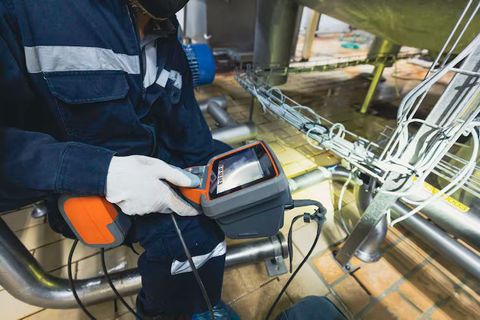
Maintenance is important because fruit juice contains sugars, organic compounds, minerals, pulp, and other components that can accumulate on equipment surfaces.
Cleaning
Cleaning removes product residues and deposits from heat-transfer surfaces, pipes, separators, valves, and other components. Many industrial food-processing systems use clean-in-place procedures that circulate cleaning solutions through the equipment without complete disassembly.
Cleaning schedules depend on the product, operating conditions, equipment design, and level of fouling.
Inspection
Routine inspections can focus on:
- Heat-transfer surfaces
- Pumps
- Valves
- Seals and gaskets
- Pressure instruments
- Temperature sensors
- Vacuum equipment
- Product lines
- Condensers
- Vapor separators
Unexpected changes in pressure, temperature, flow, or energy consumption can indicate a developing process or equipment issue.
Fouling Management
Fouling occurs when material accumulates on heat-transfer surfaces. In juice processing, deposits can reduce heat transfer and increase cleaning requirements.
Fouling can be influenced by temperature, residence time, juice composition, concentration, flow velocity, and surface condition. Process monitoring and suitable cleaning procedures can help manage these effects.
Selection Factors
Choosing a fruit juice evaporator requires consideration of the complete processing requirement rather than capacity alone.
Product Characteristics
The first consideration is the juice itself. Operators should assess viscosity, pulp content, soluble solids, acidity, heat sensitivity, and tendency to form deposits.
Required Capacity
The system should correspond to the required feed flow and expected production pattern. Seasonal fruit availability may also influence production schedules and equipment utilization.
Energy Requirements
Heating demand is another important factor. Multiple-effect evaporation, vapor reuse, mechanical vapor recompression, and heat recovery can change the overall energy profile of an evaporation process.
Temperature and Residence Time
Heat-sensitive juices may require careful control of temperature and residence time. Vacuum evaporation can reduce the boiling temperature, while thin-film configurations can limit the time the product spends in the heated section.
Cleaning Requirements
Equipment should allow appropriate cleaning procedures for the processed product. Accessibility, piping arrangement, automated cleaning systems, and materials of construction can affect cleaning practices.
Automation and Monitoring
Modern evaporation systems may include programmable controls and sensors for temperature, pressure, flow, concentration, and other operating variables. Automation can help operators monitor process conditions and maintain repeatable operating procedures.
Tools and Resources
Several technical resources can help with understanding and managing fruit juice evaporation.
Brix Refractometers
A refractometer provides a practical method for checking soluble-solids concentration. It can be used during incoming material checks, process monitoring, and concentrate verification.
Mass-Balance Calculators
A basic mass-balance calculation can estimate the amount of water that needs to be removed when the feed and final solids concentrations are known. This information is useful for understanding the required evaporation load.
Temperature and Pressure Instruments
Temperature sensors, pressure gauges, vacuum instruments, and flow meters help operators monitor the main conditions affecting evaporation.
Food-Processing Standards
Government agencies, food-safety organizations, equipment standards bodies, and technical publications provide information about hygienic processing, materials, cleaning, food-contact equipment, and process controls. Requirements depend on the country and type of food operation.
FAQs
What is a fruit juice evaporator?
A fruit juice evaporator is processing equipment that removes water from juice through controlled heating and vapor separation. The remaining liquid has a higher concentration of soluble solids.
How does a fruit juice evaporator work?
The juice is heated, often under controlled pressure or vacuum conditions, so that water evaporates. The vapor is separated from the concentrated juice, which continues through the processing line.
What are the main types of fruit juice evaporators?
Common configurations include falling film, rising film, forced circulation, multiple-effect, and plate evaporators. The appropriate type depends on product properties, capacity, heat sensitivity, and process requirements.
How is evaporator capacity measured?
Capacity may be expressed as the amount of feed processed per hour or the amount of water evaporated per hour. Feed concentration, final concentration, heating area, and operating conditions also affect practical capacity.
How is a fruit juice evaporator maintained?
Maintenance generally includes cleaning heat-transfer surfaces, inspecting pumps and valves, checking sensors and pressure equipment, monitoring fouling, and following the equipment manufacturer's maintenance procedures.
Conclusion
Fruit juice evaporators remove water from juice to produce a more concentrated product through controlled heat transfer and vapor separation. Falling film, rising film, forced circulation, multiple-effect, and plate systems provide different approaches to evaporation. Capacity, juice characteristics, energy requirements, temperature, residence time, cleaning, and automation are important factors when evaluating an evaporation process. Proper monitoring and maintenance help maintain controlled operating conditions and support food-processing requirements.