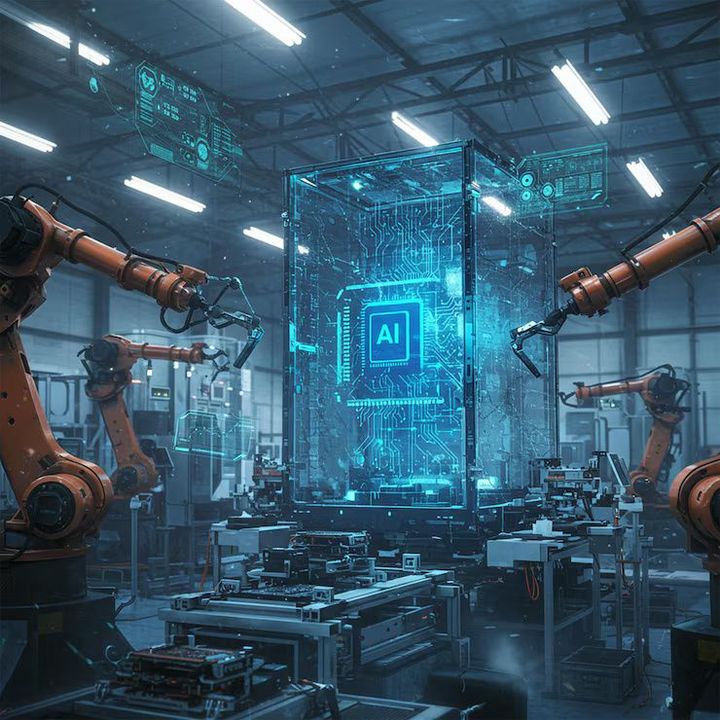
AI Automation in Manufacturing: Tips, Facts, and Operational Knowledge

Artificial Intelligence (AI) is becoming a major part of modern manufacturing operations. In smart manufacturing environments, AI technologies help companies analyze production data, automate repetitive tasks, improve equipment performance, and optimize decision-making processes. These systems are often combined with Industrial Internet of Things (IIoT) devices, robotics, cloud computing, and advanced analytics to create connected and data-driven production environments.


The importance of AI in manufacturing has increased significantly in recent years due to rising operational costs, labor shortages, supply chain disruptions, and growing demand for production efficiency. Manufacturers are now using machine learning models, computer vision systems, and predictive analytics to reduce downtime and improve production quality.

Recent industry trends show that AI adoption is expanding beyond large enterprises into mid-sized manufacturing facilities. Governments and industrial organizations are also promoting digital transformation initiatives to strengthen industrial competitiveness and resilience. As factories continue to collect larger volumes of operational data, AI-driven insights are becoming more valuable for improving productivity, sustainability, and long-term operational planning.

How AI in Smart Manufacturing Affects Industries and What Problems It Solves

AI in smart manufacturing affects multiple industries including automotive, electronics, pharmaceuticals, aerospace, food processing, logistics, textiles, and heavy engineering. Manufacturing plants that rely on continuous production processes often benefit the most because AI systems can monitor operations in real time and identify inefficiencies before they become larger operational problems.

Production managers, plant engineers, quality control teams, supply chain coordinators, and maintenance departments are among the primary users of AI-driven systems. AI tools also support executives by providing operational forecasts and performance insights that assist with strategic planning.

One of the biggest challenges in manufacturing is unplanned downtime. Equipment failures can stop production lines, delay deliveries, and increase maintenance costs. AI-based predictive maintenance systems analyze machine data such as temperature, vibration, and operating patterns to identify potential failures before they occur.

Another common issue is inconsistent product quality. Computer vision systems powered by AI can inspect products at high speed and detect defects that may be difficult for human inspectors to identify consistently. This improves quality assurance and reduces material waste.

Common Problems AI Helps Solve

Manufacturing ChallengeAI-Based SolutionOperational Benefit
Unexpected machine failuresPredictive maintenanceReduced downtime
Production inefficiencyProcess optimization algorithmsHigher productivity
Quality defectsComputer vision inspectionImproved consistency
Supply chain disruptionsPredictive forecastingBetter inventory planning
Energy wasteAI energy management systemsLower operational costs
Labor shortagesRobotics and automationImproved production continuity

AI also helps manufacturers manage growing amounts of operational data. Traditional systems often struggle to process real-time production information efficiently. AI platforms can analyze large datasets quickly and identify patterns that support faster decision-making.

Recent Updates and Trends in AI Manufacturing

Over the past year, several important developments have influenced AI adoption in manufacturing environments.

Expansion of Generative AI in Industrial Operations

Manufacturers are increasingly exploring generative AI tools for operational documentation, maintenance guidance, and process simulations. Some organizations are integrating AI assistants into factory management systems to support troubleshooting and workflow optimization.

Increased Investment in Predictive Maintenance

Predictive maintenance remains one of the fastest-growing applications of AI in manufacturing. Industrial companies are investing in sensor-based monitoring systems that use machine learning to forecast equipment issues and reduce costly shutdowns.

Growth of Edge AI Systems

Edge AI allows data processing to happen closer to manufacturing equipment instead of relying entirely on cloud infrastructure. This trend is important because factories often require low-latency decision-making for robotics, safety systems, and production controls.

Robotics and Collaborative Automation

Collaborative robots, often called cobots, are becoming more common in assembly lines and warehouse operations. These systems work alongside human operators and use AI-driven sensors to improve workplace safety and operational flexibility.

Sustainability and Energy Optimization

Manufacturers are under pressure to reduce emissions and improve energy efficiency. AI systems are increasingly used to monitor energy usage, optimize production scheduling, and support sustainability reporting.

Cybersecurity Focus in Industrial AI

As factories become more connected, cybersecurity risks are also increasing. Organizations are investing in AI-driven security monitoring systems to detect abnormal network activity and protect operational technology infrastructure.

AI Applications Across Manufacturing Operations

Operational AreaAI ApplicationExample Use Case
Production PlanningPredictive analyticsDemand forecasting
Equipment MaintenanceMachine learningFailure prediction
Quality AssuranceComputer visionDefect detection
Warehouse OperationsRobotics automationInventory movement
Supply ChainData analyticsShipment forecasting
Energy ManagementSmart optimizationPower consumption control
Workplace SafetyAI monitoring systemsHazard detection
Product DesignAI simulation modelsFaster prototyping

Operational Benefits and Challenges

Key Operational Benefits

Manufacturers implementing AI technologies often report improvements in operational visibility and production efficiency. AI systems can monitor equipment performance continuously, helping organizations reduce downtime and improve maintenance scheduling.

Automation also supports faster production cycles and more accurate forecasting. In industries with high product variability, AI systems can adapt production workflows based on changing operational conditions.

Another advantage is scalability. AI-driven systems can process large volumes of production data across multiple facilities, enabling centralized operational monitoring and benchmarking.

Challenges and Limitations

Despite the benefits, AI implementation also presents several challenges.

ChallengeDescription
High initial investmentAdvanced AI infrastructure may require significant capital
Data quality issuesAI systems depend on accurate operational data
Workforce trainingEmployees may require technical upskilling
Integration complexityLegacy systems may not support AI compatibility
Cybersecurity concernsConnected factories increase digital risks
Regulatory uncertaintyAI governance standards are still evolving

Manufacturers must also consider long-term maintenance and governance of AI systems. Without proper monitoring, AI models may become less effective over time due to changing operational conditions.

Laws, Policies, and Government Programs

AI adoption in manufacturing is increasingly influenced by national industrial policies, digital transformation initiatives, and data governance regulations.

India

India’s government has promoted Industry 4.0 initiatives through programs supporting digital manufacturing, automation, and industrial modernization. Policies related to data protection and cybersecurity are also becoming more relevant as factories adopt connected technologies.

Manufacturers operating in sectors such as pharmaceuticals, automotive, and electronics may need to comply with industry-specific quality and safety regulations when implementing AI systems.

European Union

The European Union is developing AI regulatory frameworks that emphasize transparency, risk assessment, and accountability. Manufacturers using AI in critical industrial operations may face additional compliance requirements related to data usage and automated decision systems.

United States

In the United States, AI manufacturing policies are often linked to industrial competitiveness, supply chain resilience, and advanced manufacturing initiatives. Federal programs encourage research and development in robotics, semiconductor production, and smart factory technologies.

Practical Guidance for Businesses

SituationRecommended Approach
Small manufacturers starting automationBegin with predictive maintenance systems
High-volume production facilitiesInvest in AI quality control tools
Energy-intensive operationsUse AI-based energy optimization
Multi-site manufacturing networksDeploy centralized analytics platforms
Safety-sensitive industriesPrioritize AI monitoring and compliance systems

Organizations should also establish internal governance policies for AI usage, data management, cybersecurity, and employee training before large-scale deployment.

Tools and Resources for AI in Smart Manufacturing

Several tools and platforms help manufacturers implement AI-driven operations.

Tool TypePurposeCommon Examples
Industrial IoT PlatformsData collection and monitoringSiemens MindSphere, PTC ThingWorx
Cloud AI PlatformsData analytics and machine learningMicrosoft Azure AI, AWS IoT
Computer Vision SystemsAutomated quality inspectionCognex, Keyence
Manufacturing Execution SystemsProduction trackingRockwell Automation, SAP MES
Predictive Maintenance SoftwareEquipment monitoringIBM Maximo, GE Digital
Robotics PlatformsIndustrial automationABB Robotics, FANUC
Simulation SoftwareDigital twin modelingSiemens Digital Industries Software

Helpful Online Resources

  • Manufacturing industry reports from industrial research organizations
  • Government Industry 4.0 policy portals
  • Industrial cybersecurity frameworks
  • AI training courses for manufacturing professionals
  • Smart factory benchmarking studies

Manufacturers should evaluate tools based on scalability, cybersecurity compatibility, data integration capabilities, and operational requirements.

Frequently Asked Questions

What is AI in smart manufacturing?

AI in smart manufacturing refers to the use of artificial intelligence technologies to automate processes, analyze production data, improve operational efficiency, and support decision-making in manufacturing environments.

How does AI improve manufacturing efficiency?

AI improves efficiency by reducing downtime, optimizing production schedules, automating inspections, and analyzing operational data to identify performance improvements.

What industries use AI-driven manufacturing systems?

Industries including automotive, electronics, aerospace, pharmaceuticals, logistics, and food processing commonly use AI technologies in manufacturing operations.

Is AI replacing manufacturing workers?

AI is primarily being used to automate repetitive or data-intensive tasks. In many cases, workers are shifting toward supervisory, technical, and analytical roles rather than being completely replaced.

What are the risks of AI in manufacturing?

Potential risks include cybersecurity threats, data privacy concerns, high implementation costs, integration complexity, and dependence on data quality.

Conclusion

AI is playing an increasingly important role in the evolution of smart manufacturing. From predictive maintenance and quality control to robotics and supply chain forecasting, AI technologies are helping manufacturers improve operational efficiency and respond more effectively to changing market conditions.

Industry trends show that AI adoption is continuing to expand as manufacturing organizations seek greater automation, resilience, and data-driven decision-making capabilities. However, successful implementation depends on proper planning, workforce training, cybersecurity readiness, and alignment with regulatory requirements.

For manufacturers evaluating AI adoption, the most practical approach is often to begin with targeted applications such as predictive maintenance or automated inspection systems before scaling into broader operational transformation initiatives. As industrial AI technologies continue to mature, organizations that combine operational expertise with responsible technology adoption are likely to gain long-term efficiency and competitiveness advantages.