Industrial Lift Explained: Types, Applications & Safety Tips
Industrial lifts play an important role in factories, warehouses, construction sites, distribution centers, and many other workplaces. They help move people, tools, and materials between different heights safely and efficiently. Without the right lifting equipment, many daily tasks would take much longer and involve greater physical effort. Although industrial lifts come in different designs, they all share the same goal: making vertical movement easier while reducing manual handling.
From moving heavy pallets in a warehouse to allowing technicians to reach elevated work areas, these machines support a wide variety of industries.
This guide explains what industrial lifts are, how they work, the different types available, common applications, important safety practices, and maintenance considerations in simple language.
What Is an Industrial Lift?
An industrial lift is a mechanical system designed to raise or lower people, equipment, or materials between different levels. Unlike passenger elevators commonly found in office buildings, industrial lifts are built for workplaces where heavy loads, machinery, or maintenance tasks are common.
These lifting systems use electric, hydraulic, pneumatic, or mechanical power to move vertically. Their design depends on the environment, lifting capacity, travel height, and the type of material or personnel they support.
Industrial lifts help reduce manual lifting, improve workflow, and make elevated tasks more manageable.
How Industrial Lifts Work
The operating method depends on the lift's design, but most systems include similar components.
Power Source
The lift receives power from an electric motor, hydraulic pump, battery, or another mechanical system that generates the force needed for lifting.
Lifting Mechanism
Depending on the model, movement may be created using:
- Hydraulic cylinders
- Scissor mechanisms
- Chains and pulleys
- Wire ropes
- Rack-and-pinion systems
- Screw drives
Control System
Operators control the lift using switches, buttons, joysticks, or control panels. Modern equipment may include programmable controls and emergency stop functions.
Safety Features
Most industrial lifts include multiple protective features such as:
- Emergency stop buttons
- Overload protection
- Safety locks
- Guardrails
- Limit switches
- Alarm systems
- Non-slip platforms
These features help reduce risks during operation.
Common Types of Industrial Lifts
Different workplaces require different lifting solutions.
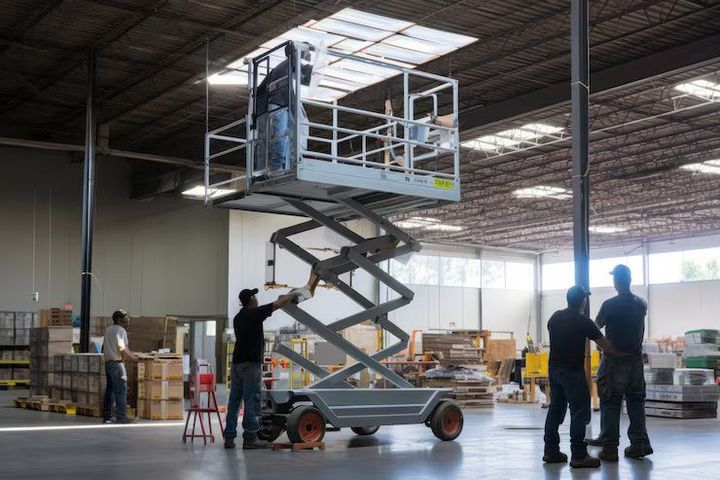
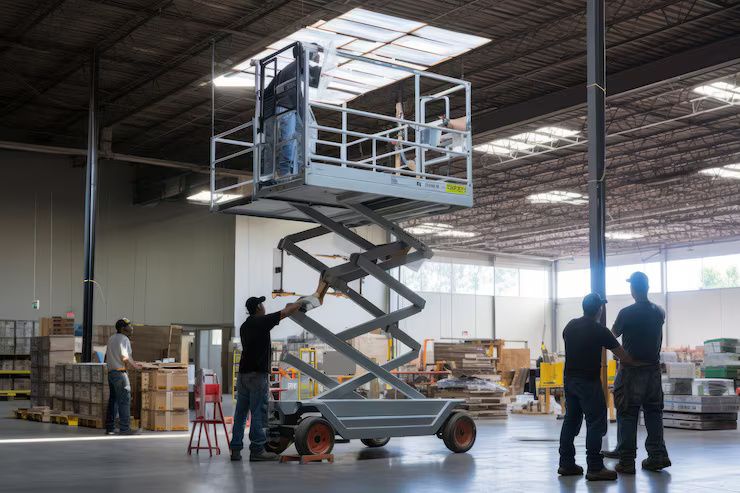
Scissor Lift
Scissor lifts use folding supports that extend upward like crossed metal arms.
They are commonly used for:
- Building maintenance
- Electrical work
- Painting
- Indoor repairs
- Warehouse operations
They provide a stable platform for workers and equipment.
Hydraulic Lift
Hydraulic lifts use pressurized fluid to raise heavy loads smoothly.
Typical applications include:
- Manufacturing plants
- Vehicle workshops
- Production facilities
- Material handling
Their lifting power makes them suitable for handling substantial loads.
Freight Lift
Freight lifts transport goods between floors inside industrial buildings.
They are often found in:
- Warehouses
- Distribution centers
- Manufacturing facilities
- Storage buildings
These lifts move materials rather than passengers.
Boom Lift
Boom lifts feature an extendable arm that reaches upward and outward.
They are useful for:
- Outdoor maintenance
- Utility work
- Construction
- Bridge inspections
- Tree maintenance
Their extended reach allows operators to access difficult locations.
Vertical Mast Lift
Vertical mast lifts provide straight upward movement while occupying relatively little floor space.
They are frequently used in:
- Retail storage areas
- Inventory management
- Indoor maintenance
- Narrow aisles
Dock Lift
Dock lifts move goods between loading docks and transport vehicles.
They simplify loading and unloading while reducing manual lifting.
Where Industrial Lifts Are Used
Industrial lifts support many industries and daily operations.
Warehousing
Warehouses use lifts to move inventory onto storage racks, transfer pallets, and improve storage efficiency.
Manufacturing
Factories use lifting equipment to position machine parts, transport raw materials, and assist assembly processes.
Construction
Construction teams use lifts to reach elevated work areas while carrying tools and building materials.
Logistics
Distribution facilities rely on lifting equipment to organize shipments and handle incoming and outgoing freight.
Maintenance
Maintenance teams use elevated platforms when working on lighting, ventilation systems, ceilings, pipelines, and structural components.
Automotive Industry
Vehicle maintenance facilities use hydraulic lifting equipment to access the underside of vehicles during inspection and repair work.
Advantages of Industrial Lifts
Industrial lifts provide several practical benefits across many workplaces.
Improved Productivity
Moving materials vertically becomes faster, allowing work to continue with fewer interruptions.
Reduced Physical Strain
Heavy lifting can place significant pressure on workers. Mechanical lifting equipment reduces repetitive manual handling.
Better Organization
Vertical storage becomes easier, allowing facilities to use available space more effectively.
Increased Workplace Safety
When used correctly, industrial lifts help workers reach elevated areas without relying on ladders for many routine tasks.
Consistent Material Handling
Mechanical lifting provides smoother movement of heavy materials compared to manual handling methods.
Important Safety Practices
Safe operation is one of the most important aspects of using industrial lifts.
Inspect Before Use
Operators should examine the lift before each use. Look for:
- Hydraulic leaks
- Damaged controls
- Worn cables
- Loose fasteners
- Tire condition
- Battery status
Any visible damage should be addressed before operation.
Follow Weight Limits
Every lift has a maximum lifting capacity. Exceeding this limit can affect stability and increase equipment stress.
Wear Protective Equipment
Depending on the workplace, operators may use:
- Safety helmets
- Protective footwear
- High-visibility clothing
- Gloves
- Fall protection equipment where required
Use Stable Ground
Mobile lifts should only operate on stable, level surfaces unless specifically designed for uneven terrain.
Keep Work Areas Clear
People should remain outside the operating zone whenever the lift is moving or handling heavy materials.
Follow Operating Procedures
Operators should understand the manufacturer's instructions before using any industrial lift.
Maintenance Considerations
Regular maintenance supports reliable performance and helps identify wear before it develops into larger problems.
Routine maintenance may include:
- Lubricating moving components
- Checking hydraulic fluid levels
- Inspecting electrical wiring
- Examining lift chains and cables
- Testing emergency controls
- Cleaning dirt and debris
- Tightening loose hardware
Keeping maintenance records also helps track inspection schedules and equipment condition over time.
Choosing the Right Industrial Lift
Selecting an industrial lift depends on several practical factors.
Consider:
- Maximum lifting height
- Weight capacity
- Indoor or outdoor use
- Available operating space
- Surface conditions
- Power source
- Frequency of use
- Type of materials being moved
Evaluating these factors helps determine which lift is appropriate for a particular application.
Emerging Developments
Industrial lifting equipment continues to evolve as workplaces adopt newer technologies.
Recent developments include:
- Battery-powered lifting systems
- Smart monitoring sensors
- Digital maintenance tracking
- Remote diagnostics
- Improved energy efficiency
- Enhanced safety monitoring
- Automated positioning features
These improvements help operators monitor equipment condition and support more efficient workplace operations.
Conclusion
Industrial lifts are valuable pieces of equipment used across manufacturing, warehousing, logistics, construction, and maintenance environments. They simplify vertical movement, reduce manual handling, and support safer access to elevated work areas when operated correctly.
Understanding the different types of industrial lifts, their applications, and essential safety practices helps workplaces make informed decisions about lifting equipment. Regular inspections, proper maintenance, and careful operation all contribute to dependable performance over time.
As technology continues to develop, industrial lifts are becoming more efficient, easier to monitor, and better equipped with advanced safety features, making them an important part of modern industrial operations.