Industrial Lasers: Insights Into Precision Manufacturing Technologies
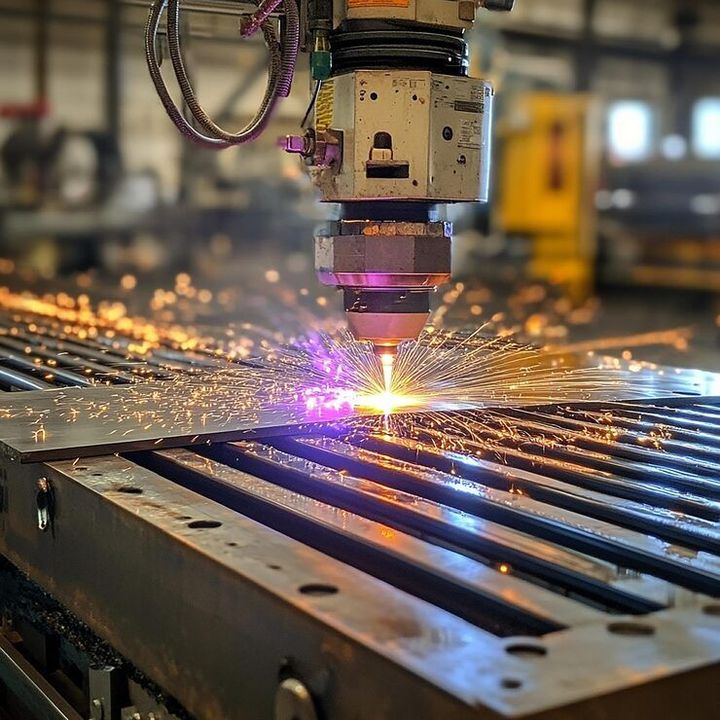
Industrial lasers have become a core technology in modern manufacturing, enabling precise cutting, welding, engraving, marking, drilling, and surface treatment across multiple industries. These laser systems use concentrated beams of light to process materials with high accuracy and minimal waste. Common laser types include fiber lasers, CO₂ lasers, diode lasers, and solid-state lasers, each designed for different industrial applications and materials.
The importance of industrial lasers has increased significantly in recent years due to the global push toward automation, smart manufacturing, and higher production efficiency. Industries such as automotive, aerospace, electronics, medical device manufacturing, and metal fabrication increasingly rely on laser systems to improve consistency and reduce manual intervention. As factories adopt Industry 4.0 practices, industrial lasers are often integrated with robotics, artificial intelligence, and computer numerical control (CNC) systems.
Recent developments in energy-efficient fiber lasers, compact laser modules, and real-time monitoring systems have also expanded their adoption. Manufacturers are focusing on reducing downtime, improving production speed, and achieving tighter tolerances, making industrial laser technology an important component of advanced manufacturing infrastructure worldwide.
Who Industrial Lasers Affect and What Problems They Solve
Industrial lasers affect a wide range of sectors, from large-scale manufacturing facilities to specialized precision engineering businesses. Automotive companies use lasers for body welding and battery manufacturing, while electronics manufacturers rely on them for micro-processing and semiconductor fabrication. Medical equipment manufacturers use laser systems for precision cutting of surgical tools and implants. Even packaging, textiles, and renewable energy industries increasingly use laser-based processing technologies.
The workforce is also influenced by this transition. Engineers, machine operators, maintenance professionals, and automation specialists need updated technical skills to manage laser-integrated production environments. Educational institutions and industrial training centers have therefore expanded programs related to laser safety, robotics, and automated manufacturing systems.
Problems Industrial Lasers Solve
| Manufacturing Challenge | How Industrial Lasers Help |
|---|---|
| Material waste | Precise cutting reduces scrap generation |
| Inconsistent product quality | Automated laser systems improve repeatability |
| Slow production speed | High-speed processing increases throughput |
| Complex geometries | Lasers handle intricate designs with accuracy |
| Excessive tool wear | Non-contact processing reduces mechanical wear |
| Heat distortion in materials | Controlled energy delivery minimizes damage |
| Manual labor dependency | Integration with robotics supports automation |
Industrial lasers are especially valuable in environments requiring micron-level precision, minimal contamination, and high repeatability. Unlike traditional mechanical cutting methods, lasers can process delicate or hard materials without direct contact, reducing the risk of deformation or surface defects.
Industrial Laser Technologies and Their Uses
Fiber Lasers
Fiber lasers are widely used in metal cutting, welding, and marking applications. They offer high electrical efficiency, long operational life, and lower maintenance requirements compared to older laser systems. Fiber lasers are especially effective for reflective metals such as aluminum, copper, and brass.
CO₂ Lasers
CO₂ lasers are commonly used for non-metal materials, including plastics, wood, glass, paper, and textiles. These systems remain popular in packaging, signage, and decorative manufacturing due to their smooth cutting performance.
Solid-State Lasers
Solid-state lasers, including Nd: YAG lasers, are used in precision welding, drilling, and medical manufacturing applications. They are capable of producing high-energy pulses suitable for specialized industrial tasks.
Diode Lasers
Diode lasers are increasingly used in compact industrial systems because of their efficiency and reduced energy consumption. They are commonly integrated into automated production lines and sensor-based manufacturing systems.
Recent Updates and Industry Trends
Industrial laser technology has evolved rapidly during the past year as manufacturers continue investing in automation and energy-efficient systems.
Growth of Fiber Laser Adoption
Fiber laser installations continue to expand globally because they offer lower operating costs and improved energy efficiency. Many manufacturers are replacing older CO₂ systems with fiber-based alternatives to improve production performance and reduce maintenance downtime.
Integration With Smart Manufacturing
Factories adopting Industry 4.0 strategies increasingly connect laser systems with sensors, cloud monitoring platforms, and AI-driven analytics tools. These integrations allow predictive maintenance, real-time monitoring, and automated quality control.
Expansion in Electric Vehicle Manufacturing
Electric vehicle (EV) production has increased demand for precision laser welding and battery manufacturing processes. Laser systems are heavily used in battery cell joining, busbar welding, and lightweight component fabrication.
Sustainability and Energy Efficiency
Governments and manufacturers are focusing more on energy-efficient industrial equipment. Modern laser systems are designed to reduce electricity usage and material waste, supporting sustainability goals and environmental compliance programs.
Miniaturization and Micro-Processing
Electronics and semiconductor manufacturers are investing in ultra-precise laser technologies capable of handling miniature components. This trend is particularly relevant in consumer electronics and medical device production.
Comparison of Major Industrial Laser Types
| Laser Type | Common Materials | Key Advantages | Typical Applications | Limitations |
|---|---|---|---|---|
| Fiber Laser | Metals | High efficiency, low maintenance | Metal cutting, welding, marking | Higher initial equipment cost |
| CO₂ Laser | Wood, plastic, glass | Smooth cutting on non-metals | Packaging, textiles, signage | Less efficient for metals |
| Nd: YAG Laser | Metals, ceramics | High pulse energy | Precision drilling and welding | Higher maintenance needs |
| Diode Laser | Thin materials | Compact and energy-efficient | Electronics, sensors | Lower power range |
| Ultrafast Laser | Sensitive materials | Minimal heat damage | Semiconductor processing | Expensive system integration |
Industrial Laser Market Trends by Sector
| Industry | Main Laser Applications | Recent Trend |
|---|---|---|
| Automotive | Welding, cutting, battery production | Increased EV-related usage |
| Aerospace | Precision cutting and drilling | Demand for lightweight components |
| Electronics | Micro-processing and marking | Semiconductor expansion |
| Medical Devices | Surgical tool manufacturing | Growth in precision fabrication |
| Renewable Energy | Solar panel processing | Higher automation adoption |
| Packaging | Engraving and labeling | Faster production line integration |
Laws, Regulations, and Government Policies
Industrial laser systems are heavily regulated because they involve high-energy radiation and workplace safety risks. Manufacturers and operators must comply with national and international standards related to laser classification, machine safety, environmental emissions, and worker protection.
International Safety Standards
Several globally recognized standards influence industrial laser operations:
| Regulation or Standard | Purpose |
|---|---|
| IEC 60825 | Laser product safety classification |
| ISO 11553 | Safety requirements for laser processing machines |
| OSHA Laser Guidelines | Workplace laser safety standards |
| ANSI Z136 Series | Laser safety practices and training |
| CE Marking (Europe) | Compliance for industrial equipment |
India’s Industrial and Manufacturing Policies
In India, industrial laser systems are affected by manufacturing modernization initiatives and workplace safety regulations. Programs such as “Make in India” and Production Linked Incentive (PLI) schemes indirectly encourage automation and advanced manufacturing technologies.
Factories using industrial lasers must also comply with:
- Factory safety regulations
- Worker protection standards
- Electrical safety requirements
- Environmental emission controls
- Hazard communication practices
Practical Guidance for Businesses
Businesses adopting industrial lasers should consider:
- Proper operator safety training
- Installation of protective laser enclosures
- Compliance with electrical and fire safety norms
- Preventive maintenance scheduling
- Certification of equipment suppliers
- Integration with ventilation and fume extraction systems
Organizations operating high-powered laser systems often designate Laser Safety Officers (LSOs) to oversee compliance and employee safety procedures.
Tools and Resources for Industrial Laser Applications
Several digital tools, software platforms, and engineering resources help manufacturers manage laser operations efficiently.
CAD and CAM Software
| Tool | Purpose |
|---|---|
| AutoCAD | Design preparation |
| SolidWorks | 3D engineering modeling |
| Fusion 360 | CAD/CAM integration |
| Mastercam | CNC and laser programming |
| LightBurn | Laser engraving workflow management |
Monitoring and Automation Tools
| Tool Type | Benefit |
|---|---|
| IoT Monitoring Platforms | Real-time machine tracking |
| Predictive Maintenance Software | Downtime reduction |
| CNC Controllers | Automated precision control |
| Robotic Integration Systems | Increased manufacturing efficiency |
Educational and Technical Resources
Helpful resources include:
- Manufacturing engineering journals
- Laser Institute technical publications
- Industrial automation webinars
- CNC and robotics certification programs
- Government manufacturing development portals
Safety Resources
Businesses should maintain access to:
- Laser safety manuals
- PPE requirement guidelines
- Hazard signage templates
- Ventilation system documentation
- Emergency shutdown procedures
Industrial Laser Efficiency and Operational Considerations
When evaluating industrial laser systems, manufacturers typically compare operational efficiency, maintenance requirements, and production flexibility.
Factors Affecting Performance
| Factor | Operational Impact |
|---|---|
| Beam quality | Determines precision and cut quality |
| Power output | Influences processing speed |
| Cooling systems | Affects reliability and lifespan |
| Automation compatibility | Supports scalable manufacturing |
| Maintenance intervals | Impacts downtime |
| Material compatibility | Determines production versatility |
Energy consumption has become an increasingly important factor as industries attempt to reduce operational costs and meet sustainability targets. Fiber lasers generally consume less energy than older laser technologies while maintaining high production speeds.
Frequently Asked Questions
What are industrial lasers mainly used for?
Industrial lasers are primarily used for cutting, welding, engraving, drilling, marking, and surface treatment in manufacturing and precision engineering industries.
Which industries rely most on industrial laser systems?
Automotive, aerospace, electronics, medical device manufacturing, metal fabrication, and renewable energy sectors are among the largest users of industrial laser technologies.
Why are fiber lasers becoming more popular?
Fiber lasers offer higher energy efficiency, lower maintenance requirements, longer operational life, and improved performance for metal processing applications.
Are industrial lasers environmentally friendly?
Modern industrial lasers can reduce material waste and energy usage compared to some traditional manufacturing methods. However, proper ventilation and safety systems are still required to manage fumes and emissions.
What safety measures are required for industrial laser use?
Key safety measures include protective eyewear, laser enclosures, operator training, emergency shutdown systems, ventilation systems, and compliance with laser safety standards.
Conclusion
Industrial lasers have become a foundational technology in modern manufacturing due to their precision, speed, and compatibility with automated production systems. The growing adoption of fiber lasers, smart factory integration, and AI-enabled monitoring reflects a broader industrial shift toward efficient and data-driven manufacturing operations.
Recent developments in electric vehicle production, semiconductor manufacturing, and sustainability initiatives continue to increase demand for advanced laser systems. While implementation costs and safety requirements remain important considerations, the long-term benefits of precision processing, reduced waste, and scalable automation make industrial lasers highly valuable across multiple sectors.
For businesses evaluating industrial laser adoption, the best approach depends on production goals, material requirements, energy efficiency priorities, and regulatory compliance needs. Fiber lasers currently dominate many industrial applications due to their efficiency and reliability, while specialized laser systems remain essential for niche manufacturing tasks requiring extreme precision or unique material handling capabilities.