Industrial Filter Guide: Types, Uses, and How They Work
Industrial filters play an important role in many everyday industries, even though most people rarely think about them. These filters help remove dust, dirt, oil, moisture, metal particles, chemicals, and other unwanted materials from air, water, gas, and liquid systems used in industrial environments. Without proper filtration, machines can wear down faster, product quality can drop, and workplace conditions may become harder to manage.
At a basic level, an industrial filter acts as a barrier or separation tool. It allows a clean fluid or gas to pass through while trapping unwanted particles. This process may sound simple, but it supports a wide range of operations across manufacturing, food processing, pharmaceuticals, automotive production, water treatment, power generation, and many other sectors.
For non-technical readers, industrial filtration can be compared to household water filters or air purifier filters, but on a much larger and more specialized scale. In an industrial setting, the filter type must match the material being filtered, the size of particles involved, pressure conditions, flow rate, and the needs of the equipment or process.
This guide explains what industrial filters are, the main types used in industry, where they are commonly found, and the key points to consider when evaluating filtration systems.
What Is an Industrial Filter?
An industrial filter is a device or component designed to separate unwanted particles or contaminants from a fluid or gas used in industrial operations. The fluid may be water, oil, fuel, chemicals, compressed air, steam, or process liquid. The gas may be air, exhaust, or another industrial gas stream.
The purpose of filtration is usually one or more of the following:
- Protect machines and internal components
- Improve product cleanliness and consistency
- Reduce dust or harmful particles in the air
- Help systems run more smoothly
- Support environmental and safety requirements
- Extend the usable life of process fluids
Different industries use filters in different ways. In one factory, a filter may keep metal particles out of hydraulic oil. In another, it may remove fine dust from a ventilation system. In food production, it may help clean water or process liquids before they move to the next stage.
Why Industrial Filters Matter
Industrial systems often operate continuously and under demanding conditions. Small contaminants can create larger problems over time. Dust can block airflow. Moisture can damage compressed air systems. Metal fragments in lubricating oil can wear down moving parts. In liquid processing, unwanted particles can affect product quality and consistency.
Filtration helps control these issues before they spread through the system. A properly selected filter can support smoother operation, reduce maintenance frequency, and help maintain cleaner processing conditions. In some industries, filtration is also closely tied to health, hygiene, and environmental rules.
For example:
- In manufacturing, filters help protect pumps, motors, compressors, and hydraulic systems.
- In food and beverage production, filters help keep process fluids cleaner.
- In pharmaceutical production, fine filtration may support strict cleanliness standards.
- In water treatment, filters help remove suspended solids and other impurities.
- In chemical plants, filtration helps separate particles from liquids or gases used in processing.
Main Types of Industrial Filters
Industrial filters come in many forms, but they are usually grouped by what they filter and how they work.
1. Air Filters
Air filters remove dust, dirt, smoke, and airborne particles from air moving through industrial spaces or equipment. They are commonly used in HVAC systems, cleanrooms, compressors, dust collection systems, and production areas.
Common uses include:
- Improving indoor air quality in industrial buildings
- Protecting machines that draw in outside air
- Reducing dust in production zones
- Supporting cleaner conditions in sensitive environments
Air filters may range from simple panel filters to high-efficiency filters designed to capture very fine particles.
2. Liquid Filters
Liquid filters remove particles from water, oils, chemicals, coolants, paints, and process liquids. They are common in manufacturing, water treatment, food processing, and chemical production.
These filters help by:
- Removing dirt, rust, sludge, or sediment
- Protecting pumps, valves, and pipelines
- Supporting cleaner liquid handling
- Reducing contamination in process lines
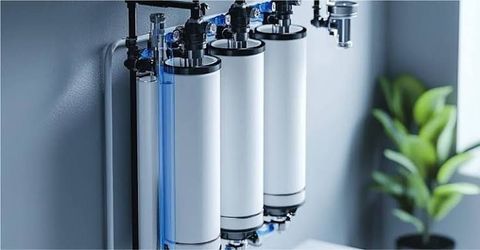
Liquid filters may be cartridge-based, bag-style, mesh-based, or built into larger filtration units.
3. Oil Filters
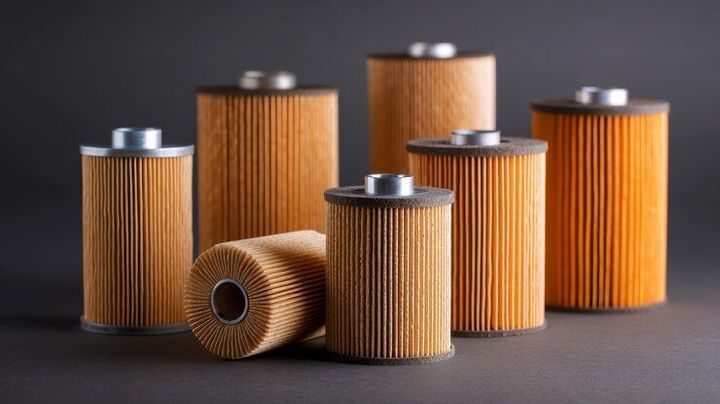
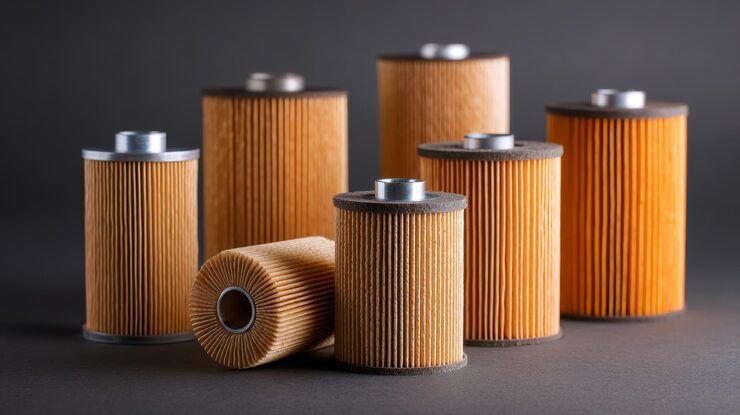
Oil filters are often used in engines, hydraulic systems, gearboxes, and lubrication systems. Their role is to remove dirt, metal particles, carbon deposits, and other contaminants from oil before they circulate through equipment.
Clean oil matters because contaminated oil can increase friction, reduce lubrication performance, and speed up wear on moving parts.
4. Fuel Filters
Fuel filters remove dirt, rust, and debris from fuel before it reaches an engine, burner, or fuel-handling system. In industrial equipment, fuel cleanliness is important because blocked injectors or contaminated fuel lines can affect combustion and system performance.
5. Compressed Air Filters
Compressed air systems often contain dust, oil aerosols, and moisture. Compressed air filters are used to remove these contaminants before the air reaches tools, machinery, packaging lines, or control systems.
This is especially important in industries where air quality affects production, such as food processing, electronics, and pharmaceuticals.
6. Dust Collection Filters
Dust collection filters are designed to capture fine dust generated during grinding, cutting, sanding, mixing, or bulk material handling. These filters are often found in baghouses, cartridge collectors, and industrial ventilation systems.
Their purpose may include:
- Reducing airborne dust in work areas
- Supporting cleaner production spaces
- Protecting workers from excessive dust exposure
- Preventing dust buildup inside equipment
How Industrial Filters Work
Although designs vary, most industrial filters work through one of a few basic filtration methods.
Surface Filtration
In surface filtration, particles stay on the outer layer of the filter media. The clean fluid or gas passes through, while larger contaminants remain on the surface. This method is common when particles are relatively large and easy to trap.
Depth Filtration
In-depth filtration, contaminants are captured throughout the thickness of the filter material rather than just on the surface. This approach is often used for finer particles and can hold a larger amount of contamination before replacement or cleaning is needed.
Mechanical Separation
Some filters use screens, meshes, or porous materials to physically block particles larger than a certain size.
Coalescing Filtration
Coalescing filters are often used in compressed air and gas systems. They help separate tiny liquid droplets, such as oil mist or water vapor, by bringing them together into larger droplets that can then be removed.
Common Filter Materials
Industrial filters are made from a variety of materials depending on the application. Some common examples include:
- Paper or cellulose media – often used in basic air or oil filtration
- Synthetic fibers – used where strength, durability, or finer filtration is needed
- Stainless steel mesh – useful in higher-temperature or reusable filter designs
- Activated carbon – used when odors, vapors, or certain chemicals need to be reduced
- Polyester or polypropylene – common in liquid and dust filtration systems
The material matters because it affects chemical resistance, particle capture, temperature tolerance, and overall durability.
Where Industrial Filters Are Used
Industrial filtration is found in many sectors, including:
- Manufacturing plants
- Water and wastewater treatment facilities
- Food and beverage processing
- Pharmaceutical production
- Chemical processing
- Mining and metalworking
- Power plants
- Oil and gas operations
- Automotive production
- Electronics manufacturing
In each of these settings, the filter may have a different role, but the overall purpose remains the same: to remove unwanted contaminants so the process, equipment, or environment stays cleaner and more stable.
What to Consider When Choosing an Industrial Filter
Selecting an industrial filter is not only about matching a filter to a machine. It also involves understanding the process and the type of contamination involved.
Important factors include:
What needs to be filtered
Is the filter handling air, water, oil, fuel, chemicals, or compressed air? Each requires a different filtration approach.
Particle size
Some applications need to capture visible debris, while others need to remove very fine particles. Filter efficiency depends heavily on particle size requirements.
Flow rate
The filter must handle the volume of fluid or air moving through the system without creating excessive restriction.
Pressure and temperature
Industrial systems can run under demanding conditions. The filter and housing must be suitable for the operating environment.
Compatibility
The filter material must be compatible with the fluid, gas, or chemical in the system.
Maintenance needs
Some filters are disposable, while others are cleaned and reused. Maintenance intervals and accessibility also matter in day-to-day operations.
Final Thoughts
Industrial filters are a quiet but essential part of modern industry. They help keep air cleaner, protect machinery, reduce contamination, and support smoother operations across a wide range of sectors. While the technology behind filtration can become highly specialized, the basic goal is simple: separate unwanted material from the system before it causes trouble.
For general readers, understanding industrial filters starts with knowing what is being filtered, why cleanliness matters, and how different filter types fit different industrial tasks. Whether the application involves air handling, water treatment, lubrication systems, or dust control, filtration remains a practical tool for keeping industrial processes more controlled, reliable, and efficient.