How Agricultural Hydraulic Machinery Works in Modern Farming
Modern farming depends on equipment that can handle demanding tasks in different weather and field conditions. One of the key technologies behind many agricultural machines is the hydraulic system. It provides the force needed to lift, lower, push, pull, and control heavy equipment with smooth and reliable movement. Agricultural hydraulic machinery is found in tractors, harvesters, loaders, seed drills, sprayers, and many other farming tools.
Although the technology may seem complex at first, the basic idea is straightforward. Hydraulic systems use pressurized fluid to transfer power from one part of a machine to another.
This guide explains what agricultural hydraulic machinery is, how it works, where it is used, its main components, common advantages, maintenance practices, and future developments in farming equipment.
What Is Agricultural Hydraulic Machinery?
Agricultural hydraulic machinery refers to farming equipment that uses hydraulic power to perform mechanical tasks. Instead of relying only on gears, belts, or manual force, these machines use hydraulic fluid under pressure to move different parts.
Hydraulic systems make it possible to lift heavy implements, steer large machines, operate attachments, and adjust equipment while working in the field. Because the system transfers power efficiently, operators can control large loads with relatively small movements of levers or controls.
Today, hydraulic technology has become a standard feature in many types of agricultural equipment because it helps machines perform a wide range of farming operations.
How Hydraulic Systems Work
A hydraulic system operates using a simple principle known as fluid power. Since hydraulic fluid does not compress easily, pressure applied in one part of the system is transmitted throughout the fluid.
The basic process includes these steps:
- A hydraulic pump creates pressure.
- Hydraulic fluid moves through hoses or pipes.
- Control valves direct the fluid where it is needed.
- Hydraulic cylinders or motors convert fluid pressure into movement.
- The fluid returns to the reservoir and repeats the cycle.
This continuous movement allows agricultural machinery to perform lifting, pushing, rotating, and steering functions smoothly.
Main Components of Agricultural Hydraulic Machinery
Understanding the major parts of a hydraulic system makes it easier to understand how agricultural equipment operates.
Hydraulic Pump
The hydraulic pump generates pressure by moving hydraulic fluid through the system. It is often driven by the engine of the machine.
Hydraulic Fluid
Hydraulic fluid transfers power throughout the system. It also helps cool components, reduce friction, and protect internal parts from wear.
Hydraulic Reservoir
The reservoir stores hydraulic fluid when it is not circulating. It also helps remove air bubbles and allows the fluid to cool before re-entering the system.
Hydraulic Cylinders
Hydraulic cylinders convert fluid pressure into straight-line movement. They are commonly used for lifting loader arms, raising implements, or adjusting equipment height.
Hydraulic Motors
Unlike cylinders, hydraulic motors create rotary motion. They power moving parts that require continuous rotation.
Control Valves
Control valves regulate the direction, pressure, and flow of hydraulic fluid. They allow operators to control different machine functions accurately.
Hydraulic Hoses and Fittings
Hoses carry hydraulic fluid between components. Strong fittings help prevent leaks while maintaining safe operating pressure.
Common Agricultural Machines That Use Hydraulic Systems
Hydraulic technology is found across many different types of agricultural equipment.
Tractors
Modern tractors use hydraulic systems to raise three-point hitches, operate steering systems, and power attached implements.
Front Loaders
Front loaders depend on hydraulic cylinders to lift soil, feed, gravel, and harvested materials safely.
Harvesters
Harvesting machines use hydraulic power to control headers, conveyors, steering, and unloading mechanisms.
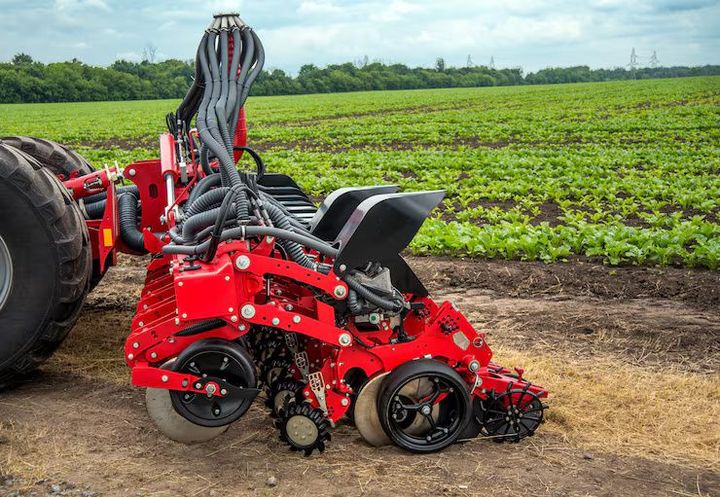
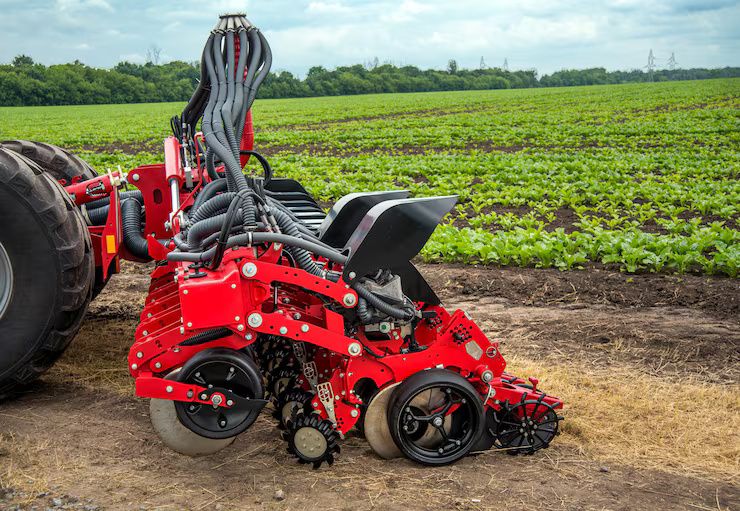
Seed Drills
Hydraulic systems help adjust planting depth, fold transport sections, and control various planting operations.
Sprayers
Hydraulics operate boom arms, height adjustments, and folding mechanisms while working across fields.
Balers
Many balers rely on hydraulic pressure to compress crops and operate moving parts during bale formation.
Advantages of Agricultural Hydraulic Machinery
Hydraulic systems provide several practical benefits that support farming operations.
Strong Lifting Capability
Hydraulic systems generate significant force, allowing machinery to lift heavy implements and materials with controlled movement.
Smooth Operation
Hydraulic controls provide gradual movement instead of sudden mechanical action, making equipment easier to handle.
Accurate Control
Operators can adjust machine functions with precision, which helps during planting, harvesting, and material handling.
Versatile Equipment
A single tractor equipped with hydraulic connections can work with many different attachments, increasing the range of tasks it can perform.
Reduced Physical Effort
Hydraulic power minimizes manual effort when lifting or adjusting heavy equipment, making daily work more manageable.
Reliable Performance
Properly maintained hydraulic systems can operate effectively under demanding agricultural conditions for many working seasons.
Common Applications on the Farm
Agricultural hydraulic machinery supports many everyday farming activities.
Some common applications include:
- Lifting cultivation equipment
- Operating front-end loaders
- Adjusting plows
- Raising seed drills
- Steering large tractors
- Running hydraulic trailers
- Controlling harvesting equipment
- Folding sprayer booms
- Managing irrigation equipment
- Handling hay and feed
These applications demonstrate how hydraulic systems support both crop production and livestock farming.
Basic Maintenance Tips
Regular maintenance helps hydraulic equipment continue operating safely and efficiently.
Check Hydraulic Fluid
Inspect hydraulic fluid regularly to ensure proper levels and clean condition. Dirty fluid may reduce system performance over time.
Inspect Hoses
Look for cracks, swelling, abrasion, or leaks. Damaged hoses should be replaced before they fail during operation.
Replace Filters
Hydraulic filters remove contaminants from the fluid. Clean filters help protect pumps, valves, and cylinders.
Monitor for Leaks
Small leaks may gradually reduce pressure and affect machine performance. Early detection helps prevent larger mechanical issues.
Keep Components Clean
Dust, mud, and crop residue can accumulate around hydraulic fittings and cylinders. Cleaning these areas reduces contamination.
Follow Maintenance Schedules
Routine inspections according to the equipment manufacturer's maintenance recommendations help identify wear before it becomes a larger problem.
Common Hydraulic Problems
Even well-maintained machinery can develop hydraulic issues over time.
Some common problems include:
- Low hydraulic pressure
- Slow cylinder movement
- Fluid leaks
- Overheating
- Air entering the system
- Contaminated hydraulic fluid
- Worn seals
- Damaged pumps
- Blocked filters
Recognizing these signs early can help prevent additional wear on connected components.
Safety When Working Around Hydraulic Equipment
Hydraulic systems operate under very high pressure, making safe handling important.
Some general safety practices include:
- Inspect equipment before use.
- Never place hands near leaking hydraulic fluid.
- Lower raised equipment before maintenance.
- Wear suitable protective clothing.
- Release hydraulic pressure before disconnecting hoses.
- Replace damaged components promptly.
- Read the machine's operating instructions before performing maintenance.
Following these practices helps reduce the chance of injury while working with hydraulic machinery.
Future Developments in Agricultural Hydraulic Machinery
Agricultural equipment continues to evolve with advances in technology.
Many newer machines include electronic controls that work alongside hydraulic systems for improved precision. Sensors can automatically adjust hydraulic pressure during different field operations, while automated steering systems help improve accuracy during planting and harvesting.
Manufacturers are also exploring more energy-efficient hydraulic designs that reduce fluid losses and improve overall machine performance. These developments support precision agriculture by allowing equipment to respond more accurately to changing field conditions.
As farming technology continues to advance, hydraulic systems are expected to remain an important part of agricultural machinery because of their flexibility and dependable power transmission.
Conclusion
Agricultural hydraulic machinery plays an important role in modern farming by providing the power needed for lifting, steering, moving, and controlling heavy equipment. Although the technology involves several connected components, its operating principle remains straightforward: pressurized hydraulic fluid transfers power efficiently throughout the machine.
Understanding how hydraulic systems work, recognizing their main components, following regular maintenance practices, and using proper safety procedures can help improve equipment reliability and support productive farming operations. As agricultural technology continues to develop, hydraulic systems will remain a key part of machinery used across farms of many sizes.