Thermal Testing Equipment Guide: Explore Types, Components, Applications, Accuracy, and Safety Factors
Thermal testing equipment is used to measure, monitor, and evaluate how materials, products, components, and systems behave when exposed to different temperatures. A thermal testing equipment guide helps explain the types of equipment available, their components, applications, accuracy considerations, and safety factors.
Temperature can affect the physical, chemical, electrical, and mechanical properties of many materials. Heating or cooling may cause expansion, contraction, changes in strength, phase transitions, degradation, or changes in electrical performance. Thermal testing provides controlled conditions for observing these effects.
Thermal testing equipment is used in laboratories, manufacturing facilities, research centers, electronics testing, automotive development, aerospace applications, construction-material evaluation, energy research, and many other technical fields.
What Thermal Testing Involves
Thermal testing may involve exposing a sample or product to a controlled temperature and recording its response. Depending on the purpose, testing can involve heating, cooling, temperature cycling, thermal shock, or long-duration exposure.
Some equipment measures temperature directly, while other systems measure how a material changes as temperature changes. The selected method depends on the material, temperature range, test duration, environmental conditions, and required measurement accuracy.
Common Types of Thermal Testing Equipment
Thermal testing equipment includes several categories:
- Thermal chambers provide controlled temperature environments for samples and products.
- Environmental chambers can control temperature together with humidity or other environmental conditions.
- Thermal shock chambers rapidly transfer samples between different temperature environments.
- Furnaces provide controlled high-temperature exposure.
- Ovens maintain elevated temperatures for heating and drying processes.
- Differential scanning calorimeters measure heat flow associated with changes in a sample.
- Thermogravimetric analyzers measure changes in sample mass as temperature changes.
- Thermal conductivity instruments evaluate how effectively a material transfers heat.
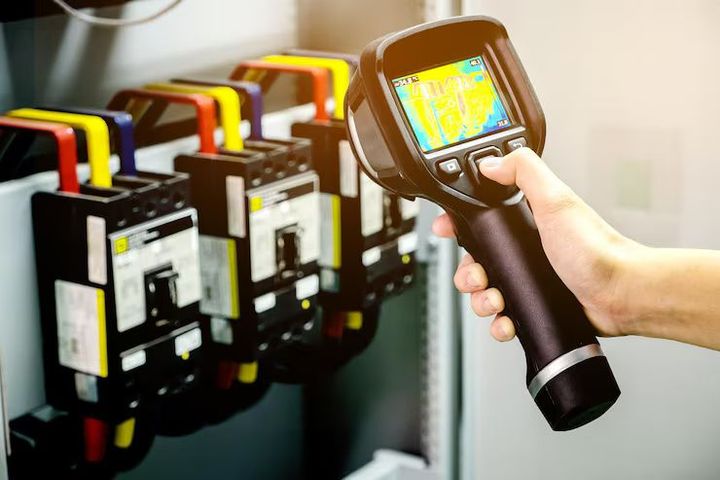
- Infrared thermal imaging systems measure surface temperature patterns without direct contact.
- Temperature calibration equipment provides controlled reference temperatures for checking measurement instruments.
The equipment selected for a test should match the temperature range, sample characteristics, measurement method, and applicable testing procedure.
Importance
Thermal behavior matters because temperature changes can influence product reliability, material performance, energy efficiency, and operating safety. Components that function correctly at room temperature may behave differently when exposed to high or low temperatures.
Thermal testing allows researchers and engineers to study these changes under controlled conditions. It can also help identify temperature-related weaknesses before a product or material is used in its intended environment.
Industries That Use Thermal Testing
Thermal testing has applications across many sectors. Electronics manufacturers may evaluate components exposed to temperature changes, while automotive organizations may examine materials and components under conditions representing engine compartments or outdoor environments.
Construction-material laboratories can study insulation and heat-transfer characteristics. Pharmaceutical and food-related laboratories may evaluate temperature sensitivity, while energy research can involve batteries, solar materials, thermal storage systems, and other temperature-dependent technologies.
Problems Addressed by Thermal Testing
Temperature testing can help investigate issues such as:
- Expansion and contraction
- Material deformation
- Thermal degradation
- Changes in electrical resistance
- Heat transfer
- Melting and crystallization
- Moisture-related temperature effects
- Component performance during temperature cycling
- Changes in mechanical properties
- Thermal stability
Testing conditions can be controlled and recorded so that observations can be compared between samples or test cycles.
Recent Updates
From 2024 through 2026, thermal testing has increasingly incorporated automation, digital data collection, improved sensors, and more precise environmental control. Modern testing systems can connect temperature sensors, controllers, data-acquisition systems, and software to create continuous records of test conditions.
Automation can also reduce manual intervention during long-duration temperature tests. Programmable controllers can follow temperature profiles containing multiple heating, cooling, holding, and cycling stages.
Digital Monitoring
Digital monitoring allows temperature, humidity, pressure, heat flow, or mass measurements to be recorded at defined intervals. Test records can then be reviewed to determine whether the required temperature profile was maintained.
Data logging is particularly useful when tests last for many hours or involve repeated thermal cycles. It can also help identify unexpected changes in temperature or equipment performance.
Advanced Thermal Analysis
Thermal analysis methods continue to support research into polymers, composites, metals, ceramics, electronic materials, energy-storage materials, and other products. Techniques such as differential scanning calorimetry and thermogravimetric analysis can provide information about transitions, decomposition, mass changes, and thermal stability.
The development of batteries and other energy technologies has also increased interest in thermal characterization. Temperature behavior is important when studying materials that experience significant heat generation or sensitivity during operation.
Improved Temperature Measurement
Temperature measurement technology continues to use devices such as thermocouples, resistance temperature detectors, thermistors, and infrared sensors. Each technology has different operating characteristics, response times, temperature ranges, and accuracy considerations.
Selecting the correct sensor is important because the measurement device itself can influence the observed result. Sensor placement, calibration, contact quality, environmental conditions, and response time can all affect measurements.
Laws or Policies
Thermal testing equipment may be affected by workplace safety requirements, electrical safety rules, environmental regulations, and standards applicable to the particular test method. In India, laboratories and industrial facilities should consider applicable requirements from organizations such as the Bureau of Indian Standards and other competent authorities.
The Occupational Safety, Health and Working Conditions framework provides a broader basis for workplace health and safety. Requirements can depend on the workplace, equipment, process, and applicable rules.
Electrical equipment used in laboratories and industrial facilities may also be subject to applicable Indian standards and electrical safety requirements. Equipment containing heating elements, high-voltage components, pressurized systems, refrigerants, or combustible materials may require additional precautions.
Testing laboratories may also use international standards such as ISO and IEC standards where relevant to their testing activities. The exact standard depends on the product, test method, industry, and intended application.
Laboratory Safety Considerations
Thermal testing can involve very high or very low temperatures. Operators should therefore consider:
- Hot surfaces and heated samples
- Cold surfaces and cryogenic conditions
- Electrical hazards
- Pressure changes
- Combustible or reactive materials
- Fumes or decomposition products
- Thermal expansion
- Unexpected sample failure
- Ventilation requirements
The manufacturer's instructions and the applicable laboratory or workplace safety procedures should be followed for each specific system.
Tools and Resources
Several tools and resources can support thermal testing and temperature measurement.
Temperature Sensors
Thermocouples are widely used for temperature measurement and are available in different types for different temperature ranges. RTDs are commonly used where stable and precise temperature measurement is required, while thermistors are frequently used for temperature sensing within defined ranges.
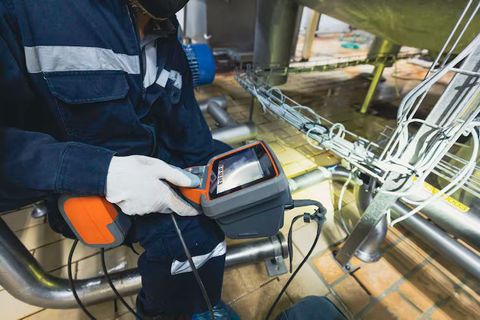
Infrared sensors and thermal cameras provide non-contact temperature measurements. They can be useful for observing temperature distribution across a surface.
Data Acquisition Systems
Data-acquisition equipment collects measurements from temperature sensors and transfers them to software for recording and analysis. Depending on the system, it may support multiple sensors and configurable sampling intervals.
Calibration Equipment
Calibration equipment provides a reference environment or known temperature for checking measurement devices. Calibration helps identify measurement deviations and supports traceability when required by a laboratory's quality system.
Standards and Technical References
Organizations such as ISO, IEC, ASTM International, and the Bureau of Indian Standards publish standards covering measurement methods, materials, electrical equipment, environmental testing, and laboratory practices.
A testing laboratory should identify the exact standard applicable to its test rather than assuming that one thermal testing procedure applies to every material or product.
Thermal Testing Data Table
| Testing factor | What it indicates | Why it matters |
|---|---|---|
| Temperature range | Minimum and maximum test temperature | Determines equipment suitability |
| Temperature stability | Variation around the target temperature | Affects test consistency |
| Heating rate | Speed of temperature increase | Influences thermal response |
| Cooling rate | Speed of temperature decrease | Important for cycling and shock tests |
| Sensor accuracy | Difference between measured and actual temperature | Influences measurement confidence |
| Uniformity | Temperature variation within the test area | Helps maintain comparable sample conditions |
| Test duration | Length of thermal exposure | Important for long-term evaluation |
| Data interval | Frequency of recorded measurements | Affects detail in test records |
FAQs
What is thermal testing equipment?
Thermal testing equipment is used to expose materials, components, or products to controlled temperature conditions and measure their thermal behavior. Equipment can include chambers, furnaces, thermal analyzers, temperature sensors, and thermal imaging systems.
What are the main types of thermal testing equipment?
Common types include thermal chambers, environmental chambers, thermal shock chambers, furnaces, ovens, differential scanning calorimeters, thermogravimetric analyzers, thermal conductivity instruments, and infrared thermal measurement systems.
How is thermal testing equipment accuracy determined?
Accuracy depends on factors such as sensor performance, calibration, temperature stability, uniformity, measurement method, and environmental conditions. Calibration against an appropriate reference helps determine measurement performance.
Where is thermal testing equipment used?
Thermal testing equipment is used in electronics, automotive, aerospace, construction materials, energy, polymers, metals, research laboratories, manufacturing, and other fields where temperature can affect material or product behavior.
What safety factors should be considered in thermal testing?
Important factors include protection from hot and cold surfaces, electrical safety, ventilation, sample compatibility, pressure changes, combustible materials, and potential fumes or decomposition products. The applicable equipment manual and workplace safety procedures should always be considered.
Conclusion
Thermal testing equipment provides controlled methods for studying how materials, components, and products respond to temperature changes. Different equipment types are designed for applications ranging from basic temperature exposure to detailed thermal analysis and rapid temperature cycling. Measurement accuracy depends on equipment design, sensor selection, calibration, temperature stability, and test conditions. Appropriate standards, operating procedures, and safety controls are important when conducting thermal tests.