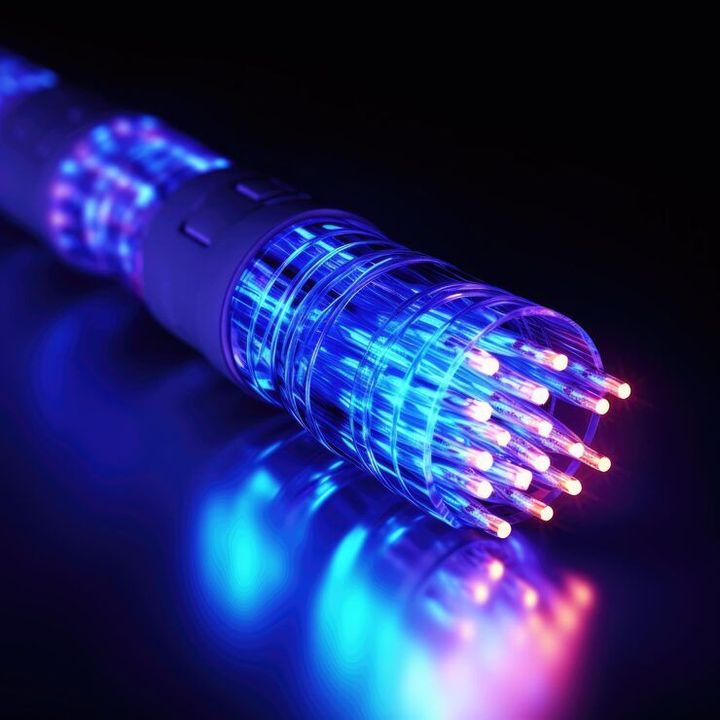
Fiber optic technology has become one of the most important communication technologies in the modern digital economy. It uses thin strands of glass or plastic fibers to transmit information through pulses of light rather than electrical signals. This approach enables significantly faster data transmission, lower latency, and greater bandwidth capacity compared with traditional copper-based communication systems.

The importance of fiber optic infrastructure has increased substantially over recent years due to rising internet usage, cloud computing adoption, remote work, streaming services, artificial intelligence applications, and smart city initiatives. Governments, telecommunications providers, and enterprises worldwide are investing heavily in fiber networks to support growing digital demands.
Recent trends show continued expansion of Fiber-to-the-Home (FTTH) deployments, 5G backhaul networks, industrial automation systems, and data center interconnections. As digital transformation accelerates across industries, fiber optic technology plays a critical role in enabling reliable connectivity and supporting future innovations. Understanding its capabilities, limitations, and practical applications helps organizations and individuals make informed decisions regarding networking, communication, and infrastructure investments.
Who It Affects and What Problems It Solves
Fiber optic technology impacts a wide range of stakeholders, including residential internet users, businesses, educational institutions, healthcare providers, government agencies, cloud service providers, and telecommunications companies. As digital services become increasingly dependent on high-speed connectivity, fiber networks help support both economic growth and technological innovation.
For businesses, fiber connectivity enables faster cloud access, improved video conferencing quality, secure data transfers, and scalable network performance. Educational institutions benefit from enhanced online learning experiences and access to digital resources. Healthcare organizations use fiber networks to support telemedicine, medical imaging transfers, and electronic health records.
Problems Fiber Optic Technology Solves
| Challenge | How Fiber Optics Helps |
|---|---|
| Slow internet speeds | Provides significantly higher bandwidth |
| Network congestion | Handles large data volumes efficiently |
| Signal degradation | Maintains signal quality over long distances |
| Electromagnetic interference | Uses light signals that resist interference |
| Limited scalability | Supports future bandwidth growth |
| High latency | Enables faster data transmission |
| Reliability concerns | Offers stable and consistent performance |
Fiber optic networks also reduce maintenance requirements compared to aging copper infrastructure, making them a preferred choice for long-term digital infrastructure planning.
Recent Updates and Industry Trends
The fiber optic industry has experienced notable developments over the past year as governments and private organizations continue expanding broadband infrastructure.
Expansion of Fiber-to-the-Home (FTTH)
Many countries are accelerating broadband deployment programs to increase internet accessibility in urban and rural areas. FTTH projects remain a priority due to growing demand for high-speed internet access.
AI and Data Center Growth
The rapid expansion of artificial intelligence workloads has increased demand for high-capacity fiber connections between data centers. AI training systems require substantial bandwidth and low-latency communications, making fiber infrastructure essential.
5G Network Integration
Telecommunications providers continue deploying fiber backhaul networks to support 5G coverage expansion. Fiber serves as the backbone connecting cellular towers and core network infrastructure.
Smart Cities and IoT Adoption
Municipal governments are integrating fiber networks into smart transportation systems, surveillance infrastructure, environmental monitoring platforms, and public services.
Sustainability Focus
Organizations increasingly prioritize energy-efficient networking solutions. Fiber optic networks generally require less power for long-distance transmission compared with traditional copper-based systems, contributing to sustainability objectives.
Fiber Optic Technology Overview
Key Characteristics of Fiber Optics
| Feature | Fiber Optic Technology |
|---|---|
| Transmission Medium | Light through glass or plastic fibers |
| Typical Speed | Gigabit to multi-terabit capacity |
| Signal Distance | Long-distance transmission with minimal loss |
| Electromagnetic Resistance | Very high |
| Security | Difficult to intercept physically |
| Reliability | High |
| Scalability | Excellent |
| Maintenance Needs | Relatively low |
Fiber Optic vs Traditional Copper Networks
| Factor | Fiber Optic | Copper Cable |
|---|---|---|
| Data Speed | Very High | Moderate |
| Bandwidth Capacity | High | Limited |
| Signal Loss | Low | Higher |
| Interference Resistance | Strong | Susceptible |
| Distance Performance | Excellent | Limited |
| Future Readiness | High | Moderate |
| Installation Cost | Higher Initial Cost | Lower Initial Cost |
Typical Fiber Deployment Areas
| Sector | Common Applications |
|---|---|
| Residential | Broadband internet |
| Enterprise | Corporate networking |
| Healthcare | Telemedicine systems |
| Education | Digital learning platforms |
| Manufacturing | Industrial automation |
| Government | Public infrastructure |
| Telecommunications | 5G and broadband backbones |
| Data Centers | High-speed interconnection |
Fiber Optic Adoption Trends
Global Networking Evolution
| Technology Generation | Primary Medium | Bandwidth Capacity |
|---|---|---|
| Early Telephone Networks | Copper | Low |
| DSL Era | Copper | Moderate |
| Cable Broadband | Hybrid Systems | Moderate to High |
| Fiber Broadband | Fiber Optic | High |
| AI and Cloud Era | Advanced Fiber Networks | Very High |
The trend demonstrates a gradual shift toward fiber-based infrastructure as bandwidth requirements continue increasing across industries.
Laws, Regulations, and Government Programs
Fiber optic deployment is often influenced by telecommunications regulations, broadband initiatives, infrastructure funding programs, and spectrum-related policies.
Broadband Expansion Programs
Many governments have introduced national broadband initiatives aimed at improving connectivity, particularly in underserved and rural regions. These programs frequently provide grants, subsidies, or public-private partnership opportunities to accelerate fiber deployment.
Infrastructure Regulations
Network providers must typically comply with:
- Construction and right-of-way requirements
- Environmental regulations
- Utility access rules
- Telecommunications licensing requirements
- Network safety standards
Data Security and Privacy Requirements
Fiber optic networks often support critical infrastructure and sensitive data transmission. Organizations deploying fiber-based communications must consider:
- Cybersecurity regulations
- Data protection laws
- Network resilience standards
- Critical infrastructure requirements
Practical Guidance
| Situation | Recommended Approach |
|---|---|
| Home internet upgrade | Evaluate FTTH availability |
| Business expansion | Consider dedicated fiber connectivity |
| Data center deployment | Prioritize high-capacity fiber links |
| Smart manufacturing projects | Integrate fiber backbone infrastructure |
| Rural connectivity projects | Review government broadband incentives |
| Municipal projects | Align with local infrastructure policies |
Organizations should review applicable local regulations before initiating large-scale fiber infrastructure projects.
Tools and Resources
Several tools and resources can help businesses, engineers, and consumers understand, plan, and manage fiber optic networks.
Network Testing Tools
| Tool Type | Purpose |
|---|---|
| Optical Power Meter | Measures signal strength |
| OTDR Tester | Identifies cable faults |
| Fiber Inspection Scope | Inspects connector quality |
| Light Source Tester | Validates transmission performance |
| Network Analyzer | Evaluates network health |
Planning and Design Resources
- Fiber route planning software
- Network capacity calculators
- GIS mapping platforms
- Infrastructure design templates
- Cable management documentation tools
Educational Resources
- Telecommunications training courses
- Fiber optic certification programs
- Networking standards documentation
- Industry research publications
- Broadband deployment guides
Useful Categories of Services
- Fiber network consulting
- Infrastructure engineering
- Broadband deployment services
- Data center connectivity planning
- Telecommunications project management
These resources help organizations optimize deployment decisions and maintain reliable network performance.
Frequently Asked Questions
What is fiber optic technology?
Fiber optic technology transmits data using light signals through thin strands of glass or plastic fibers, enabling high-speed communication over long distances.
Why is fiber optic internet faster than traditional broadband?
Fiber uses light-based transmission with significantly higher bandwidth capacity and lower signal loss than traditional copper-based networks.
Is fiber optic technology suitable for businesses?
Yes. Businesses benefit from improved reliability, scalability, faster cloud access, and support for bandwidth-intensive applications.
Does fiber optic infrastructure support 5G networks?
Yes. Fiber serves as the backbone for many 5G deployments by connecting cellular towers to core telecommunications infrastructure.
Is fiber optic technology future-proof?
While no technology is completely future-proof, fiber optic infrastructure offers substantial scalability and can support growing bandwidth requirements for many years.
Conclusion
Fiber optic technology has evolved into a foundational component of modern digital infrastructure. Its ability to deliver high-speed, low-latency, and reliable connectivity makes it essential for broadband services, cloud computing, artificial intelligence, smart cities, healthcare systems, education platforms, and industrial automation.
Current industry trends indicate continued investment in fiber deployment as organizations seek to meet increasing data demands and support emerging technologies. Government broadband initiatives, 5G expansion, and AI-driven infrastructure requirements are further accelerating adoption worldwide.
For most long-term networking and connectivity needs, fiber optic infrastructure provides the strongest combination of performance, scalability, and reliability. Organizations planning future digital initiatives should consider fiber-based solutions wherever available, particularly when bandwidth growth, network resilience, and technological readiness are key priorities.